

More news on this day
Lufthansa is set to connect Munich and Rovaniemi with a new seasonal route for the winter 2026-27 schedule, reinforcing the airline group’s strategy of expanding direct access from Central Europe to Finland’s high-demand Lapland region.
Get the latest news straight to your inbox!
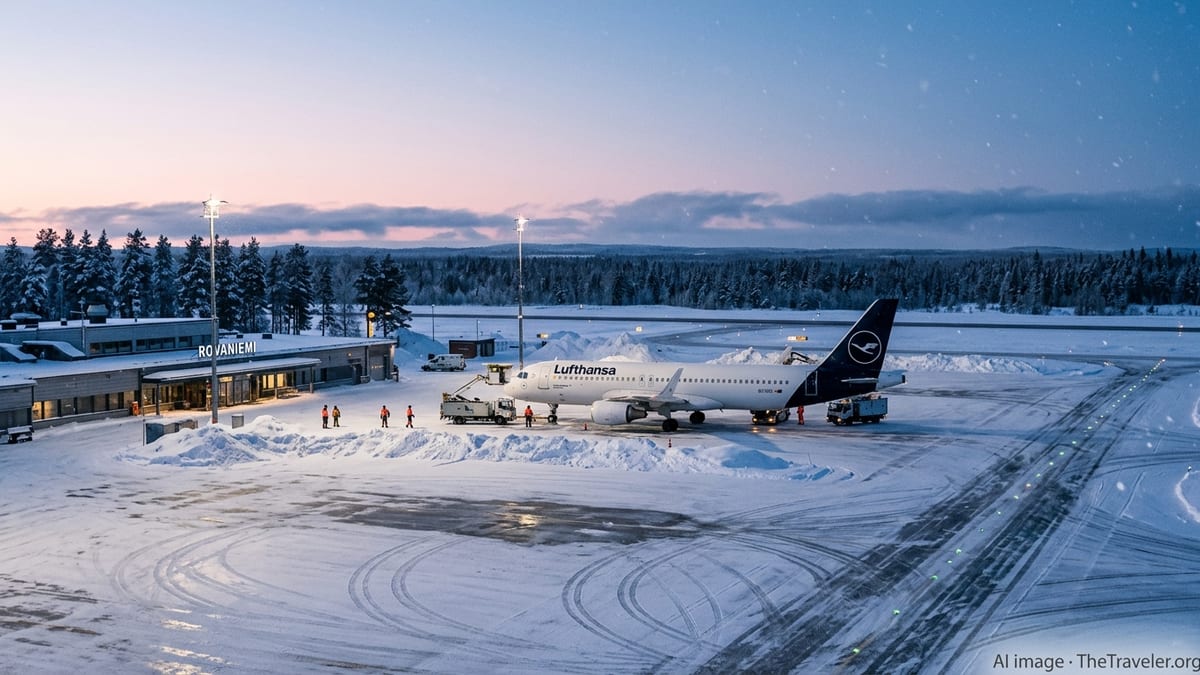
Image by Travel and Tour World – Tourism, Airline, Destination, MICE, Gobal Travel Market, Hotel news that you will find only over here.
New Winter Route Links Bavaria with the Arctic Circle
According to recent route announcements and Finnish aviation coverage, Lufthansa plans to introduce nonstop flights between Munich and Rovaniemi for the winter 2026-27 season. The new service will mark the first direct connection between the Bavarian hub and the capital of Finnish Lapland, adding to the airline group’s growing portfolio of northern winter destinations.
Publicly available information indicates that the Munich–Rovaniemi flights are scheduled as a seasonal operation aligned with peak leisure demand. The route is expected to run during the core winter travel window, coinciding with the Christmas and New Year period and extending into the main Northern Lights and ski season in early 2027.
The Munich hub already serves as a key gateway for Lufthansa’s European and intercontinental network, and the new Lapland link will provide additional options for passengers from southern Germany, Austria, Switzerland and other markets to reach northern Finland with a single connection.
The announcement follows a wider trend among European carriers of adding winter-only routes to Arctic destinations as interest in snow-based holidays and aurora hunting continues to rise.
Frequency, Schedule and Fleet Expectations
Industry reports from Nordic aviation outlets suggest that Lufthansa intends to operate the Munich–Rovaniemi route with two weekly frequencies during the winter 2026-27 timetable, using short- to medium-haul aircraft configured for both economy and business class. While final aircraft types and exact timings typically remain subject to adjustment closer to the season, the planning reflects a balance between growing demand and the still-seasonal nature of Lapland tourism.
The pattern is expected to follow established winter scheduling practices on similar northern routes, with departures timed to allow same-day connections from major European cities via Munich. This approach has been used on other Lufthansa Group services to Finland and northern Scandinavia, where travelers often arrive from elsewhere in Europe or from long-haul destinations before continuing on to the Arctic region.
As is standard for seasonal services, the route is likely to be incorporated into the airline’s broader winter 2026-27 schedule update, which is usually finalized and placed on sale well ahead of the operating period. Travelers planning multi-stop winter itineraries across Europe and the Arctic region will therefore be able to combine the new flights with existing services within the Lufthansa Group network.
Operational details, including planned start and end dates as well as potential adjustments to frequency during peak holiday weeks, are expected to follow the typical pattern of winter launch around late November or December and conclusion towards the end of March.
Responding to Surging Demand for Finnish Lapland
The decision to link Munich and Rovaniemi reflects the sustained growth of Finnish Lapland as a winter destination among European travelers. Over recent seasons, traffic statistics for northern Finnish airports have highlighted increasing volumes of international visitors drawn by Santa-themed attractions, husky and reindeer safaris, and the opportunity to see the Northern Lights.
Rovaniemi, situated almost on the Arctic Circle, has become one of the most recognizable names in winter tourism, particularly for family travel around the Christmas period. Tourism and airport data for the region show that Germany is among the key source markets, alongside the United Kingdom and Central Europe, with charter and scheduled services expanding to meet demand.
By basing the new route at Munich, Lufthansa is positioning itself to capture both point-to-point leisure traffic and connecting passengers routed through its southern German hub. This includes travelers from the wider Alpine region, where winter sports enthusiasts may be looking to diversify their holiday options from traditional ski resorts to Arctic experiences.
The new service also complements existing Lufthansa Group activity in northern Finland, where carriers within the group have already built a presence at several Lapland airports during past winter seasons. The addition of Rovaniemi from Munich further deepens that footprint and enhances the region’s connectivity to Central Europe.
Strengthening Munich as a Gateway to the North
The Munich–Rovaniemi announcement is part of a broader pattern in which Lufthansa and its partner airlines have reinforced Munich’s role as a gateway to northern Europe. Over recent seasons, the hub has seen the introduction and expansion of routes to various Nordic and Arctic destinations, aligning with the airline group’s strategy of pairing its major German bases with high-interest leisure markets.
Travel industry coverage notes that Munich’s geographic position and transfer infrastructure make it well suited for distributing traffic between central and southern Europe and Nordic destinations. Minimum connection times and coordinated schedules allow passengers to transfer efficiently from intra-European or long-haul arrivals onto flights heading north.
With the addition of Rovaniemi, Munich’s winter network further diversifies beyond traditional sun and ski destinations. For local travelers in Bavaria and neighboring regions, the new service offers a direct alternative to connecting through other European hubs when heading to Finnish Lapland.
The route also underscores continuing competition among European airlines for winter holiday traffic. As other carriers open or expand services to Arctic airports, Lufthansa’s decision to link Munich and Rovaniemi positions the group more firmly in a market that has proven resilient and fast growing.
Implications for Travelers and the Regional Economy
For travelers, the new seasonal route is expected to translate into shorter journey times and more straightforward itineraries between southern Germany and Finnish Lapland. Instead of routing through Helsinki or other northern hubs, passengers will have the option of a nonstop flight from Munich that arrives close to key winter attractions in and around Rovaniemi.
Tourism bodies in Lapland have consistently highlighted the importance of direct international flights for extending the season and spreading visitor flows more evenly across the winter months. Increased seat capacity from a major European hub can support local businesses ranging from hotels and lodges to activity providers and restaurants.
The new connection is also likely to benefit travel organizers and tour operators based in both Germany and Finland. Enhanced air access typically enables the development of package holidays and themed itineraries, making it easier to market Lapland breaks to new customer segments, including first-time visitors to the Arctic.
As bookings for winter 2026-27 gradually open across airlines and travel intermediaries, the Munich–Rovaniemi route will add another option to the growing list of direct links to Lapland. For the region, it represents an additional step in consolidating its position as one of Europe’s flagship winter tourism destinations, while for Lufthansa it reinforces a strategy focused on high-value seasonal leisure travel.