

More news on this day
Lufthansa is returning to Malaysia with a new nonstop service between Frankfurt and Kuala Lumpur, slated to begin in late October 2026 and positioned to strengthen tourism and business flows between Europe and Southeast Asia.
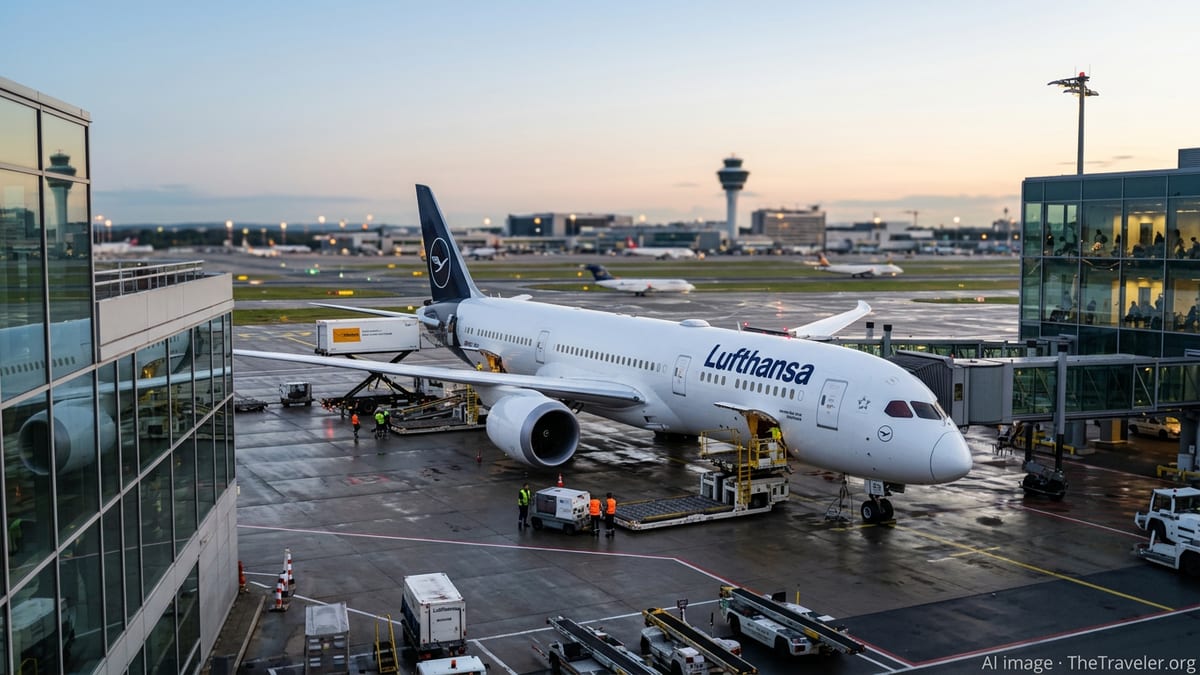
Details of the New Nonstop Service
The German carrier has confirmed that flights between Frankfurt and Kuala Lumpur will commence on October 25, 2026, operating five times a week year-round. The route, last served by Lufthansa until 2016, will once again link Germany’s largest hub with Malaysia’s capital, giving travelers a direct option on one of the region’s key intercontinental corridors.
Under the planned schedule, flight LH704 will depart Frankfurt at 9:30 p.m. local time and arrive in Kuala Lumpur at 4:40 p.m. the following day. The return service, LH705, will leave Kuala Lumpur at 11:55 p.m., touching down in Frankfurt at 6:00 a.m. the next morning. The overnight timings on both legs are designed to appeal to long-haul passengers seeking to maximize rest time and daylight hours at their destination.
Lufthansa is marketing the route as a core addition to its winter 2026/27 network, with tickets already available for booking. The airline notes that, from its home markets in Europe, it will be the only carrier to offer nonstop service to Malaysia, positioning Frankfurt as a primary gateway for both leisure and corporate travelers headed to Kuala Lumpur and beyond.
Modern Dreamliner Fleet and New Allegris Cabin
The Frankfurt to Kuala Lumpur route will be operated by the Boeing 787-9 Dreamliner, one of the newest and most fuel-efficient aircraft types in Lufthansa’s long-haul fleet. The twin-engine widebody will be configured with 287 seats across three cabins, offering a mix of comfort levels tailored to different budgets and travel purposes.
A key selling point for the new service is Lufthansa’s introduction of its Allegris cabin products on board. The latest-generation interior concept brings redesigned seating, updated materials and lighting, and enhanced privacy and storage features. Business class aims to offer a more personalized experience with direct aisle access, while premium economy and economy have been reworked to improve ergonomics and overall comfort on long sectors of more than 12 hours.
The deployment of the 787-9 also underscores Lufthansa’s broader fleet renewal strategy, focused on lower fuel burn and reduced emissions per passenger. Airline executives have framed the Kuala Lumpur route as an example of how newer aircraft can support network growth in high-potential markets while aligning with increasingly strict environmental and efficiency expectations in Europe and Asia.
Boost for Tourism and Business Travel
The launch comes as Malaysia continues to position itself as one of Southeast Asia’s most dynamic tourism and business destinations. The country has reported strong visitor numbers in recent years, reflecting renewed global demand for its beaches, rainforests, historic cities and food culture, alongside Kuala Lumpur’s role as a regional financial and technology hub.
By restoring a nonstop link from Frankfurt, Lufthansa is aiming to capture demand from both European tourists heading to Malaysia and Malaysian travelers looking for seamless access to Europe. The airline expects strong interest from German, Austrian, Swiss, Belgian and Italian markets in particular, as well as connecting flows from North America via Frankfurt.
Corporate travel is another important pillar. Germany and Malaysia maintain close economic ties, with hundreds of German companies active in the country across sectors such as manufacturing, energy, logistics and services. A direct flight reduces travel time and complexity for executives and technical staff shuttling between headquarters in Europe and operations in and around Kuala Lumpur.
Frankfurt’s Role as a Global Connecting Hub
Lufthansa has emphasized that the new schedule from October 25, 2026 is closely aligned with its global bank of connections at Frankfurt Airport. Early-morning arrival times from Kuala Lumpur are timed to feed into a broad wave of onward departures to major European cities, as well as to transatlantic and other long-haul destinations.
For travelers beginning their journey in Malaysia, this means single-stop itineraries to a wide range of European capitals and secondary cities, often with through check-in and coordinated minimum connection times. Conversely, passengers from Europe and North America will be able to connect in Frankfurt to reach Kuala Lumpur with a minimum of backtracking or overnight layovers.
The move also reinforces Frankfurt’s role as a primary long-haul gateway within the Lufthansa Group network. With Kuala Lumpur joining existing Southeast Asian destinations such as Bangkok, Singapore and Phuket, the airline is adding another key spoke in a region it has identified as central to long-term growth, particularly as travel demand in Asia continues to expand.
Strategic Return to a High-Growth Market
The reintroduction of nonstop flights to Kuala Lumpur marks a strategic return to a market Lufthansa exited a decade earlier during a period of network consolidation. Since then, competitive dynamics in Southeast Asia have evolved, with growing capacity from Gulf and Asian carriers and rising demand from both intra-Asian and long-haul travelers.
By choosing to relaunch the route with a modern Dreamliner and its newest onboard product, Lufthansa is signaling confidence in the long-term viability of Germany–Malaysia traffic. Industry analysts note that the combination of strong tourism appeal, manufacturing investment and regional connectivity through Kuala Lumpur International Airport provides a solid foundation for sustained demand.
The new Frankfurt–Kuala Lumpur service, starting in October 2026, will place Lufthansa back in direct competition on a corridor long dominated by one-stop itineraries through other hubs. For travelers, it translates into more choice, shorter travel times and a fresh premium option linking continental Europe with one of Southeast Asia’s most visited capitals.