

More news on this day
Lufthansa is set to reshape travel between Europe and Southeast Asia with the launch of new nonstop flights between Frankfurt and Kuala Lumpur from late October 2026, a year-round link that industry observers say will significantly tighten business, tourism and trade ties between Germany and Malaysia.
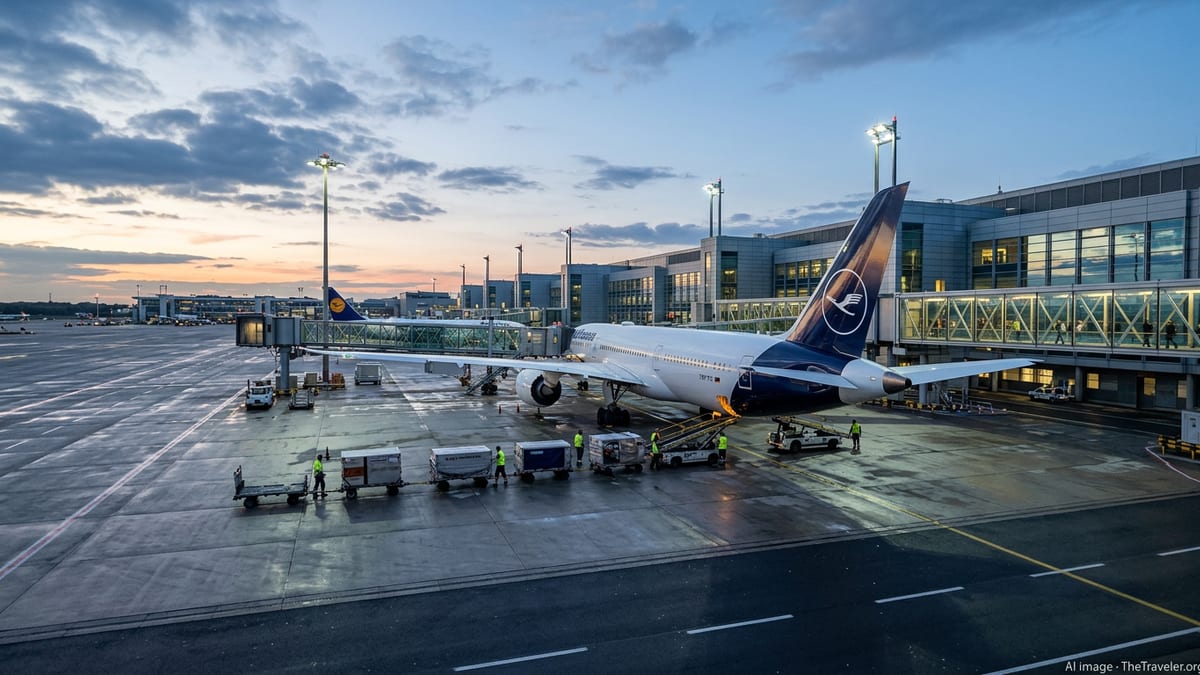
A Strategic New Bridge Between Europe and Malaysia
The German carrier confirmed this week that it will begin operating five weekly nonstop flights between Frankfurt and Kuala Lumpur from October 25, 2026, in time for the Northern Hemisphere winter 2026/27 season. The route will run year-round, positioning Malaysia’s capital back on the European network map after years of relying mainly on one-stop connections via Gulf and Asian hubs.
From Frankfurt, flight LH704 is scheduled to depart at 9.30 p.m., arriving at Kuala Lumpur International Airport at 4.40 p.m. local time the following day. The return service, LH705, leaves Kuala Lumpur at 11.55 p.m. and lands in Frankfurt at 6.00 a.m., offering passengers convenient overnight journeys in both directions and early-morning arrivals that align with onward banked departures across Europe and North America.
Lufthansa will be the only airline offering nonstop service to Malaysia from its home markets of Germany, Austria, Switzerland, Belgium and Italy, a fact the group has highlighted as it looks to consolidate long-haul traffic flows through Frankfurt. For travelers across continental Europe, the move promises fewer connections and shorter overall journey times to one of Southeast Asia’s fastest-growing destinations.
The new connection also complements Lufthansa Group’s existing Southeast Asia footprint, which already includes services to Bangkok, Singapore and Phuket. By adding Kuala Lumpur, the airline strengthens its position in a region that has been rebounding strongly on the back of leisure demand and resurgent business travel.
Dreamliner Comfort and Allegris Cabin on the New Route
The Frankfurt–Kuala Lumpur flights will be operated by Boeing 787-9 aircraft, part of Lufthansa’s new-generation long-haul fleet. The airline is pairing the route launch with its latest Allegris cabin product, aimed at lifting standards in Economy, Premium Economy and Business Class with redesigned seats, upgraded inflight entertainment and enhanced privacy options.
The 787-9s on the route will offer 287 seats across three cabins, giving Lufthansa flexibility to cater to both corporate and leisure segments. Business travelers are expected to benefit from lie-flat seats, direct aisle access in most configurations and improved work surfaces, while Premium Economy has been designed to attract long-haul holidaymakers willing to pay for extra space and comfort on overnight sectors.
Lufthansa has framed the deployment of the 787-9 as a signal of confidence in long-term demand between Europe and Malaysia. The aircraft’s fuel efficiency and range, combined with a quieter cabin and improved humidity levels, are expected to support both operational economics and passenger comfort on the nearly 12-hour sectors in each direction.
The introduction of the Allegris product on the Kuala Lumpur route also reflects a broader effort by the airline to position itself more firmly in the premium travel segment. With many European and Asian competitors refurbishing cabins and upgrading soft-product offerings, the move can be seen as a bid to stay competitive on one of the world’s most hotly contested long-haul corridors.
Connectivity Advantages for Business, Trade and Tourism
Industry analysts note that the new flights are timed to maximize connectivity at both ends. In Frankfurt, early-morning arrivals from Kuala Lumpur feed into a dense wave of departures to major European business centers as well as transatlantic destinations in the United States and Canada. For corporate travelers in Malaysia, this promises faster, more predictable journeys to secondary European cities that previously required multiple changes.
The service is also seen as a boost for trade and investment links. Germany remains Malaysia’s largest trading partner within the European Union, and more than 700 German companies are reported to be operating in the country. A nonstop air bridge between Frankfurt, a key financial and logistics hub, and Kuala Lumpur is likely to facilitate executive travel, technical support visits and supply chain coordination.
On the tourism side, Malaysia has been reporting strong visitor numbers, bolstered by the country’s mix of city attractions, rainforest experiences and island resorts. Nonstop access from Frankfurt is expected to raise the country’s profile among European holidaymakers weighing options across Southeast Asia, particularly those for whom travel time and the complexity of connections are key decision factors.
For European inbound tourism, the new route opens up greater opportunities for Malaysian travelers to explore central Europe. With a single overnight flight, passengers can connect via Frankfurt to more than 150 onward destinations, from major capitals such as Paris and Amsterdam to smaller cities that have traditionally required an extra stop and longer layovers from Southeast Asia.
Competitive Implications Across the Europe–Asia Corridor
Lufthansa’s return to the Malaysian market with a nonstop service comes against a backdrop of intense competition along the Europe–Asia corridor. Gulf carriers and several Asian airlines have long courted passengers between Europe and Southeast Asia with one-stop connections through their own hubs, emphasizing frequency, pricing and onboard product.
By reinstating a direct link between Frankfurt and Kuala Lumpur, the German carrier is betting that many travelers will favor cutting out an intermediate stop, even when faced with attractive fares and service levels from rivals. The new schedule gives point-to-point passengers an option to shave several hours off total travel time compared with typical one-stop routings via the Middle East or other Asian hubs.
The move could also have knock-on effects across alliance and codeshare partners. As a leading member of Star Alliance, Lufthansa is expected to coordinate schedules and through-fares with regional partners to feed additional traffic onto the new route. That could further consolidate Frankfurt’s role as a primary European gateway for Southeast Asian travelers heading beyond Germany.
While the long-haul market remains sensitive to global economic conditions and fuel prices, route announcements of this scale underline confidence in sustained demand. Lufthansa’s decision to commit advanced widebody capacity to Kuala Lumpur suggests that the airline sees strong potential not just for seasonal peaks but for balanced, year-round traffic flows linking Europe and Malaysia.
Booking Opens as Carriers Look Toward Winter 2026/27
The airline has already opened reservations for the Frankfurt–Kuala Lumpur service, giving both leisure and corporate customers ample lead time to plan trips for late 2026 and beyond. Travel agencies and online booking platforms are expected to promote the route as part of early-bird campaigns for the winter season, while tour operators build new packages around direct access to Malaysia.
Airports on both ends have welcomed the announcement as an endorsement of their hub strategies. Frankfurt, Germany’s largest aviation gateway, gains another long-haul destination in Asia at a time when airport operators are investing in terminal upgrades and passenger-experience improvements. Kuala Lumpur International Airport, for its part, secures a fresh European flag-carrier connection that complements existing links to the continent via other hubs.
As airlines finalize their winter 2026/27 timetables, Lufthansa’s Kuala Lumpur launch stands out as one of the more significant new intercontinental additions involving a European hub. For travelers, the service offers a new blend of schedule convenience, upgraded onboard product and nonstop efficiency on a route where one-stop options have long dominated.
With bookings now live and the first flights set for late October 2026, the carrier’s latest expansion underscores how air connectivity continues to evolve in response to shifting travel patterns, economic ties and passenger expectations between Europe and Southeast Asia.