

More news on this day
Lufthansa is preparing to introduce a new seasonal route between Munich and Rovaniemi for the 2026–27 winter season, strengthening air links between southern Germany and Finland’s Arctic tourism hub at a time when demand for Lapland travel continues to grow.
Get the latest news straight to your inbox!
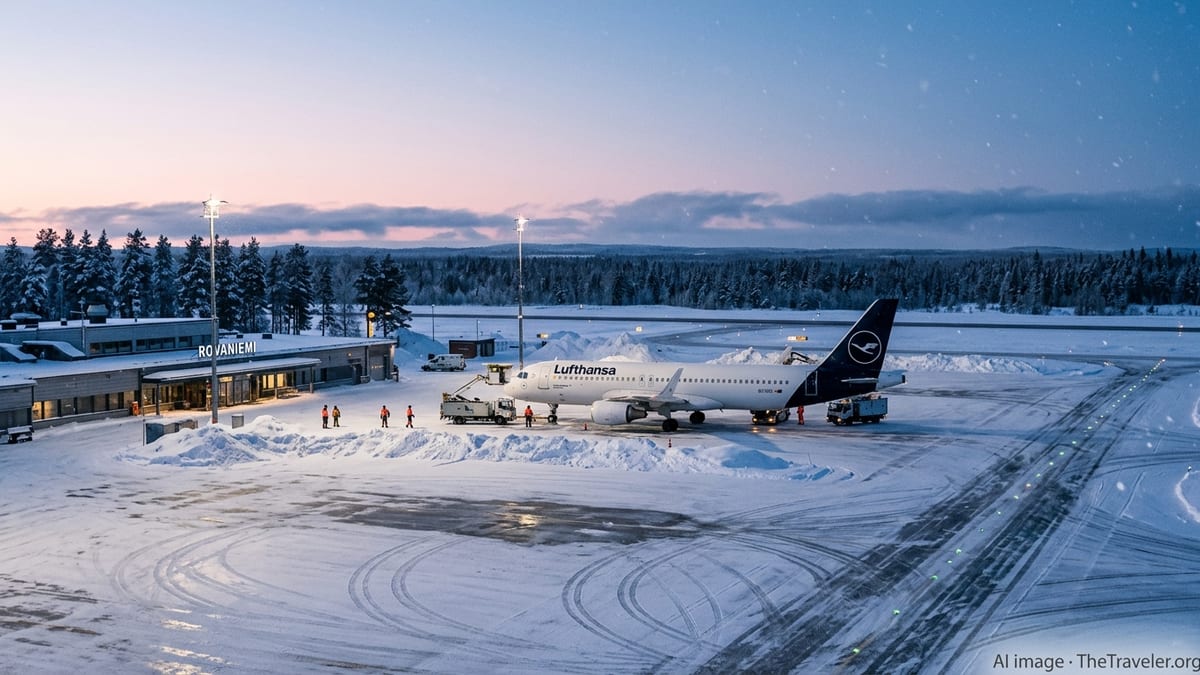
New Seasonal Link Between Bavaria and the Arctic Circle
The planned Munich to Rovaniemi service for winter 2026–27 would mark a further expansion of Lufthansa Group’s network into Finnish Lapland, building on the group’s recent growth at airports north of the Arctic Circle. Publicly available information from Nordic aviation sources shows that the group has already committed to new winter routes from Munich to Ivalo from December 2026, underscoring a broader strategy to serve Lapland more intensively during the peak snow season.
While detailed scheduling for Munich to Rovaniemi in winter 2026–27 has not yet appeared in published timetables, industry patterns and existing Lapland services suggest a limited but targeted seasonal operation timed around Christmas and the main Northern Lights period. The route would be expected to complement Lufthansa’s existing Frankfurt to Rovaniemi flights, which were first announced for the 2024–25 winter, creating additional connectivity from southern Germany and neighboring markets that feed into Munich Airport.
Munich Airport’s winter programs in recent years have emphasized both long-haul and niche leisure destinations, and Lapland has emerged as a key focus for tourism-oriented expansion. Information from airport and airline publications indicates that Lufthansa Group carriers are progressively adding Arctic Finland to their seasonal maps as travel rebounds and winter tourism products recover, setting the stage for a Munich–Rovaniemi link to fit into a broader Lapland portfolio.
Responding to Surging Demand for Lapland Winter Tourism
Passenger data and route announcements from Finnish airport operator sources highlight how Lapland has become one of Northern Europe’s fastest-growing winter regions, driven by interest in Northern Lights viewing, Arctic activities, and Christmas-themed travel. New routes from Central Europe to airports such as Ivalo, Kittilä, and Rovaniemi are being introduced or expanded almost every winter season, reflecting strong demand from German-speaking markets and beyond.
Reports on Lufthansa Group operations in Finland describe a steady build-up of services to Lapland, including seasonal links from Germany, Austria, and Switzerland. A Munich–Rovaniemi service for winter 2026–27 would align with this trend by offering travelers a direct connection from a major southern German hub to one of Lapland’s best-known destinations, reducing the need for connections via Helsinki or other European airports.
For regional tourism operators in Finnish Lapland, additional winter capacity from Munich would likely be seen as a valuable contribution to sustaining visitor numbers in the key December to March period. Publicly available tourism figures from recent winters show that German travelers are among the most important international source markets for Lapland, and direct flights from German-speaking regions are often closely linked to package tours, winter activity holidays, and tailored Northern Lights itineraries.
How the Route Fits Within Lufthansa’s Wider Network Strategy
Lufthansa Group communications on its 2025–26 and 2026 schedules point to an overarching strategy that mixes hub consolidation with selective growth in leisure-focused markets. From Munich, the group has recently introduced or expanded services to both warm-weather and winter-sport destinations, while also restoring and adding long-haul routes. The development of new Arctic connections, including the confirmed Munich–Ivalo flights from December 2026, fits into this pattern of pairing established hubs with high-yield seasonal markets.
A potential Munich–Rovaniemi seasonal link for winter 2026–27 would therefore sit alongside other winter-only offerings, using Munich’s role as a southern Germany and Central Europe gateway. Travelers from Austria, northern Italy, Switzerland, and parts of Central and Eastern Europe commonly connect through Munich, meaning that a single new Lapland route can tap into demand from multiple countries without the need for separate point-to-point services from each origin.
Analysts following the airline’s network moves note that Lufthansa has been using both its mainline brand and leisure-focused subsidiaries to reach winter destinations. While the precise operating carrier for a Munich–Rovaniemi route in 2026–27 has not been formally detailed in public documents, existing patterns suggest that either Lufthansa Airlines or a Lufthansa Group leisure carrier could be used, depending on slot availability, fleet planning, and demand forecasts closer to the season.
Operational Expectations for the 2026–27 Winter Season
Based on currently available information about comparable Lapland routes, a Munich–Rovaniemi service in winter 2026–27 would likely operate with narrowbody aircraft configured for European medium-haul flights. Typical schedules for similar seasonal services include one or two weekly frequencies concentrated between late December and late March, often with flights clustered around holiday periods and school vacations.
Capacity decisions will be influenced by broader trends in the Lufthansa Group network going into 2026–27. Corporate publications for the 2025 financial year indicate a planned acceleration in fleet renewal and a continued emphasis on aligning capacity with demand on key winter corridors. Additional aircraft deliveries and cabin upgrades expected in 2026 may give the group more flexibility to calibrate seat supply to Lapland, including Rovaniemi, as booking patterns become clearer.
Weather resilience and operational planning are also central considerations for winter routes north of the Arctic Circle. Historical operational data for Lapland services show that airlines and airports invest in de-icing capacity, runway maintenance, and schedule buffers to handle snow and low temperatures. Munich Airport’s experience as a major winter hub, combined with Finavia’s infrastructure at Rovaniemi, provides a framework for managing the specific challenges of high-season Arctic operations.
What the New Route Means for Travelers
For passengers in southern Germany and neighboring countries, the introduction of a Munich–Rovaniemi seasonal connection for winter 2026–27 would expand options for reaching Finnish Lapland without additional stops. Travelers who currently route via Frankfurt, Helsinki, or other European hubs could benefit from reduced total journey times and more straightforward itineraries, especially for families and groups traveling with winter sports equipment.
Travel industry reports suggest that demand for organized Lapland trips remains strong, ranging from short Northern Lights breaks to week-long activity holidays. A direct winter link from Munich improves the logistics for tour operators packaging flights with accommodation in and around Rovaniemi, including Santa-themed attractions, Arctic excursions, and stays in glass-roofed cabins or remote lodges.
As with all seasonal services still in the planning phase, final flight times, frequencies, and booking availability for winter 2026–27 will depend on the airline’s internal scheduling process and regulatory approvals. Prospective travelers are generally advised by consumer travel outlets to monitor official airline channels and updated timetables as the season approaches, particularly as airlines continue to refine networks in response to evolving travel demand across Europe and the Arctic region.