

More news on this day
European network airlines are rapidly reshaping long-haul routes to Asia and Africa, boosting nonstop services and skirting traditional Middle Eastern hubs as conflict and widespread airspace restrictions disrupt one of the world’s busiest aviation corridors.
Get the latest news straight to your inbox!
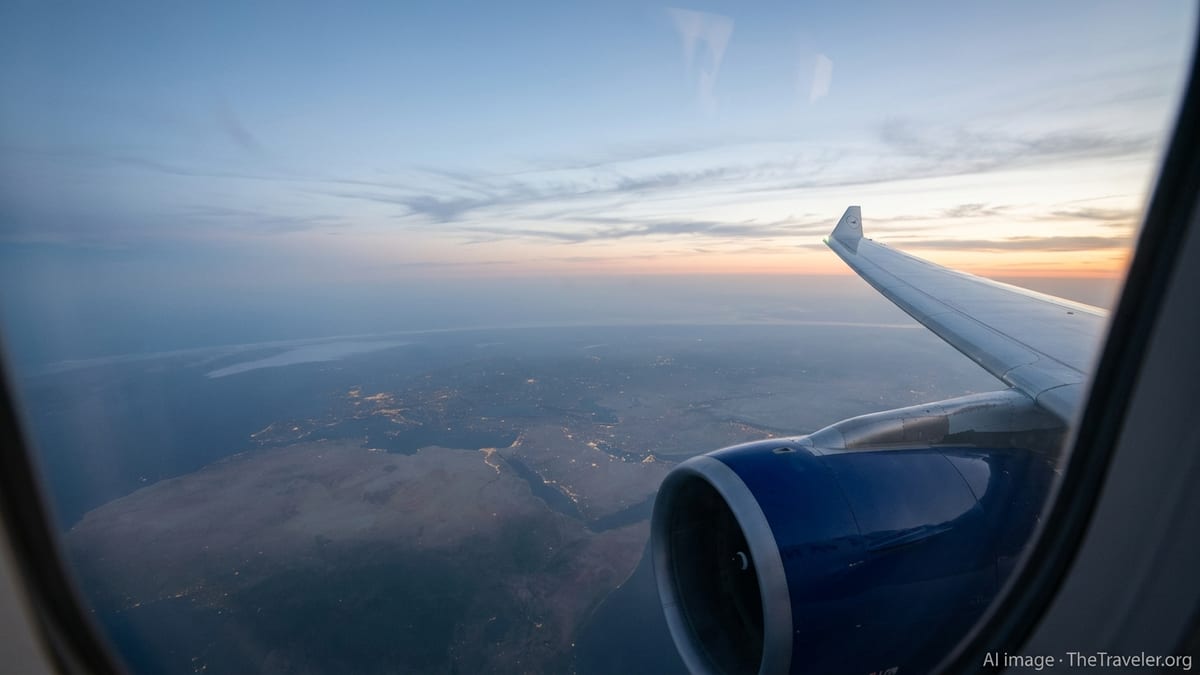
Conflict Zone Bulletins Redraw Global Flight Paths
The latest conflict between Israel and Iran has triggered one of the most significant disruptions to Middle East airspace in years, closing or severely restricting skies over Iran, Iraq, Israel, Jordan, Lebanon, and several Gulf states. Publicly available tracking data shows long-established Europe to Asia and Africa corridors that normally funnel through the region now running almost empty, as airlines divert around the affected zones.
According to published coverage, the European Union Aviation Safety Agency has issued conflict-zone guidance advising carriers to avoid large swathes of West Asian airspace. European airlines that once threaded aircraft through Iran and Iraq now route north via the Caucasus or south over Egypt and the Red Sea, adding several hours to some journeys. Travel analysis platforms report detours of two to five hours on select Europe–Asia routes, significantly increasing fuel burn and crew costs.
The closures have hit Gulf hubs such as Dubai, Abu Dhabi and Doha particularly hard. News reports indicate that temporary airspace shutdowns and capacity caps around these airports have resulted in thousands of cancellations and diversions since late February 2026, leaving hundreds of thousands of passengers waiting for rebooking. With the bridge between Europe and Asia temporarily weakened, airlines based in the European Union are recalibrating how and where they connect their long-haul networks.
Lufthansa Joins European Push Away From Middle Eastern Hubs
Lufthansa has emerged as one of the most visible symbols of this shift. Public documents and travel-industry briefings indicate that the German group, which also includes Swiss, Austrian Airlines and Brussels Airlines, has suspended services to several Middle Eastern destinations, including Tel Aviv, Beirut and Tehran, and sharply curtailed operations to key Gulf cities. The group has extended some suspensions through late March and April 2026 while it assesses the evolving security situation.
Rather than relying on Gulf stopovers, Lufthansa is emphasizing nonstop and one-stop itineraries that stay within or adjacent to European-controlled corridors. Flight data and timetable changes suggest that the carrier is concentrating capacity on direct links from its Frankfurt and Munich hubs to major Asian and African gateways, even when those flights require longer routings around both Russian and Middle Eastern airspace.
Industry analysis notes that other European airlines are following a similar pattern. British Airways and Air France have repeatedly paused or reduced flights to Gulf and Levant destinations during the current crisis while protecting and, in some cases, rebuilding direct links to cities in East and Southeast Asia. Virgin Atlantic, which has exited mainland China routes, is concentrating long-haul flying on direct connections between London and key markets in India and Africa, supported by alliance partners for onward regional access.
Direct Europe–Asia Links Become Pricier and More Precious
The combination of Russian airspace restrictions and fresh closures across the Middle East has pushed European airlines into narrow routing options to Asia, typically via Turkey, Central Asia or the Black Sea region. A recent fare analysis by a UK-based flight comparison platform found that prices on several nonstop Europe–Asia routes have surged by up to nearly 300 percent compared with pre-crisis levels, with passengers on some itineraries paying more than one thousand pounds extra for a direct flight.
Analysts attribute the spike to a simple imbalance between demand and capacity. Direct services between major European hubs and Asian cities remain relatively scarce, and every additional hour of flying increases costs in fuel, crew time and aircraft utilization. With many travelers wary of complex connections through a volatile Middle East, those limited nonstop seats on European carriers such as Lufthansa, British Airways, Air France and SAS have become premium products.
Reports also highlight that while flights between Europe and certain Gulf hubs, notably London to Dubai, have seen only modest fare changes, long-haul services that bypass the region are absorbing much of the operational strain. This dynamic strengthens the strategic value of direct Europe–Asia flights operated entirely outside Russian and Middle Eastern skies, even if they take longer and require intricate planning around remaining bottlenecks.
Europe–Africa Nonstops Gain Strategic Importance
Africa is also emerging as a beneficiary of the shift away from Middle Eastern hubs. For years, travelers between Europe and parts of Africa often connected via the Gulf, taking advantage of high-frequency services from Emirates, Qatar Airways and Etihad. With those carriers facing rolling disruptions and route suspensions, European airlines are finding fresh incentive to expand their own direct footprints.
Airbus route-development studies published in 2024 had already identified notable unserved or underserved African city pairs from Europe, including potential links to secondary cities in West and Southern Africa. These analyses suggested significant latent demand that could be tapped by long-range narrowbodies and new-generation widebodies based in Europe. The current airspace crisis is accelerating the business case for launching or reinforcing such nonstops, bypassing the Middle East entirely.
Reports from Nordic and Central European markets indicate that SAS and other regional carriers are reevaluating long-haul strategies, including potential Africa links, as traditional Asia routes remain constrained by both Russian and Middle Eastern closures. At the same time, European network airlines that already fly to African hubs such as Johannesburg, Nairobi and Lagos are marketing the advantage of single-airline, one-stop journeys from across Europe, avoiding uncertainty over transit through the Gulf.
Longer Flights, Higher Costs and a Redrawn Competitive Map
The operational consequences of bypassing the Middle East are substantial. Aviation briefings describe Europe–Asia and Europe–Africa flights now detouring over Egypt, the Mediterranean, Turkey and the Caucasus, or even further south over the Arabian Sea. These longer tracks can add two to four hours to a one-way trip, demanding more fuel, additional crews on ultra-long sectors and, in some cases, refuelling stops that further erode aircraft productivity.
Higher operating costs are feeding directly into ticket prices and reshaping competition. Chinese and other Asian carriers that still have access to shorter routings in some directions are capitalizing on their cost advantage, expanding Europe services and capturing price-sensitive demand. At the same time, European airlines are leaning on joint ventures and alliance partnerships to maintain network breadth, even as they prioritize direct control over key trunk routes to Asia and Africa.
For travelers, the shift means more choice of nonstops on certain long-haul routes, but fewer options via Middle Eastern hubs and greater volatility in schedules and fares. Travel advisories recommend that passengers heading to Asia or Africa build in extra connection time, stay alert to schedule changes and consider alternative routings that keep them within European or Asian carriers’ networks. With no immediate resolution to either the Russian or Middle Eastern airspace crises in sight, Lufthansa and its European peers appear set to continue consolidating their role as primary operators of direct links between Europe, Asia and Africa.