

More news on this day
Lufthansa is leaning harder into nonstop long-haul routes from Europe as unprecedented airspace closures across the Gulf force airlines to redraw global flight maps and sidestep once-dominant hub airports.
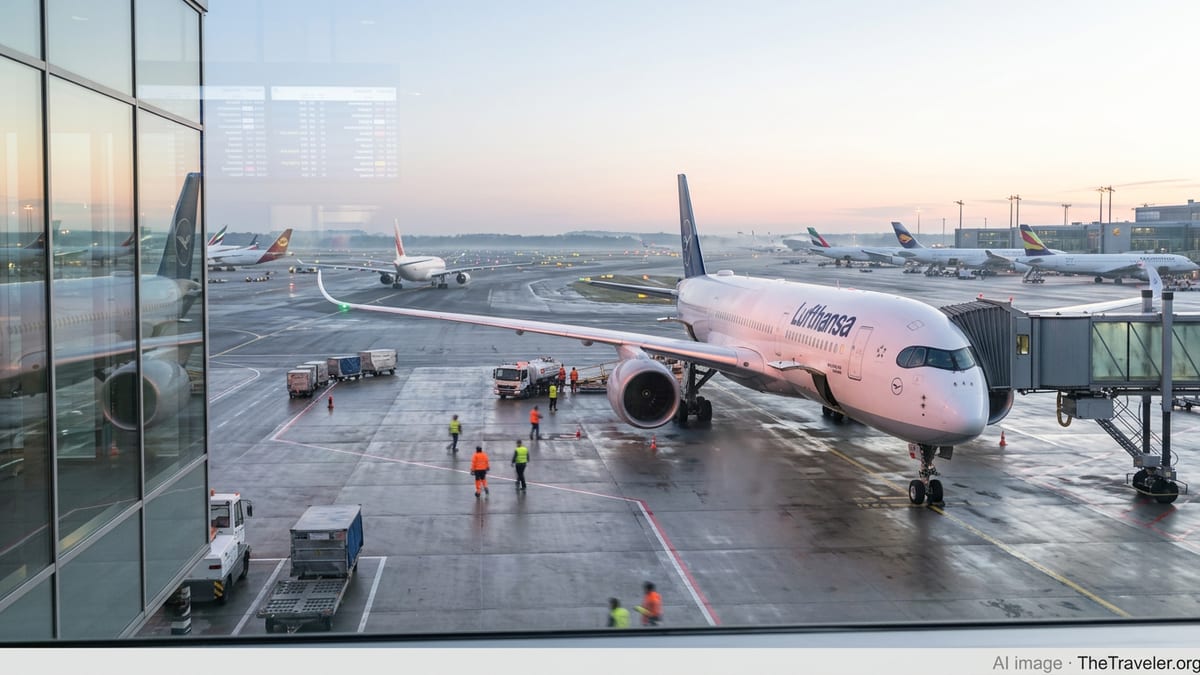
Lufthansa’s Network Pivot Meets a Sudden Gulf Shock
The German flag carrier entered 2026 already in expansion mode, adding and marketing new long-haul nonstop links from its Frankfurt and Munich hubs to key business and VFR markets in India, North America and Southeast Asia. The winter 2025/2026 schedule, published ahead of the season, highlighted a strategy built around more direct city pairs and reduced reliance on intermediate hubs.
That shift has collided head-on with a crisis few planners anticipated at this scale. Since February 28, 2026, coordinated military strikes involving the United States, Israel and Iran have prompted sweeping airspace closures across Iran, Israel, Iraq, Jordan, Qatar, Bahrain, Kuwait and the United Arab Emirates, among others. Authorities and airlines have responded by shutting or restricting key corridors that underpin Europe to Asia traffic.
For Lufthansa Group carriers, the immediate consequence has been the suspension of flights to Dubai and Abu Dhabi, alongside a halt to services to Tel Aviv, Beirut, Amman, Dammam, Erbil and Tehran through at least early March. The airline has also confirmed that it will not use the affected Gulf and neighboring airspaces during this period, forcing long-haul aircraft onto extended detours over Turkey, the Caucasus and, in some cases, the Red Sea.
Network planners now face a complex puzzle: protect the integrity of expanded nonstop routes while absorbing extra flying time, fuel burn and crew hours on sectors that traditionally passed through or over the Gulf corridor.
New Direct Routes Gain Strategic Weight
Lufthansa’s latest round of long-haul additions had already been pitched as a way to give travelers more point-to-point options and reduce exposure to congestion at third-country hubs. New and recently boosted services from Germany to major Indian cities, select US gateways and secondary Asian markets were framed as a response to strong demand and the appetite of premium and corporate travelers for shorter, simpler journeys.
The Gulf airspace shutdown has amplified the value of those direct links almost overnight. While flights to and from the Middle East itself are paused, many of Lufthansa’s intercontinental services that bypass the region altogether remain operational, albeit on modified routings to skirt closed skies. Travelers who might once have routed via Dubai, Abu Dhabi or Doha now find that a single European nonstop can be more predictable than multi-stop itineraries built around disrupted hubs.
Analysts say the crisis is likely to accelerate a trend that was already visible after the pandemic: large European and Asian carriers using widebody fleets to rebuild long-haul networks around their own hubs, rather than ceding transfer traffic to Gulf super-connectors. For Lufthansa, the timing of its expanded winter and summer schedules means additional capacity is already in place to capture some of the demand spilling away from the Gulf.
However, the airline must balance that opportunity against operational realities. Longer flight times on certain Asia-bound legs reduce aircraft and crew productivity, potentially constraining how aggressively it can grow frequencies on new and existing routes.
Rerouting Around the Gulf Reshapes Europe–Asia Flows
With swathes of Gulf and neighboring airspace off limits, Lufthansa and its peers have turned to two main alternatives: a northerly corridor threading between Turkey and the Caucasus, and a more southerly track looping over Egypt and the Red Sea. Both options add distance and time on already long sectors between Europe and South or East Asia.
Industry data and flight-tracking visuals from recent days show long-haul services that once sliced across the Gulf now bending sharply north or south, with block times extended by up to two hours on some city pairs. For Lufthansa, that translates into higher fuel bills per rotation and tighter crew duty margins, particularly on overnight services designed around finely tuned schedules.
The knock-on effects cascade through the network. Extended flight times can delay arriving aircraft into Frankfurt and Munich, compress connection windows for onward passengers and force last-minute reaccommodation when minimum transfer times are breached. On high-demand days, even small delays can ripple into missed connections on the very new long-haul routes Lufthansa is trying to promote as reliable alternatives to Gulf transfers.
Despite the turbulence, the carrier has maintained that safety and compliance with regulatory guidance are non-negotiable. Lufthansa continues to avoid the closed airspaces and is issuing flexible rebooking options for passengers whose itineraries touch the Middle East during the current suspension window.
Gulf Hub Disruptions Open a Competitive Window
The abrupt closure of Dubai, Abu Dhabi and Doha to regular transit traffic has undercut the foundations of a hub model that, for years, siphoned Europe–Asia and Europe–Africa flows through the Gulf at scale. Emirates, Qatar Airways and Etihad have all been forced to cancel or heavily reduce services, while airlines across Europe and Asia scramble to reframe their own offerings.
In this environment, Lufthansa’s emphasis on nonstop connectivity looks less like a gradual strategic pivot and more like an immediate competitive lever. Travelers stranded in South Asia or Africa, facing days-long waits for Gulf connections to resume, are increasingly considering itineraries that pair regional flights with direct long-haul services from European hubs. Corporate travel managers, in particular, are revisiting preferred-carrier agreements to prioritize options that do not rely on a volatile corridor.
The shift does not guarantee windfall gains for Lufthansa. Capacity constraints, crew availability and the need to maintain resilience on core transatlantic routes limit how much new demand it can absorb in the short term. Yet the perception change is powerful: direct flights that once competed largely on convenience and time savings are now framed as a hedge against geopolitical risk.
Strategists note that if Gulf airspace restrictions persist beyond March, pressure will grow on European and Asian carriers to lock in new traffic flows through fare sales, schedule tweaks and deeper alliances. Lufthansa’s position inside Star Alliance, coupled with its expanding long-haul footprint, puts it in a strong position to anchor alternative routings for partner airlines whose passengers previously relied on Gulf connections.
Travelers Face Uncertainty, but Options Are Shifting
For passengers, the immediate picture remains messy. Hundreds of thousands of travelers have been affected by cancellations and diversions since the first closures were announced on February 28, with airport terminals from Mumbai to London reporting surging crowds, long queues at rebooking desks and overnight stays in makeshift waiting areas.
Lufthansa customers booked to or via the Gulf and affected Middle East cities through the current suspension period are being offered free rebooking within specified dates, subject to availability and retaining the same origin and destination. Those whose journeys connect across Lufthansa’s broader long-haul network are urged to monitor flight status closely, as routings and timings can shift at short notice while airspace restrictions evolve.
At the same time, some travelers are discovering new patterns. Instead of flying from secondary European cities via Dubai or Doha, they are repositioning to Frankfurt or Munich to board nonstop flights to Asia, Africa or North America. Others are combining rail segments within Europe with intercontinental flights to avoid crowded regional airports and unpredictable feeder services.
How long these behaviors persist will depend on both geopolitics and airline scheduling. If Gulf skies reopen quickly and confidence is restored, many passengers may revert to familiar hub-and-spoke habits. But if closures stretch further into 2026, Lufthansa’s expanded long-haul network of direct routes could cement a more permanent realignment in how travelers move between continents.