

More news on this day
Travelers flying between Singapore, Germany and Malaysia faced fresh disruption this week after two key flights were cancelled, affecting connections from Changi Airport to Munich and Kuala Lumpur and underscoring the fragility of Asia’s busy aviation network.
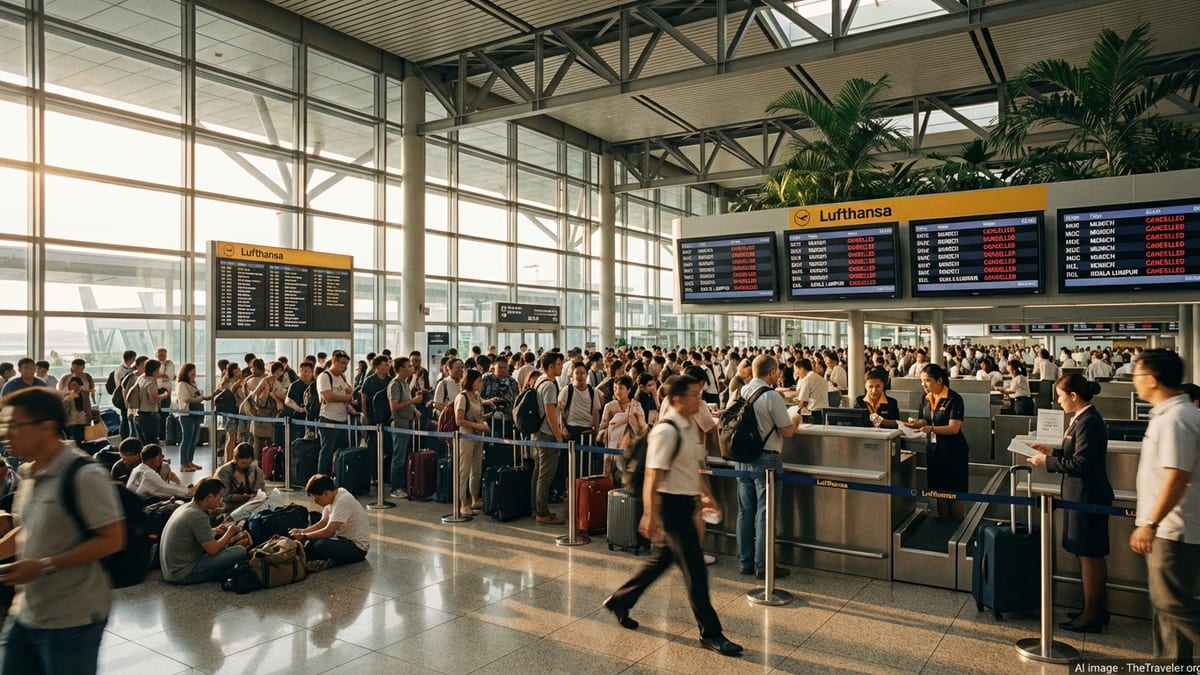
Fresh Wave of Disruption Hits Key Asian and European Hubs
The cancellation of two flights linking Singapore with Munich and Kuala Lumpur has added new strain to already busy air corridors, inconveniencing passengers traveling for business, tourism and onward long haul connections. Lufthansa and other carriers operating in and out of Changi Airport have confirmed schedule adjustments, citing operational constraints and wider pressures on regional networks.
The affected services include a Singapore to Munich connection regularly used as a gateway to Europe, as well as a short-haul route between Singapore and Kuala Lumpur that feeds traffic into Malaysia’s main aviation hub. While the cancellations involve a small number of flights in absolute terms, the impact has been magnified by high load factors, limited spare capacity and tightly timed onward itineraries during a peak travel period.
Passengers reported receiving same-day notifications of cancellation, rebooking offers on alternative services and, in some cases, overnight accommodation near airports. Airlines said they were working to accommodate disrupted travelers on the next available flights, but some itineraries involving multiple connections have required complete re-routing.
Regional aviation analysts note that although large-scale shutdowns across Asia have eased in recent months, isolated cancellations such as these highlight how operational issues in one city can quickly cascade across an interconnected system of hubs.
What We Know About the Cancelled Flights
According to operational data from flight-tracking and schedule platforms, two departures from Singapore that were due to serve Munich and Kuala Lumpur were scrubbed at short notice, triggering a series of schedule shifts for passengers and partner airlines. The Singapore to Munich link is commonly operated as an overnight long haul service that connects Southeast Asia to one of Lufthansa’s primary European hubs, offering onward flights across the continent and to North America.
The Kuala Lumpur service, by contrast, is a short regional hop typically scheduled multiple times per day between the neighboring capitals. It feeds passengers into Malaysia’s main international hub and supports both point-to-point traffic and longer journeys to South Asia, the Middle East and beyond. The cancellation of a single rotation on such an intensely trafficked corridor can still leave hundreds of travelers seeking alternative options, particularly when the aircraft is nearly full.
Operational details released so far point to a combination of factors behind the cancellations, including aircraft availability, crew scheduling constraints and knock-on effects from earlier delays on other routes. Airlines generally seek to protect their highest-yield long haul sectors first, meaning that a single technical or staffing issue can lead to targeted cancellations on specific city pairs.
While the disturbances currently appear contained to a limited number of flights, they have exposed pinch points along a route map that bridges Europe and Southeast Asia and reminded travelers that post-pandemic aviation is still navigating tight margins and complex logistics.
Impact on Passengers Traveling Via Singapore, Munich and Kuala Lumpur
For passengers, the immediate effect of the cancellations has been missed meetings, delayed holidays and an urgent scramble to rebook scarce seats. Travelers bound for Munich from Singapore faced the prospect of re-routing through other European gateways such as Frankfurt, Zurich or Istanbul, in some cases adding several hours to their journey times and introducing additional connections.
Holidaymakers and business travelers connecting through Singapore to Kuala Lumpur encountered a different set of challenges. With the route already heavily used by commuters, regional business passengers and tourists, same-day rebooking on alternative services has not been guaranteed. Some customers have been moved to flights departing from Seletar or re-accommodated on other regional carriers, while others were offered travel on later Changi departures.
Industry practice typically obliges airlines to provide meals, hotel stays or ground transport in the event of significant delays or overnight disruptions, depending on local regulations and company policy. In this case, affected travelers described a mixed experience: while some received hotel vouchers and assistance from airline staff, others reported long queues at customer service counters and limited information on next steps.
Travel agents across the region say they have been working through the night to re-issue tickets and secure seats on remaining services. Corporate travel managers, in particular, are examining whether to diversify routings for critical trips to reduce reliance on a single hub or carrier when schedules tighten unexpectedly.
Causes Behind the Latest Cancellations
Aviation experts say that while every cancellation has its own immediate cause, a blend of structural and short-term factors is driving the latest disruption. Staffing remains a key issue. Airlines and ground handlers across Asia and Europe are still rebuilding workforces after large cuts during the pandemic, and crew rosters remain vulnerable to illness, training bottlenecks and regulatory rest requirements that can quickly ripple through schedules.
Aircraft availability is another concern. Global supply chains for spare parts have not fully normalized, and several manufacturers and maintenance providers are working through backlogs. When a jet is taken out of service at short notice, airlines must decide which flights to protect and which to cancel, a decision influenced by demand patterns, regulatory obligations and alliance commitments.
Weather and air traffic management constraints also play a role. Congestion at major hubs, including those in Europe, can lead to slot restrictions and delays, which in turn push aircraft and crew out of position for subsequent flights. Even when weather in Singapore, Munich or Kuala Lumpur is stable, storms or congestion at an earlier stop can set off a chain reaction that reaches Southeast Asia hours later.
In the broader context, these isolated cancellations sit on top of a global aviation system that is still running close to capacity following a rapid rebound in travel demand. With load factors high and spare aircraft limited, the margin for error is thin, and relatively minor disruptions can be felt by passengers across multiple regions.
How Airlines Are Responding and Protecting Schedules
Lufthansa and other carriers operating between Singapore, Munich and Kuala Lumpur are now implementing contingency plans to stabilize their schedules and restore confidence among travelers. These steps include deploying larger aircraft on select services, temporarily reducing frequencies on lower-demand routes to free up capacity, and tightening maintenance and rostering buffers to reduce the risk of last-minute changes.
Airlines are also leaning on their alliance partners and codeshare arrangements to re-accommodate affected passengers more flexibly. A traveler originally booked on a cancelled Lufthansa service, for example, may be shifted to a partner airline operating a similar route or offered an alternate path through a different European hub. For passengers, this can mean new routing via Frankfurt, Zurich, Istanbul or other cities in exchange for reaching their final destination with minimal extra delay.
Digitization is playing a growing role in disruption management. Carriers have expanded their use of mobile apps and automated messaging to inform passengers of changes, offer self-service rebooking options and distribute electronic vouchers. This approach aims to reduce pressure on airport customer service desks and shorten the time it takes travelers to secure an alternative plan.
However, analysts caution that system-wide resilience will require more than technology. Investments in staff training, spare aircraft, and more flexible slot management regimes at congested airports are all being highlighted as medium-term priorities for carriers seeking to prevent small disruptions from becoming major events for passengers.
Advice for Travelers Facing Cancellations and Delays
For passengers booked on upcoming flights between Singapore, Munich and Kuala Lumpur, industry experts recommend taking a proactive approach in light of the latest disruptions. Checking flight status regularly in the 24 hours before departure, enabling app notifications and confirming contact details with airlines can help ensure that travelers receive timely alerts about any changes.
Frequent flyers also emphasize the value of allowing additional buffer time between critical connections, especially when journeys involve multiple carriers or tight layovers at busy hubs. Where possible, passengers may wish to opt for slightly longer connection times or more direct routings, even if they are marginally more expensive, to reduce the risk of missed flights if delays occur.
Passengers whose flights are cancelled or significantly delayed should familiarize themselves with their rights under applicable regulations and airline policies. Depending on the origin and destination of the journey and the cause of disruption, they may be entitled to refunds, rebooking on the earliest available service, meals, accommodation or, in some cases, monetary compensation. Keeping receipts for out-of-pocket expenses and documenting communication with airline staff can assist with subsequent claims.
Travel insurance is another tool that can provide a financial safety net during periods of heightened disruption. Policies differ widely, but many offer coverage for delays, cancellations and missed connections, subject to conditions and documentation requirements. Travel advisers recommend reviewing policy terms carefully before departure and ensuring that coverage aligns with the complexity and cost of the planned itinerary.
Regional Aviation Outlook After the Latest Setbacks
The cancellations on routes linking Singapore, Munich and Kuala Lumpur come at a sensitive time for Asia’s aviation sector. The region has seen a strong rebound in passenger volumes, driven by pent-up leisure demand and a revival in corporate travel, yet infrastructure and staffing have not always kept pace. As a result, even limited disruptions can prompt broader questions about reliability and capacity.
Industry forecasts suggest that Southeast Asia to Europe traffic will continue to grow over the next several years, with airlines adding new city pairs and increasing frequencies on established routes. Hubs such as Singapore and Kuala Lumpur are investing in terminal expansions, runway enhancements and digital passenger processing systems designed to smooth flows and accommodate more flights.
For European carriers like Lufthansa, Asia remains a crucial market, and maintaining dependable services via gateways such as Munich is central to their long haul strategy. Analysts expect that any short-term disruptions caused by cancellations will be closely studied, with carriers fine-tuning fleet plans, crew bases and maintenance locations to reduce vulnerability.
At the same time, competition on these corridors is intensifying. Asian, Middle Eastern and low-cost carriers are all vying for market share, and travelers have more choice of routing than ever. Reliable on-time performance, transparent communication during disruptions and flexible rebooking options are increasingly seen as differentiators that can win or lose loyalty when unexpected problems arise.
What the Disruptions Signal for Future Travel Planning
The latest cancellations from Singapore to Munich and Kuala Lumpur illustrate how a small number of disrupted flights can send ripples through global travel plans. For airlines, they are a reminder that schedule resilience must be built into every link of the chain, from fleet planning and staffing to air traffic coordination and digital customer service tools.
For travelers, these events underscore the importance of planning with uncertainty in mind. Flexible tickets, robust insurance policies and itineraries that avoid razor-thin connections can help mitigate the stress and financial impact of cancellations and delays. As routes between Asia and Europe continue to grow in popularity, informed travelers will increasingly weigh not only price and duration, but also the reliability and disruption-handling track record of the airlines they choose.
Aviation experts believe that as carriers and regulators absorb the lessons from each bout of disruption, overall resilience will improve. Yet with demand rising and operational constraints still present, occasional turbulence for passengers on routes such as Singapore to Munich and Kuala Lumpur is likely to remain a feature of the travel landscape in the near term.