

More news on this day
Lufthansa is marking its 100th anniversary in 2026 with a striking special livery now appearing on some of its most iconic aircraft, transforming everyday services into high-profile flying tributes to the German carrier’s history and design legacy.
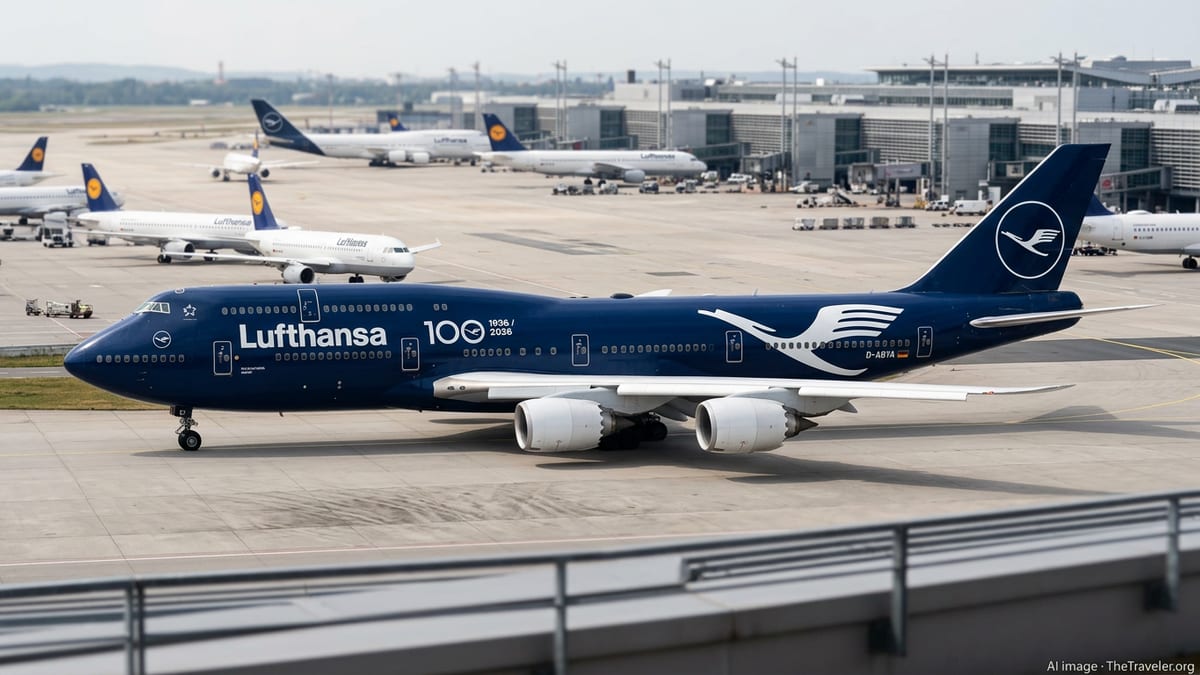
A Centennial Story Told on the Tarmac
The centenary livery is part of a broader campaign celebrating 100 years since the founding of the original Lufthansa in 1926. While the modern Lufthansa Group dates from later restructurings, the airline is anchoring its anniversary narrative in that early heritage, using the aircraft as moving billboards for its evolution from regional operator to global network carrier.
Central to the design is the company’s crane emblem, created in 1918 by graphic designer Otto Firle and regarded as one of the most enduring symbols in commercial aviation. The new scheme magnifies that motif to an unprecedented scale, using it as the organizing element across multiple aircraft types rather than a small detail on the tail.
The airline’s decision to spread the special livery across long haul and short haul fleets reflects a desire to ensure that both intercontinental travelers and intra-European passengers encounter the centennial branding. It also underlines Lufthansa’s emphasis on consistency of visual identity at a moment when competition for attention at major hubs such as Frankfurt and Munich is particularly intense.
Beyond pure branding, Lufthansa executives have framed the anniversary fleet as a way of reconnecting passengers and employees with the company’s origins and ambitions. The special paintwork coincides with broader centennial initiatives, from in-flight experiences to airport events, that aim to turn 2026 into a year-long celebration.
Iconic Types Chosen for the Anniversary Fleet
The heart of the 100th anniversary project is a curated group of aircraft that represent the breadth of Lufthansa’s modern operation. The flagship long haul contingent includes the Boeing 747-8, Airbus A380, Airbus A350-900 and Boeing 787-9, each chosen for their visibility on high-profile international routes and their significance within the fleet.
The Boeing 747-8, registered D-ABYN and named “Niedersachsen,” became the latest aircraft to join the anniversary line-up after emerging from a paint facility in San Bernardino, California, in early March. Returning to Frankfurt ahead of its first commercial service in the new colors, the four engine jumbo drew particular interest from aviation enthusiasts, reflecting the enduring appeal of the so-called Queen of the Skies on transatlantic routes.
Earlier in the anniversary rollout, an Airbus A380 based in Munich received the special livery following a multi week repainting program that covered more than 4,000 square meters of fuselage. That aircraft now shares the centennial colors with a Boeing 787-9 Dreamliner, the first to debut the scheme in late 2025, and at least one Airbus A350-900 operating out of Munich.
On the short haul side, Lufthansa has extended the design to the Airbus A320neo family, with multiple aircraft wearing the special colors on European services. This ensures that the centennial branding is visible not only at major intercontinental gateways but also on dense intra-European routes, where the airline competes closely with low cost and network rivals.
Design Language: Deep Blue, Giant Crane and Subtle Dates
Visually, the 100th anniversary livery marks a departure from Lufthansa’s relatively restrained standard scheme. The most immediately noticeable change is the deep, almost navy blue fuselage that replaces the familiar white dominated palette on the selected aircraft, giving them a more dramatic presence on the apron and in the air.
Dominating that dark background is an outsized white crane, stretched along the fuselage so that its stylized wings appear to blend into the aircraft’s own wings. On widebody types such as the 747-8 and A380, this treatment transforms the side-on view of the aircraft, with the emblem becoming a sweeping graphic element rather than a small roundel confined to the tail.
The livery also incorporates explicit anniversary references. The number 100 appears on the left side of the fuselage and on the underside, ensuring visibility from terminal windows and in-flight photography. On the right side, the inscription 1926 / 2026 connects the modern Lufthansa brand to its historical roots, a detail aimed at both history minded passengers and aviation enthusiasts.
Despite the bold palette shift, the design maintains continuity with Lufthansa’s current corporate identity, echoing the simplified lines and typography introduced in its most recent brand refresh. The result is a scheme that stands apart from the standard fleet without feeling like a retro throwback or a complete visual break.
From Frankfurt and Munich to the World
Operationally, the centennial aircraft are being deployed on a mix of flagship long haul and high density regional routes, maximizing visibility in key markets. The newly painted Boeing 747-8 is scheduled for flights from Frankfurt to destinations such as Los Angeles, where its arrival provides both a marketing opportunity and a visual spectacle for spotters at one of North America’s busiest airports.
The Airbus A380 in the anniversary colors is anchored in Munich, serving long haul routes to major cities in Asia and North America. This allows Lufthansa to showcase the livery at its secondary hub and to position the double decker as a symbol of the airline’s renewed investment in large capacity aircraft following the pandemic period.
Within Europe, the A320neo aircraft in the centennial scheme are making frequent appearances on routes linking Frankfurt and Munich with key capitals including London, Paris and Rome. Their shorter stage lengths mean more daily cycles and more takeoffs and landings in front of passengers and aviation photographers, multiplying the livery’s exposure.
Flight tracking platforms and enthusiast communities have already begun cataloguing the movements of the anniversary fleet, turning routine rotations into minor events among aviation fans. For Lufthansa, that level of organic attention extends the reach of the campaign far beyond traditional advertising channels.
A Broader Anniversary Strategy Beyond Paint
The special livery is only one facet of Lufthansa’s centennial program, which also encompasses in-flight product updates, commemorative merchandise and curated content highlighting milestones from the past century. The carrier has hinted at limited edition onboard items on selected flights operated by the anniversary fleet, from themed amenity kits to retro inspired service touches.
At its hubs, the airline is planning exhibitions and spotter friendly events timed to coincide with the arrival or departure of the specially painted aircraft. These activities aim to tap into the strong enthusiast community that has long followed Lufthansa’s fleet developments, particularly around the 747 and A380 programs.
Industry observers note that the centenary comes as Lufthansa undertakes major investments in new cabins and digital services, including its Allegris long haul product. Positioning the 100th anniversary livery on next generation aircraft such as the 787-9 and A350 helps align the nostalgic messaging of a centennial with the forward looking narrative of fleet renewal and sustainability.
As more aircraft receive the colors over the coming months, the anniversary fleet is set to become a recurring visual motif at airports across Europe, North America and Asia. For travelers, the sight of the deep blue fuselage and oversized crane could become a hallmark of long haul trips taken during this centennial year, subtly linking personal journeys with a century of commercial aviation history.