

More news on this day
Lufthansa Group has extended its suspension of flights across parts of the Middle East into March 2026, underscoring how the widening Iran conflict and rolling airspace closures are reshaping long haul travel between Europe, Asia and Africa.
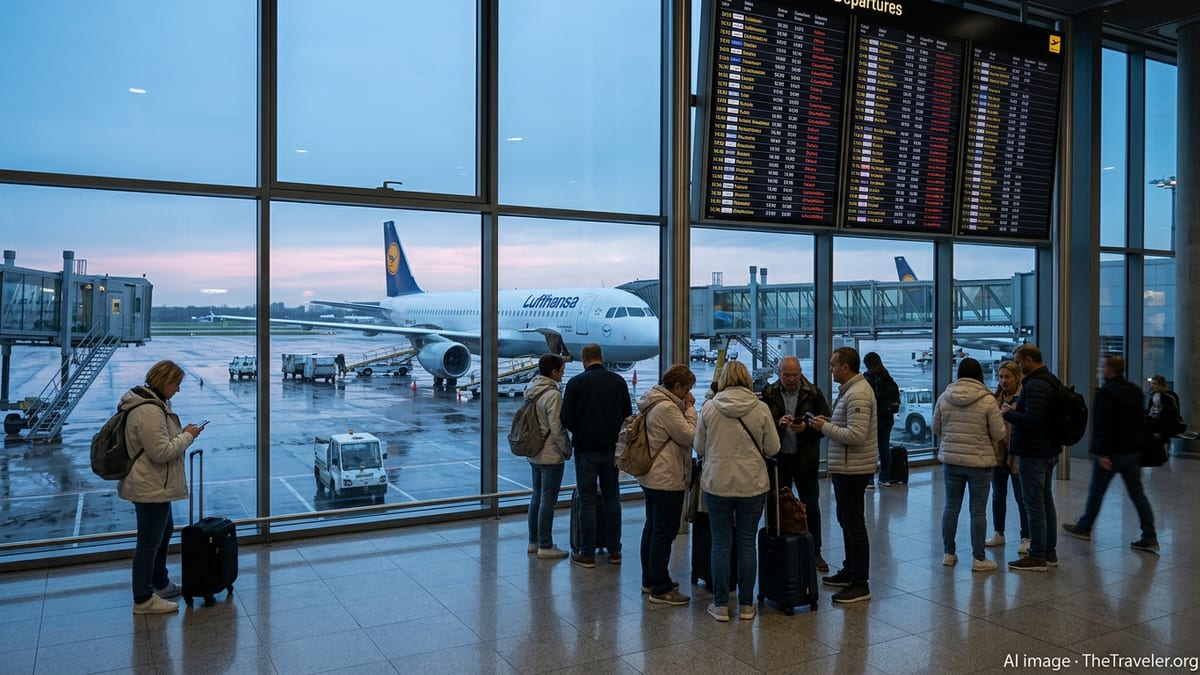
Extended Suspensions Signal Prolonged Instability
The German airline group, which includes Lufthansa, Swiss and Austrian Airlines, has progressively lengthened its pause on services to several high-profile destinations as the regional security picture has deteriorated. Initial cancellations focused on Tel Aviv, Beirut, Amman, Erbil, Dammam and Tehran through early March, but the group has since pushed its timetable well beyond the usual short-term risk window.
Industry briefings now indicate that Lufthansa’s Tehran suspension will run at least through the end of April 2026, while a rolling series of schedule cuts on routes to Israel and Lebanon is expected to extend into early 2026, with capacity only gradually restored as conditions permit. Aviation analysts say the pattern effectively amounts to a medium-term withdrawal from some markets and a marked downgrading of others, even as the airline maintains a presence at more distant hubs around the region.
Lufthansa has framed the decisions as precautionary steps rooted in its safety culture, arguing that unpredictable missile activity, GPS interference and fast-changing military notices to airmen make stable planning for certain air corridors impossible. Executives have also pointed to the need to protect crews who would otherwise be positioned overnight in cities close to active fronts.
Airspace Closures Redraw Europe–Asia Flight Paths
The extended suspensions come against a backdrop of sweeping airspace restrictions stretching from the eastern Mediterranean to the Gulf. Portions of the skies over Iran, Israel, Iraq, Syria, Kuwait and parts of the United Arab Emirates and Saudi Arabia have been periodically closed or heavily constrained since joint United States and Israeli strikes on Iran in late February, followed by retaliatory missile and drone attacks.
For Lufthansa and other European carriers, these closures sever some of the most direct links between Europe and South or East Asia, forcing long detours around conflict zones. Flights that once threaded through Iraqi or Iranian airspace now bend north over Turkey and the Caucasus or swing far south over Egypt and the Red Sea, adding up to an hour or more to some journeys and complicating crew duty schedules.
Data from flight-tracking and aviation analytics firms show thousands of cancellations across the wider Middle East in the first days of the crisis, followed by a patchwork reopening centered on Gulf hubs such as Dubai and Abu Dhabi. Even as Emirates and Etihad tentatively resume limited services, European airlines are taking a more conservative stance, with Lufthansa in particular signaling that full use of affected airspace is unlikely for many months.
Knock-on Effects for Travelers Worldwide
The practical consequences for travelers extend far beyond the cities explicitly listed in Lufthansa’s suspension notices. With Tel Aviv, Beirut and Tehran cut from the network for an extended period and services to other nearby points substantially thinned, passengers from Europe, North America and Asia who rely on the group’s hubs in Frankfurt, Munich, Zurich and Vienna are seeing fewer options, tighter connections and higher fares on remaining routes.
In the first week of disruption, hundreds of thousands of passengers across the Middle East were stranded or forced to rebook as airlines cancelled sectors on short notice. Travel agents report that itineraries involving Gulf and Levantine stopovers have become particularly fragile, with last-minute rerouting now common as airlines juggle aircraft and crew around airspace bottlenecks.
Consumer advocates note that travelers booked on Lufthansa Group flights to affected destinations are generally being offered rebooking or refunds, but warn that securing alternative seats can be challenging at peak travel periods. They recommend that passengers with nonessential trips to the region in the coming months maintain flexible plans, avoid tight connections through any single hub, and monitor their booking status closely as schedules are revised.
Competitive Landscape Shifts as Some Carriers Edge Back
Lufthansa’s extended caution contrasts with the more rapid return of some Gulf and regional carriers, which are gradually rebuilding operations as specific air corridors reopen and military activity shifts. Emirates and Etihad have begun operating a limited number of services from Dubai and Abu Dhabi, focusing on trunk routes and leveraging their geographic position at the crossroads of Europe–Asia traffic.
At the same time, other European airlines such as Air France-KLM and British Airways have taken a mixed approach, restoring certain routes while continuing to avoid the most volatile airspace blocks. The result is an unusually uneven network map in which some airports function as heavily constrained islands of connectivity while others, including Beirut and Tehran, remain largely disconnected from European flag carriers.
Analysts say Lufthansa’s stance reflects both its traditionally conservative risk profile and the particular exposure of its long haul fleet to east–west flows that intersect directly with conflict-affected skies. By effectively writing off some traffic flows into 2026, the group is betting that capacity redeployed to safer markets will offset the revenue lost from temporarily abandoned routes.
Industry Braces for a Longer-Term Realignment
Beyond the immediate schedule changes, Lufthansa’s move to extend suspensions into 2026 is being read by aviation strategists as a sign that airlines are preparing for a structurally different Middle East operating environment. With Iran warning of further escalation in the Strait of Hormuz and drone and missile incidents reported as far afield as Cyprus, insurers and risk assessors are treating large swathes of regional airspace as persistently high hazard.
That assessment feeds into higher operating costs, from war-risk insurance premiums to fuel burned on longer routings, which eventually flow through to ticket prices. If the current pattern holds, travelers may see lasting shifts in the preferred corridors between Europe and Asia, with more traffic funneled over Türkiye, Central Asia and North Africa and fewer flights skirting the Gulf and Levant.
For now, Lufthansa Group’s message to passengers is one of caution and flexibility. With suspensions on some Middle East routes stretching into March 2026 and beyond, the carrier is effectively telling travelers to treat the region as a zone of chronic volatility rather than a temporary hotspot, and to plan their journeys with that new reality in mind.