

More news on this day
Lufthansa is racing to overhaul flight schedules and contingency plans after pilots confirmed a 48-hour strike from Thursday, a move that threatens to disrupt hundreds of passenger and cargo services departing from Germany and heap fresh pressure on Europe’s second-largest airline group.
Get the latest news straight to your inbox!
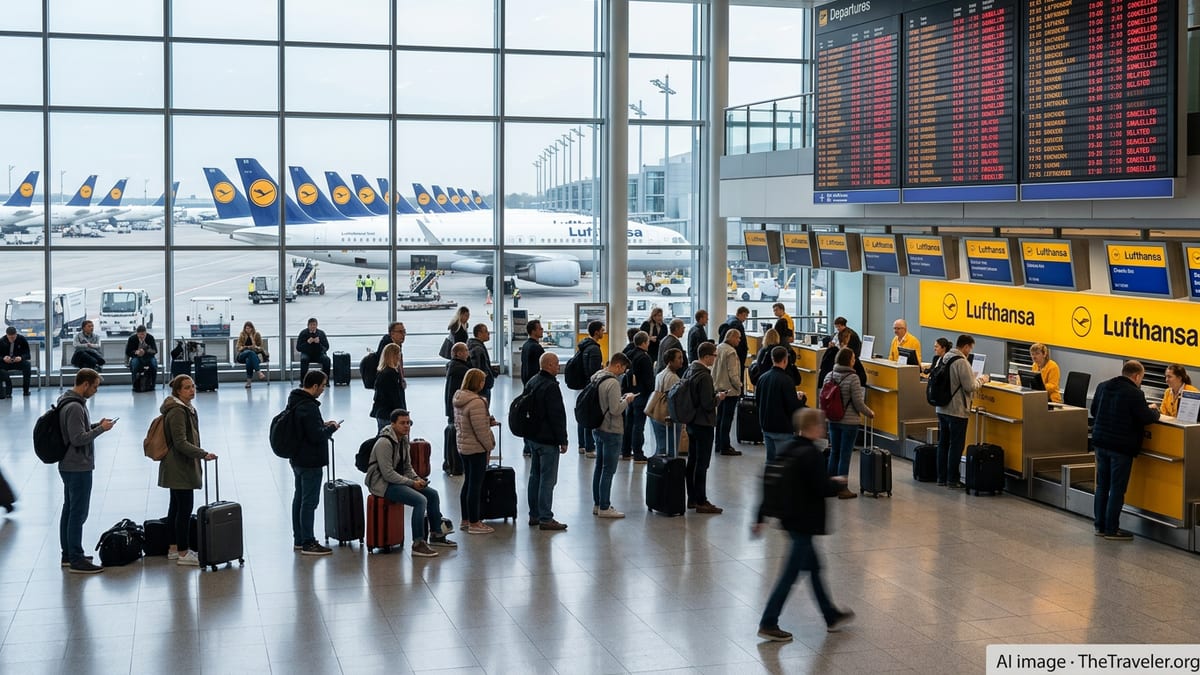
Two-Day Walkout Targets Core Lufthansa Operations
The Vereinigung Cockpit pilots union has called on more than 5,000 pilots at Lufthansa’s mainline carrier, Lufthansa Cargo and regional subsidiary Lufthansa CityLine to stop work from 00:01 on March 12 until 23:59 on March 13. The action focuses on flights departing from German airports, creating acute pressure at hubs such as Frankfurt and Munich, as well as key regional bases.
The strike follows an earlier one-day stoppage in February that led to the cancellation of around 800 flights and disrupted travel for roughly 100,000 passengers. With double the duration and a wider set of operations targeted this time, aviation analysts expect the impact to be significantly larger, particularly on short- and medium-haul routes within Europe and on feeder services linking to long-haul flights.
Lufthansa has condemned the escalation as disproportionate, arguing that talks on a new pay and pension package remain possible. The carrier says it is working “intensively” on a special timetable built around non-striking group airlines and partner carriers, but concedes that substantial cancellations are unavoidable given the short notice and the central role of the pilots involved.
The walkout comes at a delicate moment for the German flag carrier, which has been rebuilding capacity, investing in new aircraft and positioning itself as a premium option on transatlantic and intra-European routes. A prolonged or repeated wave of industrial action could erode those gains and unsettle corporate clients that value reliability above all.
Pension Standoff at the Heart of Labour Dispute
At the core of the confrontation is a long-running dispute over pensions and retirement security for flight crew. Vereinigung Cockpit says that despite months of intermittent bargaining since a strike ballot last year, Lufthansa has not tabled a credible offer that addresses concerns over future pension levels and the transition from legacy schemes to newer arrangements.
Union leaders argue that pilots have already accepted far-reaching changes in recent years as the airline navigated the pandemic downturn and competitive pressure from low-cost carriers. They insist that the current negotiations are about safeguarding sustainable retirement benefits for both veteran aviators and younger pilots who could face less generous terms under revised schemes.
Lufthansa, for its part, maintains that it needs more cost‑flexibility and modernized benefits to fund fleet renewal and remain competitive against European and Gulf rivals. Management has signalled willingness to keep talking, but has warned that overly expensive pension commitments could constrain investment and hiring at a time when demand for air travel is rising.
The standoff reflects wider tensions across Europe’s aviation sector, where unions are increasingly focused on inflation, work-life balance and post-pandemic staffing pressures. Recent disputes at carriers elsewhere in the region over pay and rosters suggest that labour relations will remain a central strategic challenge for network airlines in 2026.
Operational Overhaul as Special Timetable Takes Shape
In response to the planned strike, Lufthansa is constructing a special timetable that prioritizes essential connections, consolidates lightly booked services and leans on unaffected group airlines to backfill capacity. The company has indicated that flights operated by Austrian Airlines, SWISS, Eurowings, Air Dolomiti, Edelweiss, Discover Airlines and Lufthansa City Airlines are not covered by the current strike call and are expected to operate largely as scheduled.
Within Germany, Lufthansa is again turning to Deutsche Bahn as a key partner, allowing customers booked on cancelled domestic flights to exchange their tickets for rail travel at no extra cost. The airline is recommending that passengers secure seat reservations on long‑distance trains, as demand is expected to spike during the strike window, particularly on trunk routes between major cities and Frankfurt Airport.
To reduce knock‑on disruption, network planners are focusing on keeping long‑haul operations as stable as possible by relying on partner metal and interline agreements where feasible. Nonetheless, disruptions to feeder flights mean some long‑haul travelers will face missed connections or extended layovers, especially those transiting Frankfurt or Munich from secondary European and German airports.
Lufthansa has warned that irregularities may ripple beyond the official strike period as aircraft and crew rotations take time to normalize. The carrier currently expects to move back toward a regular schedule from Saturday, March 14, but notes that individual routes could experience lingering delays or equipment changes depending on operational constraints.
Middle East Flights Exempt but Global Knock-On Effects Likely
In a notable carve-out, Vereinigung Cockpit has exempted flights to several countries in the Middle East from the strike, citing the tense security environment and the need to maintain connectivity for evacuations, family travel and critical business links. Services to destinations including Egypt, Israel, Jordan, Qatar, Saudi Arabia and the United Arab Emirates are expected to operate, subject to airspace and safety considerations.
Even with those exemptions, the two‑day stoppage is likely to send shockwaves across Lufthansa’s global network. Many itineraries originating outside Germany still rely on a German departure leg during the affected window, particularly for passengers connecting onward from Frankfurt and Munich to Eastern Europe, Africa, South Asia and the Americas.
Travel agents report a surge in rebooking requests from customers in North America and Asia who face uncertainty over onward Lufthansa legs while their long-haul sectors remain intact with partner airlines. Some are repositioning via alternative hubs operated by Star Alliance members or switching to unaffected Lufthansa Group carriers where inventory allows.
Cargo flows are also in the crosshairs, with Lufthansa Cargo’s freighter operations subject to the strike. Freight forwarders expect short-term bottlenecks on high-yield lanes out of Germany, particularly for automotive, pharmaceutical and just-in-time manufacturing shipments. Where possible, time‑critical freight is being shifted to bellyhold capacity on unaffected carriers or rerouted via neighboring hub airports.
What Passengers Should Do in the Coming Days
For travelers, the most urgent advice is to verify the status of their bookings and ensure that contact details are correctly stored in reservation profiles, as Lufthansa is using automated messaging to alert customers when flights are cancelled or rebooked. Passengers whose flights are marked as operating are still urged to monitor their journeys closely, given the risk of late schedule adjustments as the special timetable is finalized.
Those holding tickets on domestic German routes that are cancelled can typically switch to Deutsche Bahn at no additional charge, using the airline’s ticket as a rail voucher on the day of issue and the following day. For international itineraries, rebooking options will depend on fare conditions, seat availability and whether the journey is issued on Lufthansa’s ticket stock or that of a partner carrier.
Consumer advocates are reminding passengers that European air passenger rights continue to apply, obliging airlines to provide care such as meals, refreshments and hotel accommodation in certain circumstances during extended disruptions. However, the question of cash compensation for strike-related cancellations can be complex and may hinge on how regulators classify the industrial action and the extent of the airline’s control over events.
With negotiations between Lufthansa and Vereinigung Cockpit still deadlocked on the eve of the walkout, attention is turning to whether the two‑day action will be a one‑off show of force or the prelude to a broader campaign of rolling strikes. For now, travelers planning to pass through Germany at the end of the week are being urged to plan for delays, keep itineraries flexible and build in extra time for critical connections.