

More news on this day
Lufthansa is bracing for extensive flight disruption after the German pilots’ union Vereinigung Cockpit announced a new 24-hour walkout, adding fresh turmoil to a spring of labor unrest across Europe’s skies.
Get the latest news straight to your inbox!
Fresh industrial action intensifies pressure on Europe’s largest airline
According to recent German and international media reports, Vereinigung Cockpit has called pilots at Lufthansa’s mainline passenger operations and cargo arm out on strike for a full day, running from 00:01 to 23:59 local time. The action follows a series of stoppages in February and March that already forced Lufthansa to cancel hundreds of flights and operate a heavily reduced schedule.
Coverage of the dispute indicates that the latest strike call stems from a deadlock over company pension arrangements and broader conditions for roughly 4,800 pilots. The union has argued that management plans would significantly weaken existing retirement benefits, while Lufthansa has cited cost pressures and competitiveness concerns in a challenging long-haul market.
In previous walkouts this year, Lufthansa responded with special timetables, prioritizing long-haul links to key hubs while trimming much of its short and medium haul network within Europe. Publicly available information from aviation outlets suggests a similar strategy is likely again, with the carrier expected to warn travelers that only a portion of scheduled services can be operated.
The renewed pilot strike adds to a wave of labor disputes at German airports that have involved security staff and ground handlers in recent months. For travelers, the result has been an almost continuous risk of disruption on what is traditionally one of Europe’s most reliable airline networks.
Cabin crew strike compounds disruption risk for April travelers
The latest pilot action comes just as Lufthansa is already contending with a separate walkout by cabin crew, called by the independent union UFO. That stoppage, set for Friday 10 April, targets departures operated by the Lufthansa mainline brand from Frankfurt and Munich between 00:01 and 22:00, with additional disruption expected at several German airports served by regional subsidiary CityLine.
Union statements reported in German media describe the cabin crew dispute as focused on higher pay, improved roster predictability and better protection for staff at CityLine amid restructuring plans. After strike ballots produced clear majorities for industrial action, UFO declared talks with management exhausted and opted for a full-day stoppage affecting both domestic and international flights.
The overlap between pilot and cabin crew unrest increases the likelihood that some flights will be hit by multiple labor actions in quick succession. Passengers flying through Frankfurt or Munich, particularly those relying on tight connections, face an elevated risk of cancellations, missed onward flights and overnight delays.
Travel industry analysts quoted in recent coverage say the accumulating disruptions are beginning to weigh on Lufthansa’s brand just as it is trying to consolidate a post-pandemic recovery and roll out new cabin products. Business travelers, who often prize reliability over marginal fare differences, may temporarily shift bookings to rivals or rail alternatives on short-haul routes within Germany.
What passengers can expect at airports during the strike
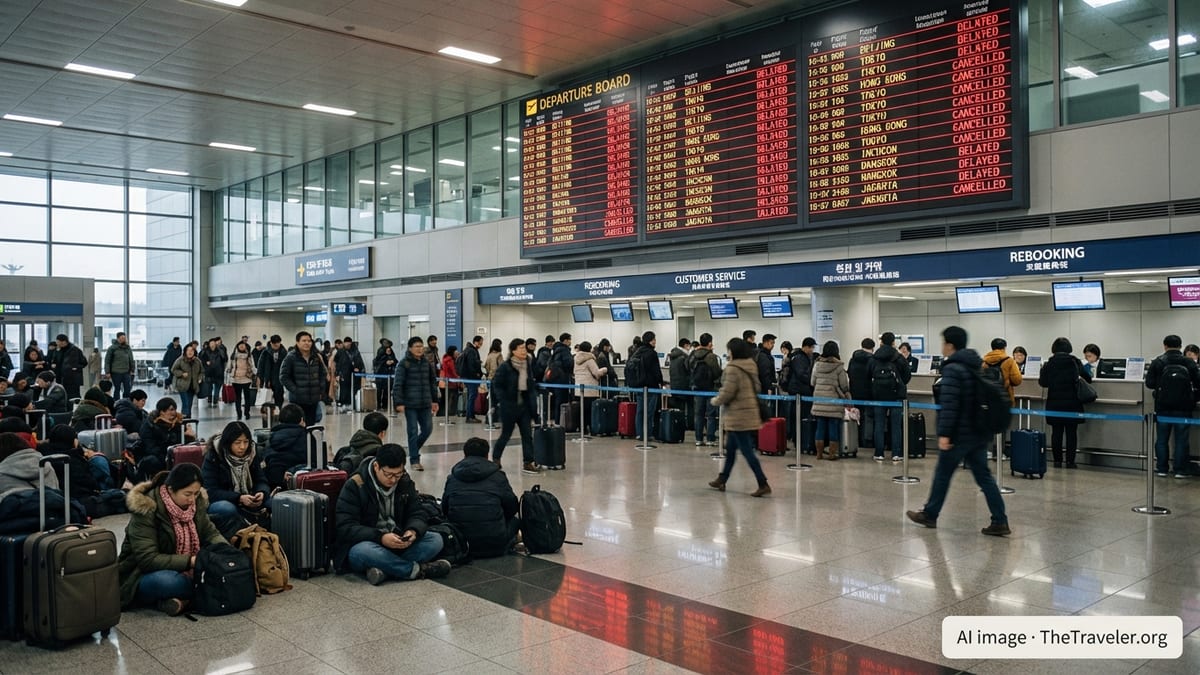
Based on previous strike days, travelers can expect crowded terminals, long lines at service counters and frequent schedule changes in the 24 to 48 hours surrounding the pilot walkout. Lufthansa has typically advised passengers to check their flight status repeatedly on the day before departure and again shortly before setting out for the airport, as additional cancellations are often loaded gradually as crew availability becomes clearer.
Public information on the airline’s disruption policies shows that Lufthansa generally offers free rebooking on alternative dates or routes where space is available. For domestic routes within Germany, the carrier often permits ticket exchanges for rail travel on Deutsche Bahn services, giving passengers an option to avoid airport congestion altogether on affected days.
For long haul travelers, the situation is more complex. Transatlantic and Asia bound flights may be prioritized, but schedules can still be thinned or retimed. Passengers connecting from partner airlines onto Lufthansa-operated segments within Europe are particularly vulnerable, as a missed onward leg might require an overnight stay or rerouting through a different hub city.
Travel forums and consumer advisories stress the importance of keeping boarding passes, disruption notices and receipts for any out of pocket expenses. Depending on the exact circumstances and applicable regulations, some travelers may later be able to claim compensation or reimbursement for meals, hotels and alternative transport if their flights are significantly delayed or canceled because of the strike.
Labor dispute highlights structural challenges at Lufthansa
The renewed confrontation between Lufthansa and its pilots underscores wider tensions in Europe’s aviation sector as airlines attempt to balance rising labor costs, volatile fuel prices and intense fare competition. Analysts note that the German group is implementing a multi year turnaround program aimed at restoring margins, reducing debt accumulated during the pandemic period and investing in fleet renewal.
For unions, the current round of talks has become a test of how far management can go in altering long standing benefit structures and working patterns. Vereinigung Cockpit has pointed to strong passenger demand and recent group profits as evidence that the company can afford to maintain more generous pension arrangements, while the airline has framed the issue as essential to safeguarding long term competitiveness against low cost and Gulf carriers.
In parallel, cabin crew and ground staff have pressed for higher wages to keep pace with inflation in Germany, as well as more predictable rosters in an operation that has become increasingly complex with the growth of joint ventures and partner airlines. The result has been a fragmented bargaining landscape in which several unions with differing priorities can call overlapping strikes, increasing the impact on the traveling public.
Observers of European labor relations say the outcome of the current disputes at Lufthansa may influence negotiations at other network carriers, where similar tensions over pay, pensions and staffing levels are emerging. The stakes are therefore not limited to one airline’s spring schedule, but touch on broader questions about the balance of power between airline management and highly skilled flight crews.
Advice for travelers planning upcoming trips
With fresh strikes adding uncertainty, travel experts recommend that passengers with imminent Lufthansa bookings take proactive steps to protect their plans. Flexible tickets or those booked directly with the airline are generally easier to rebook than complex itineraries stitched together across multiple carriers.
Travel insurance policies that include disruption coverage can also provide a safety net, although the precise treatment of strikes varies between providers. Passengers are encouraged to review policy wording carefully to understand whether airline labor actions are covered events and what documentation would be required to support a claim.
For non essential trips, some travelers may decide to shift journeys away from forecast peak disruption days, especially where alternative carriers or train connections are readily available. Those who must travel on the affected dates are advised by public travel advisories to allow extra time at the airport, travel with carry on luggage where possible and maintain flexible expectations about exact departure times or routings.
As the dispute between Lufthansa and its pilot and cabin crew unions continues, the coming weeks are likely to remain unsettled for passengers. Each new strike call reinforces the message that industrial relations at one of Europe’s flagship airlines are entering a more confrontational phase, with ripple effects felt across the continent’s already busy air travel network.