

More news on this day
Germany’s Lufthansa is facing a renewed risk of flight attendant strikes after cabin crew representatives rejected management demands for sweeping changes to work rules, raising the prospect of fresh disruptions for travelers just weeks after coordinated walkouts hit the airline’s network.
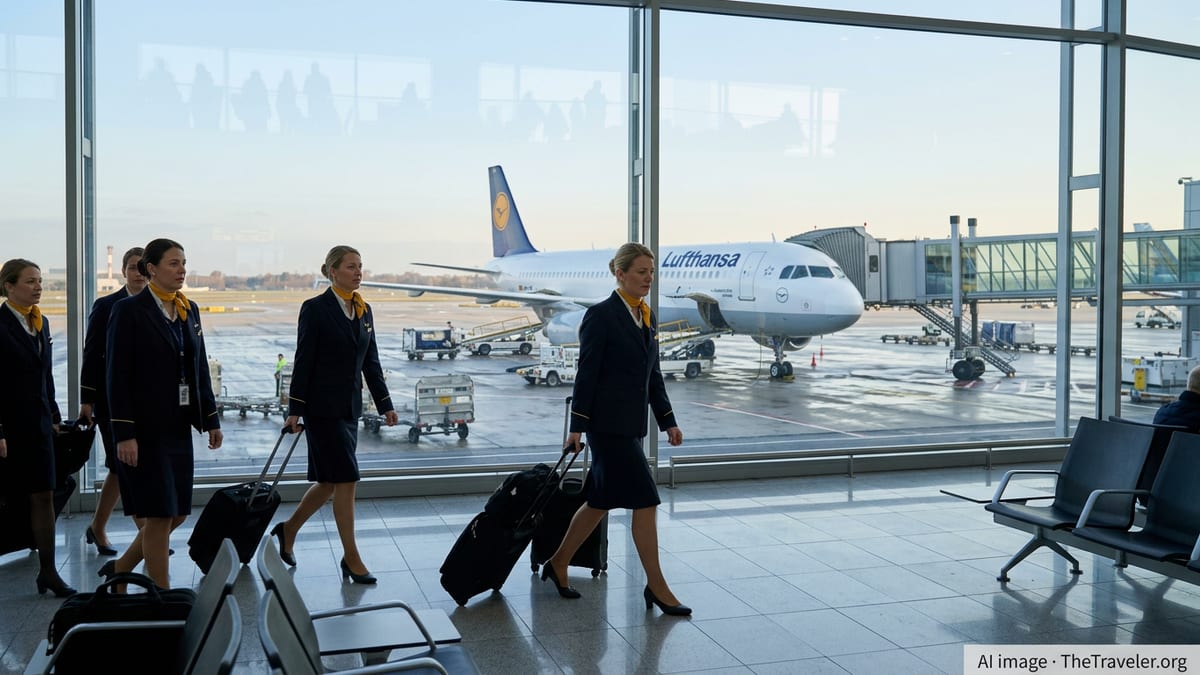
Union Rejection Escalates Labor Standoff
The latest confrontation centers on Lufthansa’s push for what insiders describe as a radical overhaul of flight attendant work conditions, including scheduling, duty times, and staffing patterns. The cabin crew union, represented primarily by the Unabhängige Flugbegleiter Organisation, has rejected the proposals outright, arguing that they would effectively roll back long-fought protections and worsen an already strained work-life balance for crew.
Union officials say they will not return to the bargaining table unless the company significantly softens its stance. They accuse Lufthansa of using cost pressures and competition from low cost rivals to justify a structural downgrade in pay scales and benefits, particularly through growth at subsidiaries where starting salaries and allowances are lower than at the mainline carrier.
Lufthansa, for its part, frames the changes as essential for safeguarding long term competitiveness and funding fleet renewal and product upgrades. Management points to thin margins and rising labor and infrastructure costs, insisting that a more flexible cabin crew agreement is necessary to protect jobs in the long run and maintain a strong hub presence in Frankfurt and Munich.
The hardening of positions on both sides has left negotiations effectively frozen, with only informal contacts continuing in the background. That deadlock heightens the risk that the union will once again reach for its most powerful tool: strike action that can ground hundreds of flights in a single day.
Strike Ballots and Recent Walkouts Weigh on Travelers
The renewed tension comes on the heels of a wave of industrial action that has already rattled traveler confidence in Germany. In February, a coordinated 24 hour strike by pilots and cabin crew forced Lufthansa to cancel a large share of its schedule, disrupting tens of thousands of passengers and triggering a scramble for rebookings across Europe.
More recent labor unrest and weather related disruption at major German hubs have reinforced the perception of fragility in the country’s aviation system. Frankfurt and Munich, two of Europe’s key transfer gateways, have seen repeated bouts of cancellations over the past year due to strikes not only by airline staff but also ground handlers, security workers, and public sector employees.
Within this context, the possibility of a fresh strike mandate among Lufthansa’s flight attendants is likely to weigh heavily on both leisure and business travelers planning spring and early summer trips. Advance bookings to and through Germany remain strong, but travel agents report rising concern from clients who fear last minute cancellations and complex rerouting.
Strike ballots typically give unions significant leverage, even before a single flight is grounded. The mere threat of renewed action can pressure management to relax its demands, while also encouraging passengers to hedge their bets with flexible tickets or alternative routings via competing hubs in Zurich, Vienna, Amsterdam, or Paris.
Cost Pressures, Competitors and New Subsidiaries
Underpinning the dispute is a structural shift in Lufthansa’s business model. To cut unit costs and respond to nimble European and Gulf rivals, the group has leaned increasingly on a web of subsidiaries with differing pay and conditions. One of the most contentious points for cabin crew unions is the expansion of a newer subsidiary that operates under lower wage scales and a leaner benefit structure than the mainline carrier.
Union leaders argue that this approach amounts to internal outsourcing and undermines the traditional collective agreements that made Lufthansa one of the more secure and attractive employers in European aviation. They warn that unchecked expansion of lower cost units will hollow out career prospects for young flight attendants and deepen divisions within the workforce.
Company executives counter that without such structural changes, Lufthansa risks losing market share on key European and long haul routes. They point to rising competition from Gulf carriers, low cost European airlines, and even rail operators on shorter segments within Germany, all of which put pressure on yields. In recent financial reports, the group has flagged labor disputes and strike risks among cockpit and cabin crews across several subsidiaries as a material business risk.
Balancing these cost pressures with the need to maintain service quality is particularly sensitive for Lufthansa, which sells itself as a premium network carrier. Flight attendants are central to that proposition, and prolonged conflict with cabin crew could erode the brand’s reputation at a time when travelers have more choice than ever.
What Rising Strike Risk Means for Air Passengers
For travelers, the immediate concern is uncertainty. While no new strike dates have been formally announced in the latest round of tensions, the breakdown in talks and uncompromising rhetoric on both sides suggest that the probability of renewed walkouts has increased. Given the experience of recent strikes, even a 24 hour stoppage can trigger a cascade of cancellations and delays that echo for several days.
Industry analysts say that passengers with near term bookings on Lufthansa or its German hubs should monitor their reservations closely and consider building extra flexibility into their plans. This can include allowing longer connection times, opting for earlier flights in case of same day disruption, or choosing tickets that can be more easily rebooked in the event of industrial action.
The timing of any potential strike will be critical. A stoppage coinciding with upcoming holiday periods or major trade fairs in Frankfurt, Berlin, or Munich would magnify the impact, stranding a larger number of international visitors and business travelers. That scenario would also increase pressure on Lufthansa and the unions to find a compromise that limits the economic fallout for the wider German tourism and travel sector.
For now, both sides insist publicly that a negotiated solution remains possible. But unless Lufthansa and the cabin crew union can quickly narrow their differences over work rules and the role of lower cost subsidiaries, the threat of new flight attendant strikes will continue to cast a shadow over travel plans to and through Germany.
Broader Implications for Germany’s Aviation Landscape
The standoff at Lufthansa has implications beyond a single airline, touching the broader aviation labor climate in Germany and across Europe. Recent years have seen a revival of industrial action by pilots, flight attendants, and ground staff as they seek to claw back purchasing power lost to inflation and push back against structural changes introduced during and after the pandemic.
Germany’s major airports are key gateways not only for tourism but also for the continent’s export driven economy. Each round of strikes carries a measurable cost in missed connections, delayed cargo, and lost productivity. Policymakers and industry groups worry that recurring disruptions could encourage some long haul passengers and global businesses to route more traffic through alternative European hubs perceived as more stable.
The outcome of Lufthansa’s dispute with its flight attendants will be closely watched by other airline workforces negotiating new contracts. A deal that leans heavily toward management’s desired flexibility could embolden carriers elsewhere in Europe to press for similar changes, while a union victory in preserving traditional work rules might stiffen labor’s resolve in pending negotiations at other airlines.
For now, travelers eyeing Germany for business trips or holidays face a familiar equation: attractive fares and extensive connectivity, tempered by the risk that labor tensions could again spill over into walkouts. How Lufthansa and its cabin crew unions navigate the coming weeks will do much to determine whether that risk remains a distant concern or turns into another disruptive chapter for European air travel.