

More news on this day
Lufthansa Group has reported the highest revenue in its history, generating €39.6 billion in 2025 and delivering a 20 percent jump in operating profit, cementing the German aviation giant’s turnaround and setting new performance benchmarks for Europe’s airline sector.
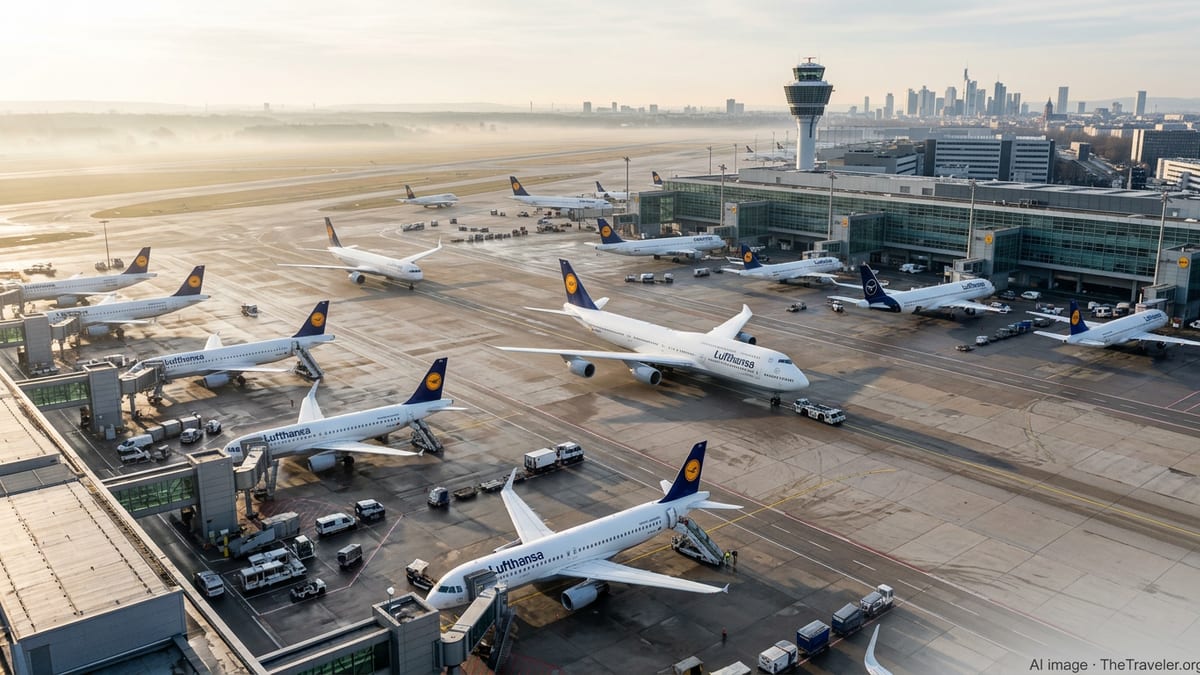
Centennial Year Delivers Record Results
The 2025 financial year marks a historic milestone for Lufthansa Group, which reported record revenue of €39.6 billion, around 5 percent higher than in 2024. The result confirms the group’s full recovery from the pandemic shock and caps a complex period in which strikes, cost inflation and capacity constraints weighed on European aviation.
Operating performance also improved decisively. Adjusted EBIT rose by roughly 20 percent to around €2 billion, lifting the operating margin to about 4.9 percent. After a year in which profitability had been squeezed by labor disputes and network disruptions, the latest figures signal that restructuring measures and network optimization are now translating into stronger earnings.
The 2025 outcome is particularly notable in the context of 2024, when Lufthansa’s operating profit slipped even as revenue grew to €37.6 billion. Management had guided for a clear improvement in 2025 and has now delivered on that promise, underpinned by robust demand for long haul travel, especially on transatlantic and Asia bound routes.
The group’s centennial celebrations have therefore coincided with a commercial high point. Executives are framing the 2025 performance not simply as a rebound, but as a new base line from which the company intends to expand its global footprint and strengthen its position among the world’s largest airline groups.
Demand Recovery and Premium Strategy Drive Growth
The surge in revenue and profits was primarily driven by sustained demand for international travel. Lufthansa Group airlines continued to benefit from strong bookings on long haul services, a segment where European carriers have enjoyed favorable yields in the wake of capacity realignments and shifting traffic flows.
Premium leisure and business traffic remained resilient, with customers willing to pay more for reliability, connectivity and comfort. The group’s investment in upgraded cabins and new product concepts, including the Allegris long haul experience, has started to pay off through higher unit revenues and improved customer satisfaction scores.
Short and medium haul operations across Europe also contributed to revenue growth, supported by high load factors and disciplined capacity management. While competition from low cost rivals remains intense on intra European routes, Lufthansa Group has focused on schedule connectivity through its Frankfurt, Munich, Zurich, Vienna and Brussels hubs, aiming to capture high yielding transfer traffic alongside local demand.
Cargo operations added another layer of support. Although global air freight markets have normalized from the peaks seen during the pandemic, Lufthansa Cargo has maintained a solid performance, benefiting from specialized capacity, long standing customer relationships and a diversified sector mix that includes pharmaceuticals, express and industrial goods.
Cost Discipline and Fleet Modernization Strengthen Margins
Behind the top line growth, tighter cost control was central to the 20 percent surge in operating profit. The group has been executing a multi year efficiency program that targets labor productivity, process simplification and the greater use of digital tools across operations, network planning and revenue management.
At the same time, Lufthansa is advancing one of the largest fleet renewal programs in its history. The delivery of new generation aircraft with lower fuel burn and reduced maintenance costs has started to ease pressure on operating expenses. Management highlights that each step of modernization not only improves margins but also supports the group’s environmental objectives through lower emissions per passenger.
Despite higher fuel prices and wage settlements agreed after industrial disputes in previous years, the efficiency gains and more profitable route mix were sufficient to widen margins in 2025. The operating margin of just under 5 percent still trails the double digit levels some competitors have briefly achieved, but represents a clear improvement relative to the turbulence of earlier years.
Capital discipline remains a theme for investors. The group continues to prioritize deleveraging and maintaining a strong liquidity position while funding its fleet investments. With free cash flow supported by robust earnings and advance ticket sales, Lufthansa enters the next planning cycle from a more secure financial footing than at any point since the pandemic.
Competitive Position in a Consolidating Global Market
Lufthansa Group’s 2025 performance further reinforces its role as one of the leading airline groups worldwide by revenue. The latest figures place it among the top tier of global carriers, alongside major US and Gulf operators, underscoring the continuing relevance of Europe’s hub and spoke model in long haul aviation.
The group’s multi brand portfolio, which includes Lufthansa, Swiss, Austrian Airlines, Brussels Airlines and Eurowings, provides flexibility across different market segments. Premium brands focus on intercontinental and corporate traffic, while Eurowings targets point to point and leisure routes, particularly from German speaking markets to southern Europe.
Industry observers note that the improved results also strengthen Lufthansa’s hand in ongoing consolidation dynamics. With European skies still fragmented compared with the United States, financially stronger network carriers are better positioned to participate in future mergers, equity partnerships or joint ventures that can unlock additional synergies and network breadth.
From a strategic perspective, the record 2025 numbers send a signal that Lufthansa’s long term transformation program is gaining traction. The group is not yet insulated from macroeconomic shocks or competitive pressure, but it has rebuilt a level of resilience that appeared in doubt during the worst phases of the health crisis and subsequent labor unrest.
Outlook: Capacity Expansion and Travel Trends in 2026
Looking ahead, Lufthansa Group has signaled plans to increase passenger airline capacity by around 4 percent in 2026 compared with 2025, in line with earlier guidance. Management expects demand for air travel to remain robust, supported by stable premium bookings and the continued popularity of long haul leisure travel, though growth rates are likely to normalize after the sharp rebound of recent years.
New aircraft deliveries are scheduled to continue at a brisk pace, with almost one new jet joining the fleet each week over the coming years. These additions will help replace older, less efficient models, expand capacity on key long haul routes and support the rollout of upgraded cabins that are central to the group’s premium positioning.
At the same time, executives are cautious about external risks. Economic uncertainty in key European markets, volatile fuel prices and ongoing geopolitical tensions all pose potential headwinds. Labor relations, a recurring challenge for the group, remain in focus as management seeks to balance cost discipline with efforts to attract and retain skilled staff in critical operational roles.
For travelers, the group’s record year suggests a network that is likely to become denser and more globally connected in 2026, with additional frequencies to North America and Asia and more options for connecting itineraries through its European hubs. As the aviation industry moves into a more mature phase of the post pandemic recovery, Lufthansa Group’s 2025 performance sets a high bar for what European full service carriers can achieve in a challenging market environment.