

More news on this day
Lufthansa has joined a growing list of European and regional airlines suspending or sharply curtailing flights to the United Arab Emirates, Qatar, Saudi Arabia, Israel, Lebanon and Jordan, as widening airspace closures linked to the 2026 Iran conflict disrupt some of the world’s busiest long-haul corridors.
Get the latest news straight to your inbox!
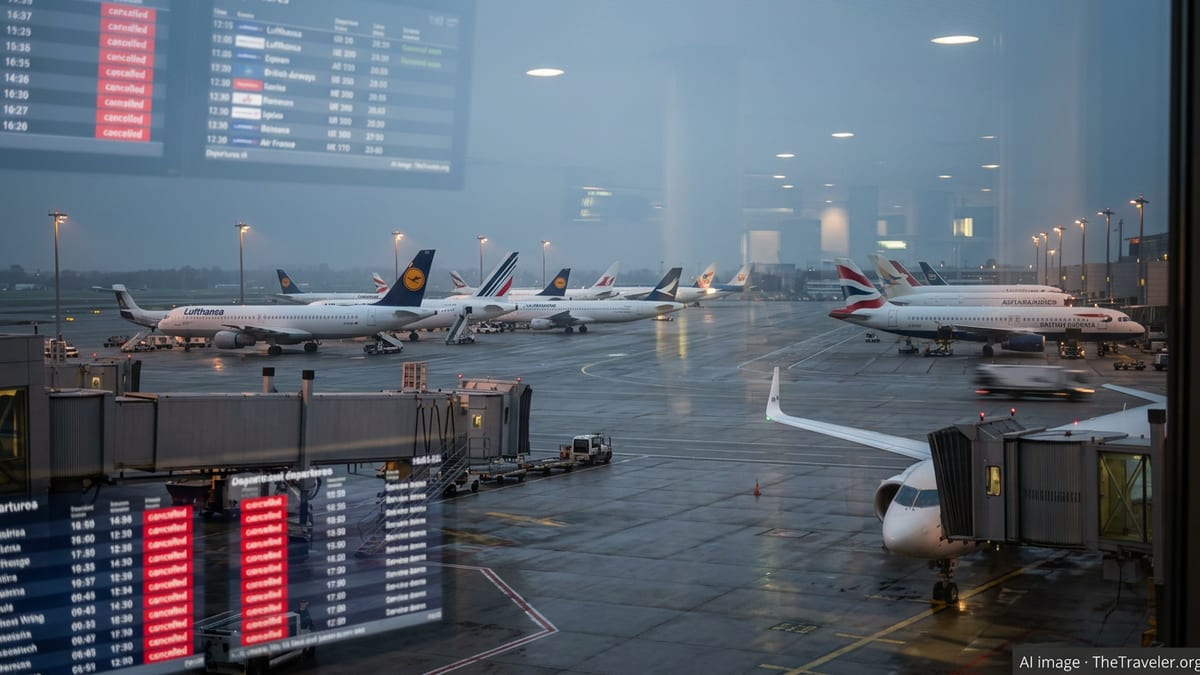
Expanding Wave of Suspensions Across Key Middle East Gateways
Recent days have seen a rapid escalation in flight cancellations and suspensions across the Gulf and Levant as airspace over and around Iran, Iraq, Israel, Qatar and the United Arab Emirates has been periodically closed or heavily restricted. Publicly available operational updates and travel advisories indicate that commercial services to Dubai, Abu Dhabi, Doha, Riyadh, Jeddah and Tel Aviv have been among the most affected, with knock-on impacts for Lebanon and Jordan as airlines redraw routings across the region.
Lufthansa’s latest schedule changes place it in the same camp as Air France, KLM, Virgin Atlantic, British Airways, Wizz Air and Aegean Airlines, which have all reduced or suspended flying to parts of the Middle East since the start of March. Industry summaries of airline operations show that many of these carriers have frozen flights not only to Israel but also to major transfer hubs in the Gulf, citing regional airspace uncertainty, crew safety considerations and the lack of reliable routings around conflict zones.
For Lufthansa Group, the decision represents an extension of earlier risk-based adjustments, including the suspension of services to Tehran and overflights of Iranian airspace. Recent analysis of its network highlights that the airline has been progressively pruning exposure to high-tension corridors, and the latest wave of suspensions to Gulf and Levant destinations further tightens that stance as the conflict continues.
Air France, KLM, British Airways and Others Pull Back
Air France and KLM, historically large operators between Europe and the Middle East, have implemented extensive cancellations and reroutings affecting flights to the Gulf states and Israel. Operational notices referenced in travel and logistics industry briefings show reduced services into Dubai and other Gulf hubs, as well as the avoidance of Israeli, Lebanese, Jordanian and Iraqi airspace on flights that remain in operation. Schedule databases point to aircraft being redeployed to European and transatlantic routes while Middle East frequencies are curtailed.
British Airways has also sharply reduced its Middle East flying, with aviation community tracking and airline communications showing widespread cancellations to destinations such as Dubai, Abu Dhabi and Doha following the most recent airspace shutdowns. The carrier has been rebooking passengers where possible via alternative routings, though options remain limited as other airlines adopt similar restrictions.
Low cost and regional players are equally affected. Wizz Air, which in recent years built a sizeable presence in Abu Dhabi and expanded into routes linking Europe with Gulf and Levant cities, has suspended many services into the affected countries according to its latest network announcements. Greek carrier Aegean Airlines, which relies on eastbound flows through Athens, has also trimmed or suspended flights to Israel and nearby markets, reflecting the broader reluctance among European operators to maintain regular schedules into the conflict zone.
Gulf and Regional Airlines Face Prolonged Disruptions
While the current focus is on European carriers, Gulf and Middle Eastern airlines have been forced into equally sweeping adjustments. Travel security advisories and airline bulletins compiled since early March show that major hubs including Dubai International, Abu Dhabi International and Hamad International in Doha have each experienced periods of near-total suspension of commercial passenger traffic, with only emergency, evacuation and limited cargo flights continuing under special permissions.
Emirates and Etihad Airways have temporarily halted large portions of their networks from their respective UAE bases during the height of the airspace closures, significantly reducing connectivity between Europe, Asia, Africa and Australasia. Qatar Airways, whose business model depends on cross-regional transfer traffic through Doha, has likewise kept scheduled passenger services grounded during phases when Qatari airspace remained formally closed, with gradual and tightly controlled reopenings focused on essential operations.
Carriers based in Saudi Arabia and other neighboring states are navigating a patchwork of restrictions. Operational updates circulated to corporate travel clients describe Saudi airports as technically open but subject to reduced schedules, delays and last-minute cancellations, especially on routes that would ordinarily cross Iranian or Iraqi airspace. Services to Israel, Lebanon and Jordan remain particularly volatile as operators respond to evolving security assessments and regulatory notices.
Global Knock-On Effects for Long-Haul Travel and Cargo
The suspension of flights to the United Arab Emirates, Qatar, Saudi Arabia, Israel, Lebanon and Jordan is reverberating well beyond the Middle East itself. The Gulf hubs of Dubai, Abu Dhabi and Doha have become essential waypoints for long-haul journeys linking Europe and North America with South and Southeast Asia, Australasia and parts of Africa, and public logistics briefings now describe notable disruption to these flows.
With many European and Asian airlines unable or unwilling to transit the affected airspace, some long-haul services that remain in operation are being rerouted along longer, more northerly or southerly paths. Industry reports note that such diversions add significant flight time and fuel burn, increasing operating costs and further constraining aircraft and crew availability. As a result, passengers on routes that do not directly touch the Middle East are encountering delays, missed connections and reduced seat availability as airlines adjust schedules.
The cargo sector is contending with similar challenges. Freight forwarder communications describe delays and capacity bottlenecks on lanes that previously relied on Gulf carriers and airports as central distribution nodes. Medical supplies, high value electronics and other time-sensitive shipments moving between Asia, Europe and the Americas are facing longer transit times, with some shippers shifting volumes to alternative gateways in Oman, Turkey or Southern Europe where routing remains feasible, albeit at higher cost.
What Travelers Should Expect in the Coming Weeks
For travelers, the expanding list of airlines suspending flights to the UAE, Qatar, Saudi Arabia, Israel, Lebanon and Jordan means that flexibility and close monitoring of bookings are essential. Travel advisories urge passengers to check flight status repeatedly in the days and hours before departure, as schedules are subject to rapid change based on evolving airspace notices and security considerations.
Passengers whose flights have been canceled are generally being offered rebooking on later dates, alternative routings that avoid affected airspace where possible, or refunds in line with each carrier’s policies. However, given the scale of disruptions and the concentration of capacity through a small number of Middle East hubs, alternative itineraries may be limited for several weeks, particularly for those traveling between Europe and Asia or Australasia.
Industry observers caution that a full restoration of normal traffic patterns will depend not only on formal reopening of airspace but also on sustained confidence among airlines, insurers and crew unions that conditions have stabilized. Until then, Lufthansa and its European peers are expected to continue operating conservative schedules to and through the region, prioritizing safety and operational predictability over rapid resumption of pre-crisis capacity.