

More news on this day
Lufthansa has become the latest major European airline to halt flights to parts of the Middle East, joining Air France, KLM, Virgin Atlantic, British Airways, Wizz Air, Aegean and other carriers in temporarily suspending services to the United Arab Emirates, Qatar, Saudi Arabia, Israel, Lebanon and Jordan amid heightened geopolitical tensions and widespread airspace restrictions.
Get the latest news straight to your inbox!
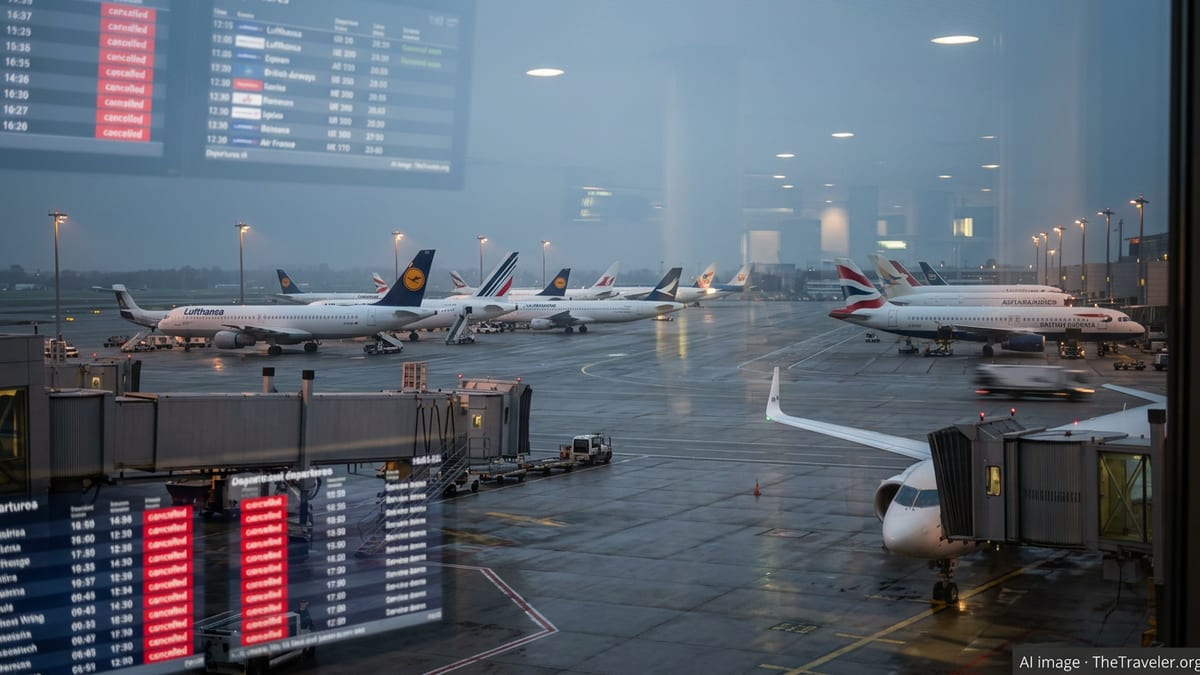
Wave Of Suspensions Follows Rapidly Evolving Security Crisis
Publicly available operational updates show that a growing list of European carriers have sharply scaled back or paused their Middle East networks since late February 2026, as conflict involving Iran, Israel and regional actors has triggered multiple airspace closures. Routes linking European hubs to Dubai, Abu Dhabi, Doha, Riyadh, Dammam, Jeddah, Tel Aviv, Beirut and Amman are among the most affected, with many services cancelled outright or converted to limited evacuation and repatriation operations.
According to industry summaries tracking schedule changes, British Airways, Air France and KLM were among the first large network airlines to suspend regular passenger flights to Israel and parts of the Gulf after Israel, Qatar and the United Arab Emirates imposed sweeping temporary airspace shutdowns at the end of February. Subsequent restrictions by Jordan and Lebanon, along with conflict-zone advisories covering Iran and Iraq, have further narrowed safe routing options for commercial traffic across the eastern Mediterranean.
Low cost and leisure-focused airlines have also reacted. Wizz Air has paused flights to Tel Aviv, Dubai, Abu Dhabi, Amman and select Saudi destinations for at least several days at a time, while Aegean Airlines and other regional carriers have reduced or suspended operations to Lebanon and Israel. Travel-industry monitoring sites indicate that some of these suspensions have already been extended into mid-March as the security situation remains volatile and airport operations across the region continue to face intermittent disruption.
Lufthansa Group Cuts Middle East Services And Cargo Links
Within this broader context, Lufthansa Group has taken a notably cautious stance. Updates shared via cargo and passenger advisories indicate that Lufthansa, Swiss and Austrian Airlines have suspended a range of services into the Middle East, including routes to Tel Aviv and Amman, and have extended the suspension of flights to Tehran until at least late March 2026. Night-stop operations and crew layovers in certain cities have been removed from schedules to reduce exposure to rapidly changing conditions.
On the freight side, Lufthansa Cargo has paused bookings to key destinations including Amman, Beirut, Dammam, Dubai, Erbil, Tel Aviv and Tehran for a period that currently runs into early April. This move reflects not only demand uncertainty but also the practical difficulties of planning aircraft routings through or around conflict-affected airspace, especially where short-notice closures are possible. Cargo suspensions can be particularly disruptive for time-sensitive shipments such as pharmaceuticals, perishables and industrial components that often move through Gulf and Levant hubs.
Lufthansa’s reductions come on top of the group’s earlier decisions to reroute long-haul services between Europe and South or East Asia to avoid particular flight information regions associated with elevated risk. These elongated routings increase fuel burn and block times, and in some cases have led to reduced frequencies or payload caps. The latest Middle East cuts therefore add an additional layer of complexity to the group’s already constrained network planning for the remainder of the winter season.
Gulf Hubs And Levant Gateways Face Prolonged Disruption
The suspensions hitting the United Arab Emirates, Qatar and Saudi Arabia underscore the central role of Gulf hubs in global connectivity. Airspace closures and restrictions affecting Doha, Dubai and Abu Dhabi have forced both regional and foreign carriers to cancel or severely limit normal commercial services, even as limited evacuation and cargo flights continue under special arrangements. Reports on recent Iranian strikes on Qatar indicate that Hamad International Airport has been operating under constrained conditions, with air navigation only gradually reopening for emergency and evacuation traffic while standard commercial schedules remain heavily curtailed.
In the Levant, the closure of Israeli civil airspace and the suspension of operations at Ben Gurion Airport have cut off a major entry point for both business and leisure travel. Lebanon and Jordan have alternated between temporary airspace closures and carefully managed reopenings, contributing to an unstable operating environment for carriers attempting to maintain links to Beirut and Amman. Some airlines have opted to keep flights suspended for longer than the minimum regulatory advisories, prioritizing predictability for crews and passengers over the risk of last-minute cancellations.
The combined effect has been to squeeze traditional east–west corridors that rely on overflights of the eastern Mediterranean and adjacent Gulf states. Even airlines that are not directly serving the affected cities are experiencing knock-on delays and schedule changes as they reroute around active conflict zones, adding flying time and complicating aircraft rotations.
Knock-On Effects For Travelers And Global Flight Networks
For travelers, the most visible impact is a sharp reduction in non-stop options between Europe and destinations across the Middle East, South Asia and East Africa. With many of the usual connecting points in the Gulf and Levant subject to restrictions or heavily thinned schedules, passengers are being rebooked via alternative hubs in Turkey, Egypt and southern Europe, or asked to delay or cancel their journeys. Travel advisory platforms caution that even flights which remain on sale may be rescheduled or rerouted at short notice, and that total journey times may increase by several hours.
Operational data compiled by European aviation bodies indicate that the crisis has not yet produced severe systemic delays within Europe, but has introduced greater complexity to traffic flows on the south-east axis linking Europe with Asia and Africa. Airlines are juggling slot availability, crew duty time constraints and refuelling requirements as longer routings consume additional time and fuel. For some carriers, particularly low-cost operators with tight turnaround models, the disruption has reduced the economic viability of previously popular routes into the region.
Industry observers note that the current situation comes on top of existing limitations on overflying Russian airspace, further narrowing the set of efficient long-haul paths available to European airlines. The layered effect of multiple conflict-driven no-fly zones has revived familiar concerns about the resilience of global aviation networks to geopolitical shocks and the degree to which airlines can diversify their routings in response.
Uncertain Timeline For Resumption As Advisories Evolve
As of mid-March 2026, there is no clear consensus on how long the latest round of suspensions to the United Arab Emirates, Qatar, Saudi Arabia, Israel, Lebanon and Jordan will last. Some carriers have published provisional dates in late March or early April for a possible phased resumption of services, often framed as subject to ongoing security assessments and the lifting of airspace restrictions. Others are relying on rolling review periods of a few days at a time, allowing for rapid adjustments if the situation stabilizes or deteriorates further.
European aviation safety authorities continue to update conflict-zone information for operators, with airlines using this guidance in combination with their own risk assessments and insurance considerations. Publicly available information suggests that while certain corridors may reopen under specific conditions, any renewed escalation could quickly trigger fresh closures or tighter altitude and routing constraints, complicating attempts at a swift return to normality.
For now, travelers with plans involving the affected countries are being advised across multiple platforms to monitor their bookings closely, maintain flexible itineraries and consider alternative routings that avoid the most disrupted hubs. The evolving patchwork of suspensions by Lufthansa, Air France, KLM, Virgin Atlantic, British Airways, Wizz Air, Aegean and other carriers illustrates how closely global air travel remains tied to the trajectory of geopolitical tensions in the Middle East, with network decisions often changing as rapidly as developments on the ground.