

More news on this day
Europe’s biggest network airlines are pouring billions into new first, business and premium cabins, as Lufthansa joins Air France, Turkish Airlines, SWISS, KLM, Eurowings and Norwegian in a fast-accelerating race to capture the top tier of luxury travelers.
Get the latest news straight to your inbox!
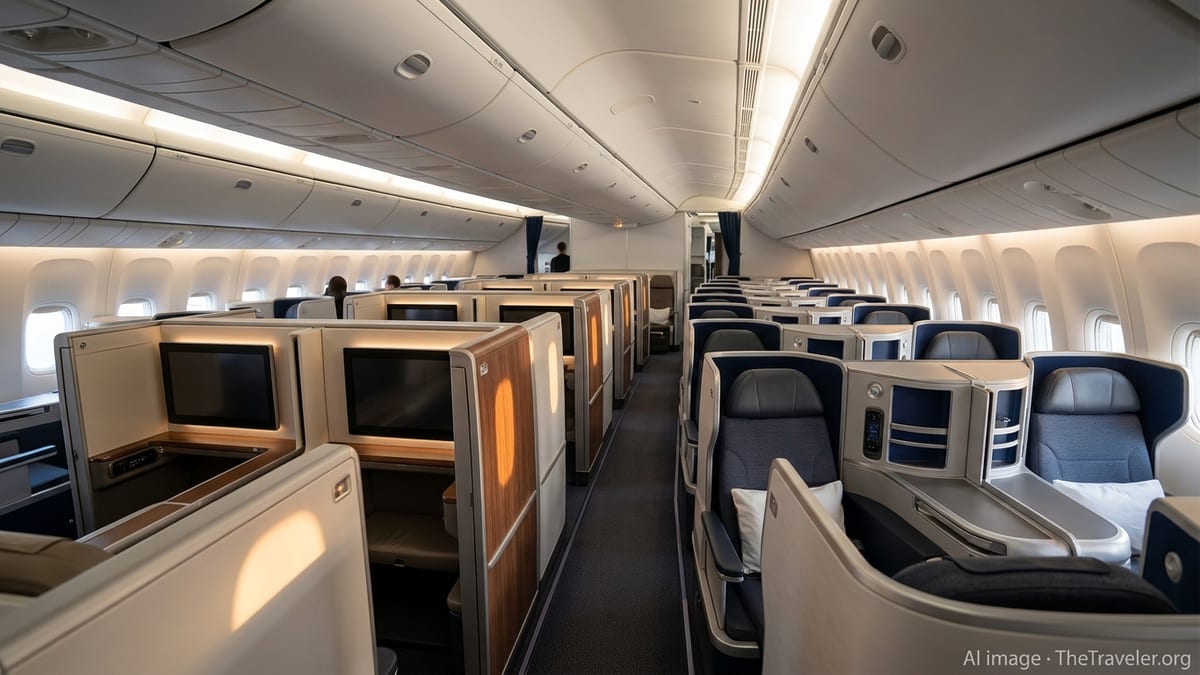
Lufthansa’s Allegris Signals a New Flagship Era
Lufthansa is in the midst of one of the most extensive premium-cabin overhauls in its history, centered on the Allegris product that introduces enclosed first class suites and redesigned business, premium economy and economy seating. Investor presentations and product fact sheets indicate that more than 80 new aircraft, including Airbus A350s and Boeing 787-9s, are scheduled to enter the fleet with Allegris cabins, backed by a multibillion-euro investment program rolling out from 2025.
The new First Class Suite Plus is positioned at the very top of Lufthansa’s offering, combining a fully enclosed double suite with separate dining and sleeping areas, expansive high-resolution screens and significantly upgraded materials compared with the existing long-haul fleet. The wider Allegris family also introduces privacy doors in many business class seats, direct aisle access, wireless charging and larger personal storage, reflecting a push toward a more residential feel on board.
Schedules filed for 2025 and 2026 show Allegris gradually appearing on more long-haul routes from Munich and Frankfurt, particularly to North America and key Asian gateways. Aviation tracking data and enthusiast reports indicate that early deployments on selected A350 and 787 services have been used to fine-tune the hard product before a broader rollout, underscoring how closely the carrier is calibrating its new flagship experience to premium customer expectations.
By combining new-generation cabins with fuel-efficient aircraft, Lufthansa is aiming to compete not only on comfort but also on quieter cabins and improved environmental performance, a factor that has become increasingly important to corporate travel buyers and high-net-worth individuals booking premium seats.
Air France and KLM Double Down on High-End Comfort
Within the same group, Air France and KLM are also reshaping their premium cabins to anchor a coordinated, upmarket strategy. Publicly available information shows that Air France’s latest La Première suite, introduced in 2025 on selected Boeing 777-300ER routes from Paris Charles de Gaulle, offers one of the most spacious first class footprints in the sky, with individual suites that can be configured as a private lounge, dining area and fully flat bed more than two meters long.
Reports in specialist travel media describe how the La Première ground journey has been upgraded in parallel, with dedicated check-in, private transfer to the aircraft and a refreshed flagship lounge concept at Paris Charles de Gaulle. Air France has also expanded the network for its new first class, adding additional North American and Middle Eastern destinations for the 2025–2026 seasons as more aircraft are refurbished with the latest cabin.
KLM, meanwhile, has completed the introduction of its Premium Comfort cabin, a separate class between economy and World Business Class that adds more personal space, enhanced catering and upgraded amenities. Company announcements describe the project as the airline’s biggest product change in years, combined with a refreshed World Business Class seat across much of the long-haul fleet.
The Air France-KLM group strategy positions La Première and KLM’s top-tier business class as complementary offerings at the summit of its product pyramid, while Premium Comfort and improved economy cabins are intended to capture travelers who are willing to pay for extra comfort without moving all the way to first or business class pricing.
Turkish Airlines and SWISS Elevate the Boutique Flagship Experience
Turkish Airlines and SWISS, though smaller than some of their European peers, are pursuing premium-focused upgrades designed to appeal to long-haul business travelers and high-spending leisure passengers. Turkish Airlines has outlined plans for an all-new Crystal business class suite, expected to feature sliding doors, increased privacy and a more spacious layout on wide-body aircraft such as the Boeing 777 and Airbus A350.
While the rollout timeline has shifted, aviation industry coverage and passenger reports suggest that Turkish Airlines is already deploying improved business class cabins on select routes, especially where competition from Gulf and Asian carriers is strongest. These cabins typically provide direct aisle access in a one-two-one configuration, larger surfaces for work and dining, and personal storage designed around modern travel habits, including space for multiple devices.
SWISS, part of the Lufthansa Group, has aligned its own long-haul upgrade path with its parent’s wider premium strategy. The carrier has announced next-generation first and business class seats for future A350s and retrofitted 777s, drawing design cues from its trademark understated Swiss aesthetic. Renderings and early product details emphasize warm wood tones, textured fabrics and discrete privacy elements that differentiate the cabins from more heavily branded competitors.
Both airlines are leveraging their hubs in Istanbul and Zurich to position themselves as convenient one-stop gateways between Europe, Asia and the Americas, using upgraded premium cabins and lounges as key tools to retain and attract connecting passengers who could otherwise choose direct services on rival carriers.
Eurowings and Norwegian Blur the Line Between Low-Cost and Luxury
At the other end of the traditional full-service spectrum, Eurowings and Norwegian are steadily incorporating more premium touches into their products, narrowing the gap between low-cost and legacy carriers for travelers willing to pay a supplement. Eurowings, also under the Lufthansa Group umbrella, has focused on a “BEST” product on selected routes, offering extra-legroom seating, blocked middle seats, upgraded catering and priority services that approximate a light business class experience on short and medium-haul flights.
Norwegian, which rebuilt its model around short-haul and medium-haul operations after exiting long-haul flying, is emphasizing modern aircraft interiors, high-quality Wi-Fi and a range of selectable extras that allow passengers to assemble a more comfortable journey. Public information on its latest cabin refurbishments points to refreshed seat designs, improved lighting and more easily accessible power outlets, elements that are increasingly seen as minimum expectations among affluent leisure travelers within Europe.
These developments reflect a broader trend in which even value-focused carriers recognize that a segment of their customer base is willing to pay more for comfort, priority handling and a degree of exclusivity, especially during peak holiday periods. Rather than reintroducing traditional business class cabins, Eurowings and Norwegian are layering optional services on top of their base fares, creating a tiered experience that can edge into quasi-luxury territory on shorter flights.
For network groups like Lufthansa, positioning Eurowings as a bridge between low-cost and premium brands helps keep price-sensitive customers within the same wider ecosystem, where they can be offered seamless connections onto long-haul services operated by Lufthansa, SWISS or Austrian with fully flat beds and upgraded onboard service.
A Intensifying Race for High-Yield Travelers
The simultaneous push by Lufthansa, Air France, Turkish Airlines, SWISS, KLM, Eurowings and Norwegian to refresh their cabins underscores how aggressively European airlines are targeting high-yield travelers in the post-pandemic market. Industry analysts note that premium cabins generate a disproportionate share of revenue and can be decisive in securing lucrative corporate contracts, long-stay leisure bookings and loyalty program engagement.
New first and business class suites are often paired with upgraded soft products, including revised menus by well-known chefs, expanded beverage programs and more personalized service concepts. Airlines across the continent are also racing to improve connectivity, with high-speed Wi-Fi and expanded in-flight entertainment libraries becoming standard features in newly refurbished cabins.
As more aircraft enter service with these next-generation interiors through 2026 and beyond, travelers on key transatlantic and Europe–Asia routes are likely to see a marked increase in choice at the top end of the market. For airlines, the challenge will be to keep these flagship products consistently available on advertised routes and to maintain the exclusivity that justifies the premium pricing attached to what is rapidly becoming the new definition of ultimate luxury travel.