

More news on this day
A new seasonal Lufthansa route connecting Munich and Rovaniemi is set to give Arctic tourism another lift, improving access to Finnish Lapland as demand for northern winter experiences continues to grow across Europe.
Get the latest news straight to your inbox!
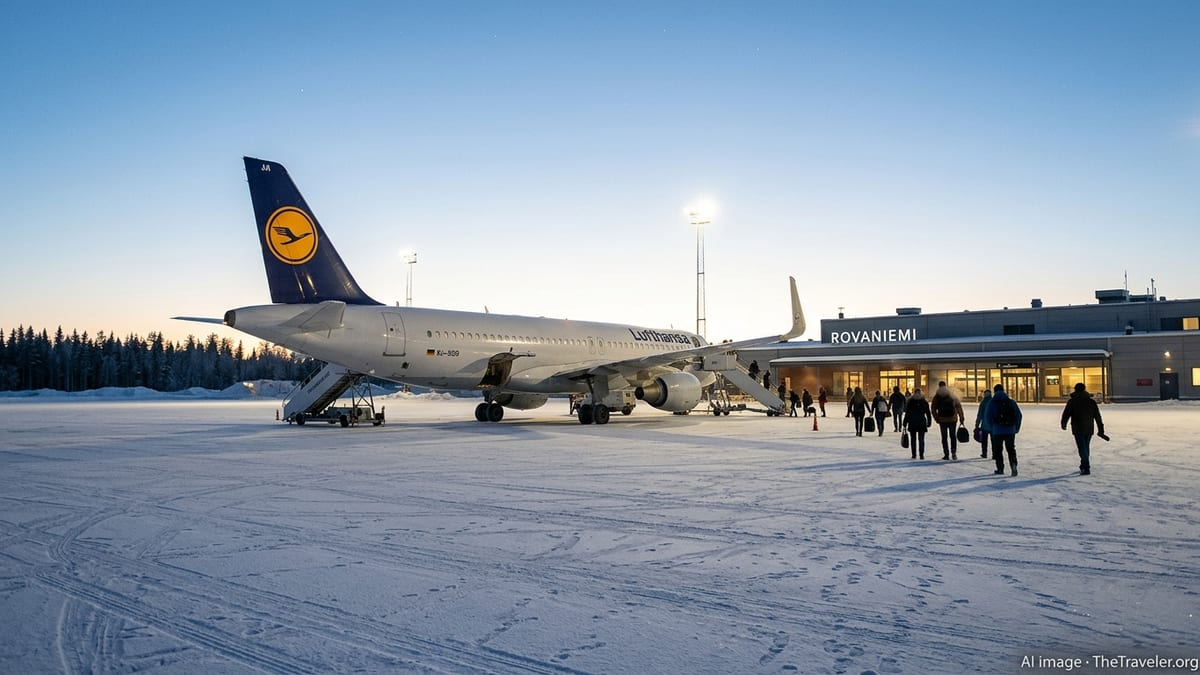
New Direct Route Connects Bavaria to the Arctic Circle
The latest Lufthansa Group network materials list Rovaniemi among the destinations served from Munich in the winter timetable, adding a direct link between southern Germany and Finnish Lapland. Publicly available route information indicates that the service is structured as a seasonal winter connection, reflecting the intense but concentrated demand for Arctic travel between late autumn and early spring.
Rovaniemi, capital of Finnish Lapland and located on the Arctic Circle, has become one of northern Europe’s most visible leisure gateways. Airline schedule documents show that Lufthansa previously focused its Finland operations on Helsinki and several key Lapland airports such as Kittilä, Ivalo and Kuusamo. The decision to connect Munich and Rovaniemi directly marks a further step in the group’s long-term expansion into Nordic winter markets.
The new route dovetails with Munich Airport’s strategy of broadening its winter schedule with more tourism-oriented destinations. Regional and leisure-focused subsidiaries within the Lufthansa Group have increasingly used Munich as a base for seasonal services, turning the Bavarian hub into an important departure point for winter holidays across Europe and beyond.
While precise operating days can vary by season, current published material points to a classic peak-winter pattern, centered on prime travel weeks around Christmas, New Year and the core ski and snow season. This aligns the Munich–Rovaniemi service with other Lapland routes that airlines have timed to capture short, experience-driven trips.
Rovaniemi’s Rapid Rise as a Northern Gateway
Rovaniemi’s profile as an Arctic destination has risen sharply in recent years, supported by a wider European trend toward experiential winter travel. Airport and tourism data show that the city has moved from a niche market to a mainstream short-break destination, drawing visitors with a mix of Northern Lights viewing, reindeer and husky safaris, and visits to Santa-themed attractions.
Air service analysis published during the 2024 and 2025 winter seasons highlights a steady increase in direct European routes into Rovaniemi, including new links from Germany, the United Kingdom and southern Europe. Carriers such as Eurowings, Edelweiss, Norwegian and others have added or expanded services, while Lufthansa’s Frankfurt–Rovaniemi route introduced for winter 2024/25 underlined the strength of demand from central Europe.
The addition of a Munich–Rovaniemi link deepens that access, creating a second major German gateway into Lapland and reinforcing Germany’s role as one of Finland’s most important source markets. The route also opens a convenient option for travelers from Austria, Switzerland, northern Italy and other regions within easy reach of Munich by air or rail, effectively extending Rovaniemi’s catchment area across much of central Europe.
Tourism reports focusing on Lapland note that growing international capacity has encouraged local providers to broaden their offerings, with more guided activities, higher-end accommodation and longer operating seasons. A direct connection from Munich is expected to support this evolution by bringing in visitors who typically seek premium, short-duration winter experiences.
Munich’s Role as a Winter Leisure Hub
Munich Airport has been positioning itself as a key winter hub, offering an expanding mix of long-haul and regional leisure routes. Recent winter timetables showcase additional services to warm-weather destinations, but also a strengthening portfolio of snow-oriented flights serving the Alps and the Nordics.
Lufthansa Group documents describe a strategy in which Munich operates as both a transfer hub and an origin point for holiday traffic. The Munich–Rovaniemi connection fits this pattern by catering simultaneously to local Bavarian travelers and to connecting passengers from across Europe, North America and parts of Asia who use Munich as a transfer point.
The route is also supported by the presence of group carriers such as Lufthansa CityLine, Lufthansa City Airlines and leisure-focused Discover Airlines, which collectively feed passengers into Munich from secondary European cities. That network of feeder flights increases the viability of niche seasonal routes like Rovaniemi by drawing demand from a broad geographic area.
Industry commentary on recent schedules notes that leisure-oriented capacity is growing faster than traditional business travel on many European hubs. The deployment of aircraft and slots on routes like Munich–Rovaniemi reflects a calculated shift toward markets where demand remains robust and relatively price-insensitive during peak periods.
Boost for Arctic Tourism and Local Economies
For the wider Arctic tourism sector, additional air connectivity from central Europe is seen as a key driver of growth. Publicly available tourism strategies for northern Finland emphasize improved international access as a priority, with particular attention to direct flights that reduce travel time and complexity for visitors.
Direct services from Munich cut out an additional connection for many travelers who might otherwise route via Helsinki or another Nordic hub. This shorter journey is especially attractive for family groups and short-stay visitors who seek a two to four night Arctic experience, where every hour saved in transit can be spent on activities at the destination.
Economic impact assessments published for Lapland’s airports suggest that each new seasonal route typically brings measurable gains in local employment, accommodation occupancy and spending on guided activities. A high-spending international customer base, which often books all-inclusive or pre-packaged experiences, amplifies those benefits in remote regions where tourism is a major part of the local economy.
The Munich connection also strengthens Rovaniemi’s role within a broader network of Arctic gateways that includes Kittilä, Ivalo and other Lapland airports served by European carriers. Together, these routes help spread visitor flows more evenly across the region, easing pressure on individual hotspots while sustaining demand for small operators and rural communities.
Capacity Growth and Environmental Considerations
The expansion of flights into sensitive northern environments has prompted discussion about how to balance tourism growth with climate and environmental goals. Airlines and regional authorities have promoted measures such as newer, more efficient aircraft, voluntary offset schemes and coordinated ground transport planning as part of broader sustainability narratives.
Lufthansa Group’s fleet renewal program, which includes more fuel-efficient narrowbody and widebody types, is positioned in corporate materials as a central response to emissions targets. While a single seasonal route such as Munich–Rovaniemi represents a small portion of total operations, it sits within this larger context of gradual efficiency gains and changing fleet composition.
On the ground, Lapland tourism organizations have increasingly highlighted low-impact activities, certified accommodations and public or shared transport options from airports to resort areas. Improved scheduling of buses and transfers from Rovaniemi Airport to surrounding destinations aims to reduce the need for individual car journeys, complementing cleaner air access with more sustainable local mobility.
As new direct routes from central Europe come online, Rovaniemi and Munich are likely to remain closely watched examples of how increased connectivity, economic opportunity and environmental responsibility can be negotiated in one of Europe’s most fragile but fastest growing tourism regions.