

More news on this day
What was supposed to be a short evening hop from Munich to Copenhagen became a nightmare for more than 120 Lufthansa passengers this week, after they were ordered to remain on board their aircraft overnight when Munich Airport shut down operations and no transport was available to return them to the terminal.
Routine Evening Departure Turns Into a Canceled Flight
Lufthansa flight LH2446 was scheduled to depart Munich Airport for Copenhagen at around 9:30 p.m. local time, a standard late evening departure on one of the airline’s core European routes. Operated by an Airbus A320neo, the flight was expected to cover the short 504 mile journey in just over 90 minutes, landing in the Danish capital shortly after 11:00 p.m.
Passengers say boarding proceeded largely as normal, with the aircraft pushed back and prepared for departure. However, a combination of operational delays and tightening curfew rules at Munich quickly began to erode the margin for a timely takeoff. As minutes turned into hours, those on board grew increasingly anxious that they would miss onward connections or arrive in Copenhagen after midnight, when public transport options become scarce.
Ultimately, the delay proved fatal to the flight’s prospects. Shortly before midnight, as Munich’s strict night curfew approached, the decision was taken to cancel the service altogether. What should have prompted an immediate return of passengers to the terminal instead marked the beginning of a long and uncomfortable night stuck in their seats.
According to reports shared by passengers and aviation outlets, the aircraft was parked on a remote stand, away from the main terminal, making it heavily dependent on buses and ground handling staff to move travelers and luggage. Once the flight was canceled, the crew began requesting transport, only to discover that the closure of the airport would have far-reaching consequences.
Airport Curfew and Ground Handling Breakdown
Munich Airport, one of Europe’s busiest hubs, operates under a tightly enforced overnight curfew designed to limit aircraft movements during late night hours. While departures and arrivals typically cease around midnight, airport facilities and ground services usually retain enough staffing to handle late-arriving flights, diversions and irregular operations.
On this night, however, the system buckled. Passengers report that the crew initially reassured them that buses had been requested to take them back to the terminal, and that updates would follow every 30 minutes. As the hours passed, the tone of the announcements changed. Around 2:00 a.m., passengers say they were informed that the airport had effectively closed for the night and that no bus drivers could be found to operate transport between the remote stand and the terminal.
This left the aircraft in an unprecedented limbo. Regulatory constraints meant that the aircraft could not taxi back to the terminal on its own with passengers on board, and ground handling teams were now limited. With no buses and no drivers, both the airline and airport appeared unable to provide a basic means of deplaning passengers who were already on the ground, legally checked in and no longer traveling anywhere.
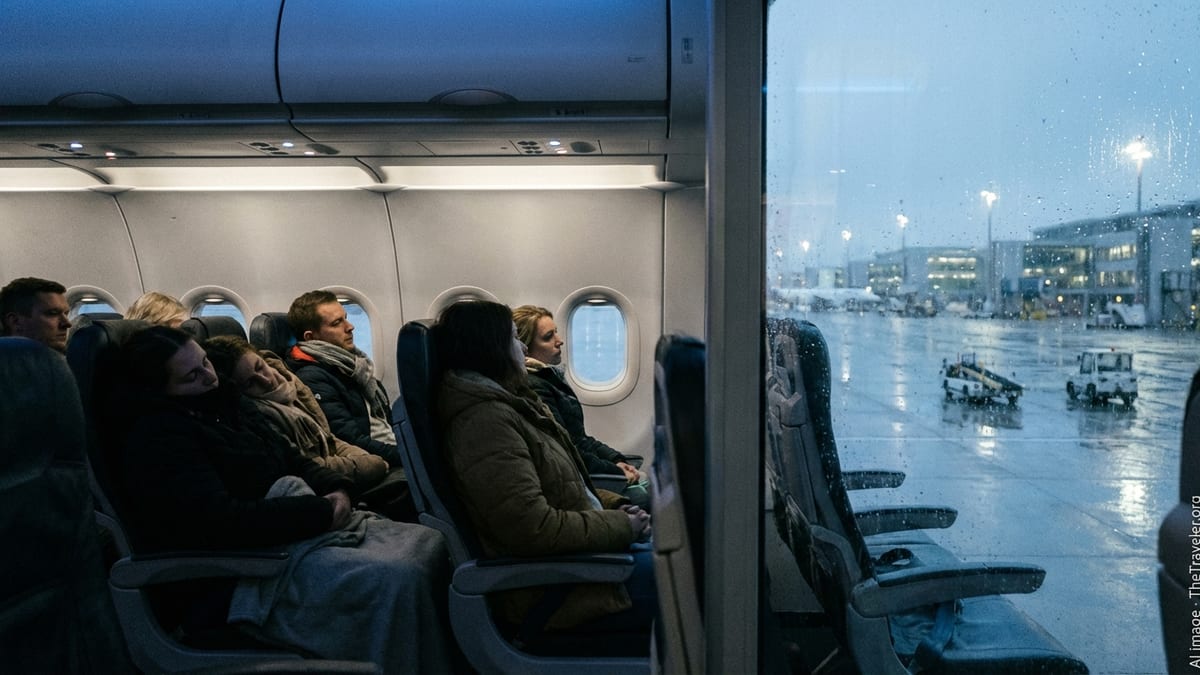
The result was that 123 passengers remained confined to the A320neo until morning. Over the course of the night they were served limited refreshments, offered intermittent information and advised that there was no safe or permitted way to move them back into the terminal complex until airport operations resumed.
Hours in the Dark: Passenger Accounts From the Cabin
Accounts shared via social media and with aviation publications paint a picture of a weary and increasingly frustrated cabin. With cabin lights dimmed and the aircraft stationary on the apron, passengers tried to sleep in cramped economy seats designed for short hops, not full nights onboard. Many had already been in transit for hours before boarding LH2446, further intensifying their exhaustion.
Several travelers described a shortage of basic amenities. While water and light snacks were eventually distributed, passengers say there were no proper meals, limited access to hot drinks and no additional blankets or pillows for most of those on board. Parents traveling with young children reported difficulty keeping them calm and occupied through the long, disorienting wait in the darkened cabin.
The air quality and temperature also became a concern. Although the aircraft’s auxiliary power unit and air conditioning systems remained available for parts of the night, passengers noted that the cabin alternated between stuffy and chilly as systems cycled or were throttled down to conserve fuel and comply with noise constraints on the apron.
Despite the difficult conditions, most passengers praised the flight attendants and cockpit crew for maintaining a calm and professional demeanor. Crew members continued to walk the aisles, check on those who were distressed and explain the situation as best they could. The sentiment among many passengers was that the frontline staff were doing what they could, but that they were let down by a lack of planning and support from airline operations and airport authorities.
Morning Release and Scramble to Rebook
As dawn approached and Munich Airport began the process of reopening, the ordeal on LH2446 finally inched toward resolution. Buses and ground staff became available again, and passengers were at last transported from the remote stand back to the terminal. By that point, they had spent the better part of the night confined to their seats, with no realistic way to leave the aircraft.
Once in the terminal, travelers faced a second wave of disruption. The canceled night flight had to be rebooked, with passengers scattered across a mix of morning services to Copenhagen, alternative routings via other European hubs and, in some cases, later departures from Munich. Those with missed long-haul connections or important commitments in Denmark faced particularly complex rebooking challenges.
Lufthansa is understood to have offered rebooking at no additional charge, along with vouchers and support in line with European Union passenger rights regulations. Under EU261 rules, passengers affected by cancellations and long delays can be entitled to compensation and care, including meals, refreshments and, in some cases, hotel accommodation. However, the unusual nature of this incident, with passengers never leaving the aircraft overnight, left many questioning whether they received the full range of support they were owed.
Some passengers reported that hotel rooms were either unavailable at such short notice or not proactively offered during the night. Instead, they contended with a night on board followed by queues at service desks in the morning, trying to salvage business meetings, leisure trips and family visits that had been upended by the disruption.
Lufthansa and Munich Airport Under Scrutiny
The incident has sparked sharp criticism of both Lufthansa and Munich Airport, raising fundamental questions about how Europe’s major hubs are prepared to handle late-night disruptions. Aviation commentators point out that while curfews are well known and built into schedules, robust contingency plans should exist to ensure that passengers are never forced to remain on a parked aircraft simply because bus drivers are off duty.
For Lufthansa, the scenes are particularly damaging at a time when the airline is trying to rebuild trust after a period of strikes, operational challenges and intense competition. The carrier has prided itself on German efficiency and reliability, yet this episode suggests that its irregular operations planning and coordination with ground handling partners may not match its marketing promises.
Munich Airport, which has been lauded with industry awards and frequently ranks highly in passenger satisfaction surveys, also faces uncomfortable questions. Travelers and consumer advocates are asking how a major international hub, accustomed to handling diversions, weather events and technical disruptions, could reach a point where passengers on an already canceled flight had no viable path back to the terminal for an entire night.
Legal experts in aviation law note that even if curfew and staffing rules constrained movements on the airfield, authorities retain a duty of care to ensure passenger safety and reasonable comfort. Being effectively detained on a stationary aircraft raises not only customer service concerns but also issues about rights and emergency procedures in the event of a medical or security incident during the night.
Passenger Rights and Potential Compensation Claims
The overnight stranding has renewed interest in European passenger protection rules and the extent to which travelers can seek redress after extreme disruptions. Under EU261, passengers whose flights are canceled at short notice are typically entitled to compensation, unless the airline can prove that the cause was extraordinary and beyond its control. In addition, carriers must provide care, including meals and accommodation, when delays and cancellations cause passengers to wait for extended periods.
In this case, consumer advocates argue that a lack of ground transport does not appear to be an extraordinary circumstance in the same way as severe weather, air traffic control strikes or security threats might be. Instead, they frame it as a foreseeable operational risk that should be mitigated by contingency staffing and contracts with service providers.
Specialist claims companies and legal firms are already assessing whether passengers from LH2446 might be eligible for compensation for both the cancellation and the conditions endured on board. Some passengers have indicated they intend to file formal complaints with Lufthansa and, if necessary, escalate cases to national enforcement bodies in Germany or Denmark.
Beyond financial compensation, many affected travelers say they want clear answers about how such an incident could happen at a major European hub, and what concrete changes will be implemented to ensure that no one else spends an entire night locked inside a grounded aircraft because an airport has closed for the day.
A Wider Pattern of Strain in European Air Travel
The episode in Munich is unfolding against a broader backdrop of tension and strain within European aviation. In recent months, passengers across the continent have faced waves of delays, cancellations and strikes as airlines and airports grapple with staffing shortages, rising costs and lingering operational fragilities in the post-pandemic era.
Germany’s aviation sector has been particularly affected. Lufthansa has recently contended with industrial action by pilots and cabin crew, leading to hundreds of flights being canceled and tens of thousands of passengers disrupted in a single day. Airport workers at major German hubs have also staged walkouts, creating long security lines and forcing airlines to pare back schedules.
At the same time, airports like Munich have had to manage emerging risks such as drone sightings and airspace disruptions that periodically shut down operations. While safety remains paramount, each closure or large-scale irregular operation adds pressure to a system already stretched by tight turnarounds, high utilization of aircraft and lean staffing models in ground handling.
Industry analysts say that while the overnight confinement of passengers on LH2446 is an extreme example, it reflects a system where buffers have gradually been eroded. When everything runs smoothly, passengers rarely notice. When a series of small failures align, however, the lack of resilience becomes painfully apparent to those stuck on the wrong side of a closed airport door.
Trust at Stake for Airlines and Airports
Incidents like the overnight stranding at Munich strike at the heart of traveler trust, a critical asset for airlines and airports alike. Frequent flyers and leisure travelers often accept that delays and cancellations are an unavoidable part of modern air travel. What matters most to them is how carriers and airports respond when plans unravel.
For many of the passengers on LH2446, it was not only the initial cancellation that angered them but the feeling of powerlessness that followed. Sitting for hours in a parked aircraft, with limited food, little sleep and no clear timeline for release, created a sense that the system had forgotten about them entirely.
Lufthansa and Munich Airport now face the task of rebuilding confidence, both among those directly affected and the wider traveling public who have followed the story. That will likely require a transparent account of what went wrong, a review of night-time contingency procedures and visible steps to ensure that buses, drivers and essential ground staff remain available whenever passengers are present on the apron.
For travelers, the ordeal serves as a stark reminder to factor in curfew rules, connection buffers and travel insurance when planning evening flights through major hubs. While extreme cases like this remain rare, the passengers of LH2446 learned the hard way that when an airport shuts down and backup plans fail, a routine short-haul flight can turn into a sleepless night on the tarmac.