

More news on this day
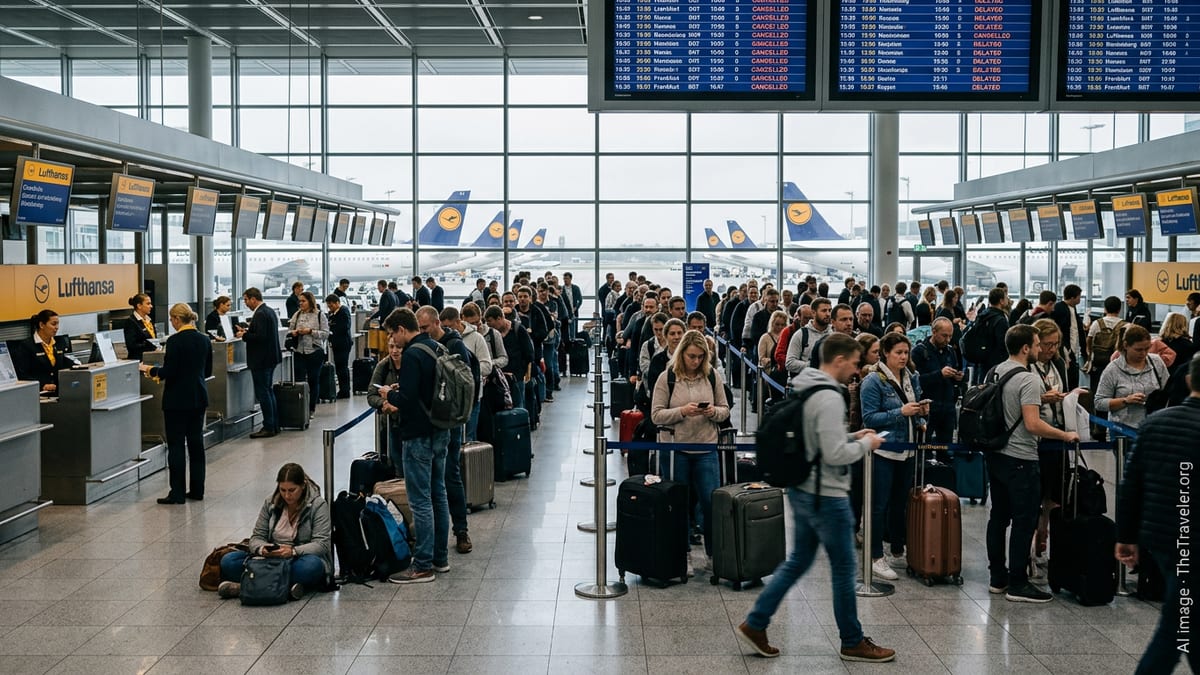
Thousands of passengers across Europe face cancellations and last-minute rebookings as Lufthansa pilots launch a 48-hour strike from March 12 to 13, forcing the German carrier to slash its schedule and scramble emergency timetables at key hubs in Frankfurt and Munich.
Get the latest news straight to your inbox!
How widespread are the cancellations?
The walkout, called by Germany’s Vereinigung Cockpit pilots’ union, began just after midnight on March 12 and is set to run through 23:59 on March 13. It affects Lufthansa’s mainline operations, as well as Lufthansa Cargo and regional carrier CityLine, with knock-on disruption spilling into the wider Lufthansa Group network across Europe.
Estimates from industry analysts and travel-rights organizations suggest that several hundred flights a day are being canceled, with total disruption likely affecting well over 1,000 flights by the end of the two-day action. While Lufthansa has stressed that it aims to operate more than half of its scheduled services during the strike period, the reality on the ground for many travelers is one of rolling cancellations, delays and missed connections at already congested hubs.
The heaviest impact is concentrated at Frankfurt and Munich, Lufthansa’s primary hubs, where a mix of short-haul European routes and long-haul intercontinental flights have been trimmed from the timetable. Secondary German airports, including Düsseldorf, Berlin and Hamburg, are also reporting significant disruption, with some regional routes canceled outright and others consolidated onto remaining services.
Beyond Germany, the strike is being felt at major European gateways such as London Heathrow, Paris Charles de Gaulle, Amsterdam Schiphol, Zurich and Vienna, where Lufthansa and its partners usually operate dense schedules. Many of these airports are seeing reduced frequencies, last-minute aircraft swaps and unusually long queues at airline service desks as passengers seek alternative ways to reach their destinations.
What routes and travelers are most affected?
Short-haul European routes are bearing the brunt of the cancellations, particularly high-frequency business corridors linking Germany with nearby countries such as France, the Netherlands, Switzerland, Austria, Belgium, the United Kingdom and Italy. On many of these routes, Lufthansa has cut multiple daily rotations, leaving only a skeleton service in place and forcing travelers to rebook onto less convenient departure times or indirect routings that connect via other hubs.
Long-haul operations are also affected, though Lufthansa has prioritized maintaining a majority of its intercontinental network. Transatlantic flights between Germany and the United States and Canada are seeing selective cancellations and retimings, while certain services to Asia, the Middle East and Africa have been trimmed or consolidated. In some cases, passengers have been moved onto flights operated by Star Alliance partners, including United Airlines, Air Canada and others, to keep long-planned journeys intact.
Travelers with tight connections are among the most vulnerable. Disrupted inbound legs into Frankfurt or Munich can cause passengers to misconnect for onward flights to destinations across Europe, North America and beyond. Rail-air itineraries within Germany are also under strain, as more passengers are shifted onto Deutsche Bahn services when domestic flights are canceled.
Holidaymakers returning from winter getaways, corporate travelers heading to key financial centers and families planning city-break weekends are all being hit. Travel forums and social media are filled with reports of last-minute cancellation emails, non-functioning rebooking tools and long waits on telephone hotlines as Lufthansa’s customer service teams struggle to cope with the volume of requests.
Why are Lufthansa pilots striking now?
The pilots’ strike is the latest flashpoint in a long-running dispute over pay, pensions and working conditions at Germany’s flag carrier. Vereinigung Cockpit has accused Lufthansa of failing to adequately share the benefits of the airline’s post-pandemic recovery with cockpit crews, while simultaneously demanding greater flexibility in rosters and more intensive use of pilots across its mainline and regional operations.
Central to the conflict are demands for higher base pay, improved pension provisions and clearer long-term guarantees around staffing levels at Lufthansa Cargo and CityLine. The union argues that inflation and increased workload have eroded real earnings in recent years, and it has highlighted what it sees as growing pressure on pilots as the airline pushes to boost profitability and expand capacity on key routes.
Lufthansa management, for its part, has condemned the strike as disproportionate and economically damaging, particularly at a time when European aviation is still navigating geopolitical uncertainty and volatile fuel and operating costs. The airline maintains that its offer would keep cockpit salaries among the most competitive in Europe and has emphasized the financial burden of previous crises, including the pandemic, on its balance sheet.
Negotiations between the two sides have so far failed to produce a breakthrough. Recent mediated talks ended without agreement, prompting the union to escalate to a full 48-hour walkout after earlier, shorter strikes and warning actions did not shift the airline’s position sufficiently.
What are Lufthansa and partner airlines doing for passengers?
Lufthansa has activated a special strike timetable and urged passengers not to travel to the airport without a confirmed booking on an operating flight. The airline is sending out notifications by email and app as flights are canceled or retimed, and it has expanded the use of automatic rebooking tools that attempt to place affected customers on alternative Lufthansa Group or partner services where seats are available.
For domestic German journeys, passengers whose flights are canceled are being offered rail vouchers to travel on Deutsche Bahn services instead of flying, a standard measure during major disruptions. At the same time, airport check-in counters and transfer desks at Frankfurt and Munich are reporting heavy crowds as travelers seek in-person assistance to adjust complex itineraries, particularly those involving multiple carriers or long-haul segments.
While the strike does not directly involve Lufthansa Group carriers such as Swiss, Austrian Airlines, Brussels Airlines and Edelweiss, their schedules are also coming under pressure. Aircraft and crews are being redeployed to cover critical links, which can trigger secondary delays and occasional cancellations at hubs including Zurich and Vienna. Other European airlines not involved in the dispute, such as Ryanair, EasyJet and several smaller carriers, are seeing an uptick in last-minute bookings from travelers who have decided to abandon disrupted Lufthansa itineraries.
Travel-rescue and flight-compensation firms report a surge in inquiries, both from passengers looking for practical rerouting options and from those asking about potential eligibility for monetary compensation under European consumer-protection rules. With many flights fully booked at short notice and airport hotels filling quickly, some travelers are being advised to consider postponing non-essential trips where possible.
What rights and options do affected travelers have?
Under European air passenger protections, travelers whose flights are canceled or heavily delayed because of an airline staff strike are generally entitled to a range of support measures. These typically include the choice between rerouting at the earliest opportunity, travel at a later date under comparable conditions, or a refund of the unused ticket if the journey is no longer needed.
In addition, passengers stuck at airports for extended periods while waiting for replacement flights may be entitled to care and assistance in the form of meals, refreshments, and, where an overnight stay is necessary, hotel accommodation and transport between the airport and the hotel. In practice, the extent and speed of this support can vary depending on local conditions and how overwhelmed ground operations and call centers are during peak disruption.
Eligibility for fixed-sum financial compensation depends on factors such as the length of delay at final arrival, the distance of the flight and whether the disruption is considered within the airline’s control. While airlines often argue that certain strikes qualify as exceptional circumstances, recent legal interpretations have tended to take a stricter view of internal labor disputes, and some specialist claims firms are actively encouraging Lufthansa passengers to pursue compensation where they meet the criteria.
For now, travelers booked to fly with Lufthansa on March 12 or 13 are being urged to monitor their booking status closely, use digital channels where possible for rebooking, and allow extra time at airports in case of queues. Those planning upcoming spring trips involving Lufthansa or its partners may also want to watch developments in the talks between the airline and its pilots as both sides weigh the fallout from this latest wave of industrial action.