

More news on this day
Lufthansa is preparing to retire one of its most storied identifiers, confirming that the iconic LH1 flight number on the early-morning Hamburg to Frankfurt service will disappear from the regular schedule when the airline’s summer 2026 timetable takes effect.
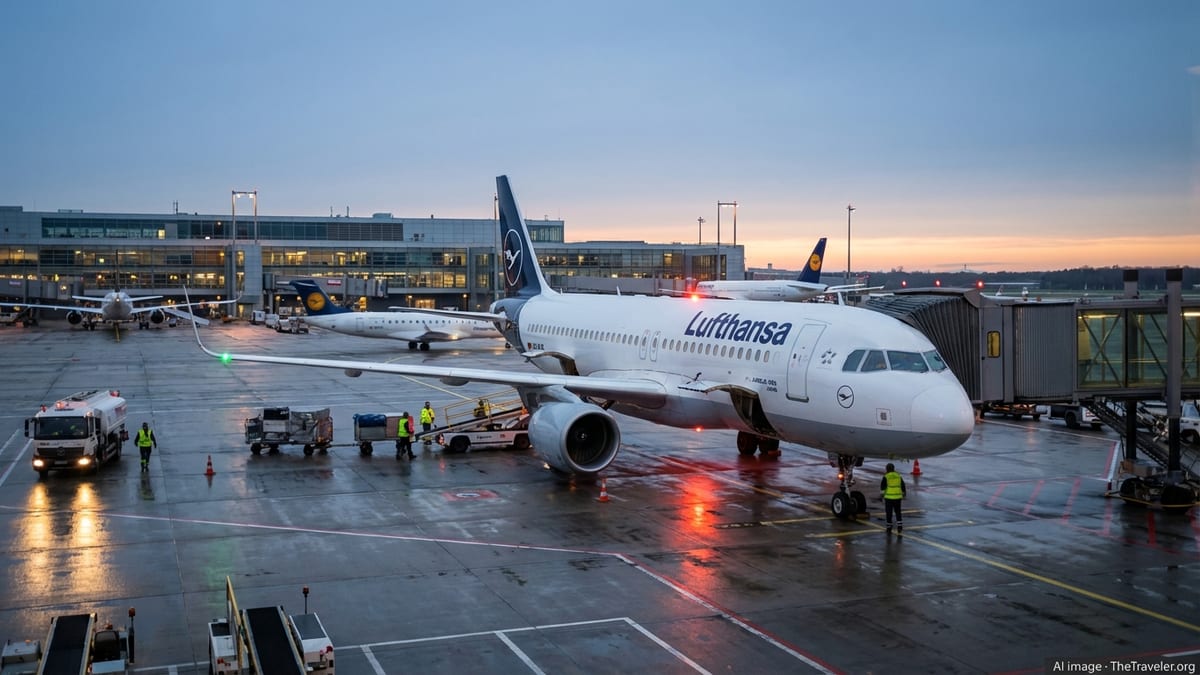
What Is Changing to Lufthansa’s LH1 Flight
From the start of the summer 2026 schedule, expected at the end of March 2026, the long-standing LH1 service between Hamburg Airport and Frankfurt Airport will be renumbered. The early departure, which has traditionally left Hamburg at 06:00 and arrived in Frankfurt just after 07:00, will continue to operate as a key domestic connection but under a new designation.
According to industry reports and statements from the airline, the flight will be reassigned as LH31 in the new timetable. Other early-morning departures from Hamburg to Frankfurt are set to receive similar two-digit numbers in the 30s series, such as LH33 and LH35, reflecting a broader cleanup of Lufthansa’s numbering logic rather than a reduction in capacity on the route.
For regular travelers on the Hamburg–Frankfurt shuttle, the most visible difference will be on their boarding passes and in booking systems. The aircraft type, departure time pattern and role of the flight as a feeder to long-haul banks in Frankfurt are expected to remain largely unchanged, even as LH1 itself disappears from the daily roster.
Why Lufthansa Is Overhauling Its Flight Number System
Lufthansa’s decision goes beyond a cosmetic tweak. The airline is introducing a revised flight-numbering structure aimed at making its network easier to manage operationally and simpler to understand for passengers. Under the new system, departures from the carrier’s main hubs will generally receive even, “round” numbers, while returning services into those hubs will carry a number incremented by one.
In practice, this means that if an outbound flight from Frankfurt is designated as LH32, the inbound leg returning to the hub would become LH33. The pattern creates a more predictable pairing, something that can help both internal planning and customer recognition, especially across a sprawling route map that ranges from short domestic hops to intercontinental services.
A technical detail inside Lufthansa’s reservation architecture has also played a role. The airline does not use a theoretical LH000 designation, which makes it impossible under the new rules to sustain an LH1 pairing, since that would imply a non-existent “flight zero” in one direction and LH1 in the other. Rather than carve out an exception, Lufthansa has opted to apply the new system consistently, even at the cost of retiring a historically resonant number.
Decades of History Behind “Lufthansa One”
The LH1 code has held a near-mythical status among German aviation enthusiasts and frequent flyers. For years, the callsign “Lufthansa One” evoked the image of an early-morning jet pushing back from Hamburg in the dark or dawn light, carrying business travelers, connecting passengers and airline staff toward Lufthansa’s largest hub in Frankfurt.
Beyond its daily operational role, LH1 became part of Lufthansa lore, mentioned in enthusiast forums, aviation blogs and local media as one of the carrier’s most recognizable flight numbers. It took its place alongside other notable Lufthansa identifiers such as transatlantic services to New York and historically significant routes connected to the airline’s growth in the jet age.
The decision to remove LH1 from the normal timetable is therefore as much an emotional break as it is a technical one. For long-time passengers and aviation spotters, the end of “Lufthansa One” as a routine domestic flight symbolizes how modern airlines, under pressure to streamline and digitalize, increasingly rely on internal logic and efficiency over romantic, legacy-laden numbering traditions.
What Passengers on the Hamburg–Frankfurt Route Can Expect
For travelers who rely on the Hamburg–Frankfurt shuttle, the renumbering should have limited practical impact day to day. The timing of the early-morning departure is expected to remain broadly similar, providing the crucial first wave of feed into Frankfurt’s morning banks of European and long-haul departures. Additional rotations later in the morning, frequently operated by aircraft that overnight in Hamburg, will also continue.
Passengers booking trips for summer 2026 and beyond will simply see different flight numbers when searching itineraries. Instead of selecting LH1, they will likely be offered LH31 or another two-digit alternative, depending on the day and time. Check-in processes, baggage handling and connecting procedures at Frankfurt will function as before, supported by Lufthansa’s existing hub infrastructure.
Some confusion is possible in the transition phase, particularly for corporate travelers or travel managers accustomed to referencing LH1 in internal policies, preferred flight lists or traveler communications. Travel agents and corporate booking tools may need to update templates and profiles to reflect the new numbering, ensuring that passengers are rebooked on the correct morning service rather than relying on a code that no longer exists.
LH1’s Future Role as a Special Mission Flight Number
Although LH1 will vanish from the published daily schedule, Lufthansa is not abandoning the designation entirely. The airline has indicated that the number will be retained for special operations and one-off missions, such as charter services for major sports teams, national delegations or ceremonial flights that merit a distinctive callsign.
This approach mirrors a broader trend in the industry, where certain symbolic flight numbers are reserved for high-profile occasions rather than routine commercial service. By holding LH1 in reserve, Lufthansa can deploy “Lufthansa One” as a branding asset, underscoring the prestige or significance of a particular journey, while still adhering to its new, more rational standard for day-to-day numbering.
Speculation has already surfaced among aviation watchers about possible future uses. Everything from championship-winning national football teams returning home to special anniversary flights for the airline has been mentioned as a potential context for an LH1 reappearance. While concrete plans have not been publicly detailed, the message is clear: LH1 is being elevated from a workhorse domestic code to a kind of honorary title.
How the New Numbering Logic Works Across the Network
Lufthansa’s revised numbering logic is designed to impose a more intuitive structure on its schedule. Under the new rules, departures from primary hubs such as Frankfurt and Munich are assigned even numbers, while inbound flights into those hubs adopt the corresponding odd number. This creates clear outbound and inbound pairs that can be easily traced and managed in operational systems.
The system also allows Lufthansa to group routes and frequencies more systematically. Flights on a given route can be clustered within a specific numerical band, aiding both scheduling teams and front-line staff who manage gate allocations, substitutions and disruption recovery. Over time, passengers may also notice recurring patterns that make it easier to recognize whether a particular service is heading away from or toward a hub.
For LH1, the logic proved incompatible with tradition. To maintain an LH1 arrival into a hub under the new rule set, there would need to be a logically paired outbound with a lower, even number, which the airline’s systems do not accommodate. Rather than treat Hamburg–Frankfurt as a special case, Lufthansa has chosen to apply the structure uniformly, reducing exceptions that complicate crew planning, aircraft rotations and digital tools.
Why Airlines Are Rethinking “Iconic” Flight Numbers
Lufthansa’s decision comes amid a broader industry shift in how airlines treat historically important flight numbers. Some carriers have quietly retired numbers associated with accidents or security incidents, while others have reassigned high-profile codes to routes that better align with commercial priorities, such as flagship long-haul city pairs.
In an era of increasingly automated scheduling, flight numbers are no longer just marketing devices or cultural touchstones. They are critical data points within complex systems that handle everything from aircraft maintenance tracking and crew rostering to real-time disruption management. The push for cleaner, more consistent numbering schemes reflects the growing importance of operational resilience and digital integration.
At the same time, airlines recognize the brand value of memorable flight identifiers. Reserving select numbers for special missions, anniversaries or national events allows carriers to maintain a sense of heritage and storytelling without compromising the efficiency of the daily schedule. LH1’s move into this category suggests that Lufthansa is trying to balance nostalgia with the demands of a modern hub-and-spoke network.
What This Means for Lufthansa’s Identity and Frequent Flyers
For frequent flyers and aviation enthusiasts, the retirement of LH1 from everyday use may feel like the end of a small but significant chapter in Lufthansa’s history. Many travelers have personal stories tied to the Hamburg–Frankfurt shuttle, from first business trips to tight connections that depended on that pre-dawn departure. The number itself became a shorthand for reliability and routine within the German domestic market.
Lufthansa, for its part, appears to be framing the change as one step in a broader modernization drive that spans fleet renewal, digital services and loyalty program evolution. The streamlined numbering system is meant to support these shifts behind the scenes, even if it means letting go of some of the legacy identifiers that once defined the airline’s public image.
Over time, passengers are likely to adapt, just as they have when aircraft types, liveries or cabin layouts have changed. New numbers such as LH31 may acquire their own reputations among regular travelers on the Hamburg–Frankfurt corridor. And if, as hinted, LH1 periodically reappears on the radar for special flights, the callsign “Lufthansa One” may take on an even more exclusive aura than it had as a daily commuter link.