

More news on this day
Lufthansa is preparing a significant overhaul of its First Class meal service, aligning a more personalized, restaurant-style dining experience with the carrier’s broader Future Onboard Experience initiative as it refreshes cabins and celebrates its centenary in 2026.
Get the latest news straight to your inbox!
Future Onboard Experience Brings Dining to the Fore
Publicly available information shows that Lufthansa’s new Future Onboard Experience, often referred to as FOX, is being positioned as a comprehensive rethink of long-haul service across all cabins, with food and beverage at the center of the upgrade. The multi-year program coincides with the airline’s preparations for its 100th anniversary in 2026 and is expected to roll out progressively across the long-haul fleet.
According to recent industry coverage, FOX is designed to introduce a more personalized dining concept, enhanced comfort elements and updated service rituals, particularly in premium cabins. For First Class, this translates into greater choice in how and when passengers dine, along with refreshed menus, new tableware and a more coherent “restaurant in the sky” feel.
The initiative builds on Lufthansa’s existing reputation for premium dining elements, such as its long-standing caviar service and fine wine program, but aims to move beyond traditional scheduled meal waves. Instead, the airline is expected to refine its dine-on-demand approach and expand the scope of à la carte ordering, framed within a more contemporary fine-dining narrative.
Reports also indicate that the FOX program is tied closely to the ongoing introduction of the Allegris cabin generation, allowing Lufthansa to match a new hard product in First Class with an upgraded culinary and service concept that feels consistent from lounge to landing.
Allegris First Class Suites as a Restaurant-Style Stage
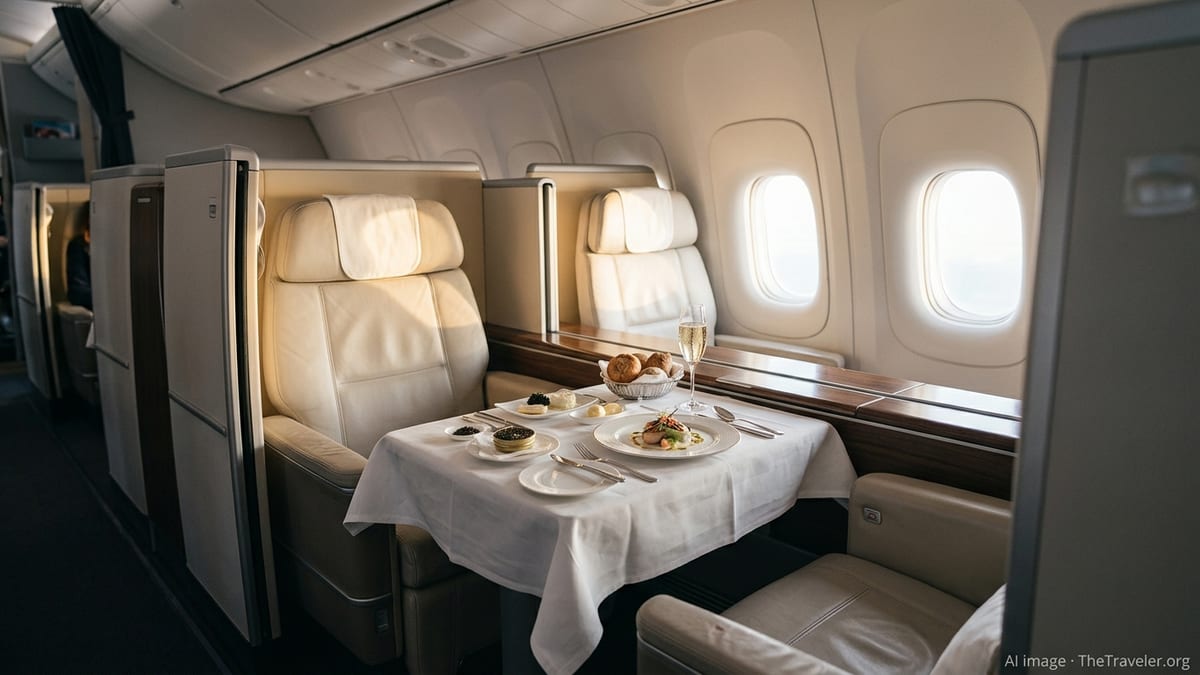
The Allegris First Class Suites, already highlighted by Lufthansa as the new flagship for its premium offer, provide the physical framework for the revamped meal service. The suites feature closeable doors, large sideboards and a generous dining surface, all of which support a more restaurant-like experience at altitude.
In the Allegris First Class Suite Plus, two passengers can sit opposite each other at a large dining table, mirroring the layout of a high-end restaurant booth. This configuration is expected to be central to Lufthansa’s storytelling around its renewed meal concept, enabling shared tasting menus, wine pairings and multi-course service that feels less like a conventional airline tray delivery and more like a private dining room.
Official product descriptions emphasize an atmosphere akin to a Michelin-star restaurant, with amuse-bouche, an extended appetizer selection, several main course choices and a structured dessert and cheese course. The airline also continues to highlight curated wine and champagne selections, which are expected to be integrated more tightly into the new service choreography.
By combining the privacy of enclosed suites with larger, better-lit dining spaces and upgraded tableware, Lufthansa is positioning First Class as a place where the culinary experience is not just a functional element of the journey, but a central feature that can be tailored to the pace and preferences of each traveler.
Personalization, Pre-Selection and Local Cuisine Emphasis
Lufthansa has already introduced meal pre-selection for certain cabins and routes, and reports suggest this capability is being expanded and refined as part of the broader catering revamp. The goal is to let premium passengers indicate their preferred main courses and dietary preferences before departure, improving both customization and availability of popular dishes.
For First Class, this is expected to evolve into a more extensive “culinary journey,” where travelers can choose from several menu paths influenced by regional cuisine, seasonal ingredients or lighter wellness-focused options. Industry reports highlight that the airline has worked with well-known chefs and catering partners to develop these menus, underlining a shift toward more chef-driven curation.
Lufthansa has also invested in showcasing local specialties on key routes. For example, routes to and from Japan have seen the reintroduction of traditional Japanese meals, presented on fine ceramic tableware and styled to evoke the feel of a traditional restaurant. Similar destination-focused touches are likely to play a larger role in First Class menus under the FOX umbrella, as the airline leans into a sense of place at mealtimes.
Beyond regional dishes, the redesign includes attention to special diets and modern dining preferences, with more clearly labeled vegetarian, vegan and lighter options. While exact First Class offerings will vary by route and season, the overarching direction points toward a broader, more flexible menu that better reflects contemporary fine-dining trends.
New Catering Partnership and Upgraded Presentation
This revamp of First Class meals does not start from scratch. In Frankfurt, Lufthansa previously appointed Munich-based Käfer as the catering partner for its First Class Lounges and the dedicated First Class Terminal. The partnership focuses on high-quality ingredients, seasonal dishes and restaurant-level presentation, setting expectations for what passengers encounter before boarding.
Onboard, published information indicates that Lufthansa’s collaboration with major airline caterer Gategroup is central to executing the FOX program. The partnership is aimed at standardizing high-end culinary quality across the network while still enabling regional variation and chef-led creations in First and Business Class.
The visual presentation of meals is another point of emphasis. New tableware, redesigned crockery and glassware, and more modern plating styles are expected to replace some of the more traditional layouts that have characterized Lufthansa’s First Class in past years. The airline appears to be moving toward cleaner lines, smaller but more numerous courses and a table setting that better matches the understated luxury of the Allegris suites.
Alongside the main dishes, enhancements to bread service, petit fours, and coffee and tea offerings help round out the experience. Paired with the established caviar service and a carefully selected list of wines and champagnes curated with input from sommeliers, the aim is to offer a dining arc that feels consistent from aperitif to digestif.
Timing, Rollout and What Passengers Can Expect Next
The timing of the First Class meal service revamp is closely linked to both the rollout of Allegris-equipped aircraft and the phased introduction of FOX across the long-haul fleet. Allegris First Class is gradually appearing on select Airbus A350 routes, with additional aircraft and destinations scheduled to be refitted over the coming years.
Reports from aviation and travel outlets suggest that elements of the new culinary concept are being introduced progressively rather than on a single launch date. As aircraft receive the Allegris cabins and associated galley upgrades, crews are being trained in updated service procedures, including more flexible dining windows and expanded à la carte options.
For travelers booking First Class in the near term, this means that the exact experience will depend on aircraft type, route and schedule. On Allegris-operated flights, passengers can expect the most complete version of the refreshed service, with the full suite environment, expanded menus and upgraded presentation. On other aircraft awaiting refurbishment, some enhancements may appear in the form of updated menus or pre-selection options, even if the underlying cabin has not yet been replaced.
As Lufthansa moves toward its centennial year, the airline is using the FOX initiative and Allegris cabins to signal a renewed focus on the premium segment. For First Class passengers, the most tangible manifestation of this strategy will be a meal service that is more flexible, more tailored and more closely aligned with modern fine-dining expectations at 35,000 feet.