

More news on this day
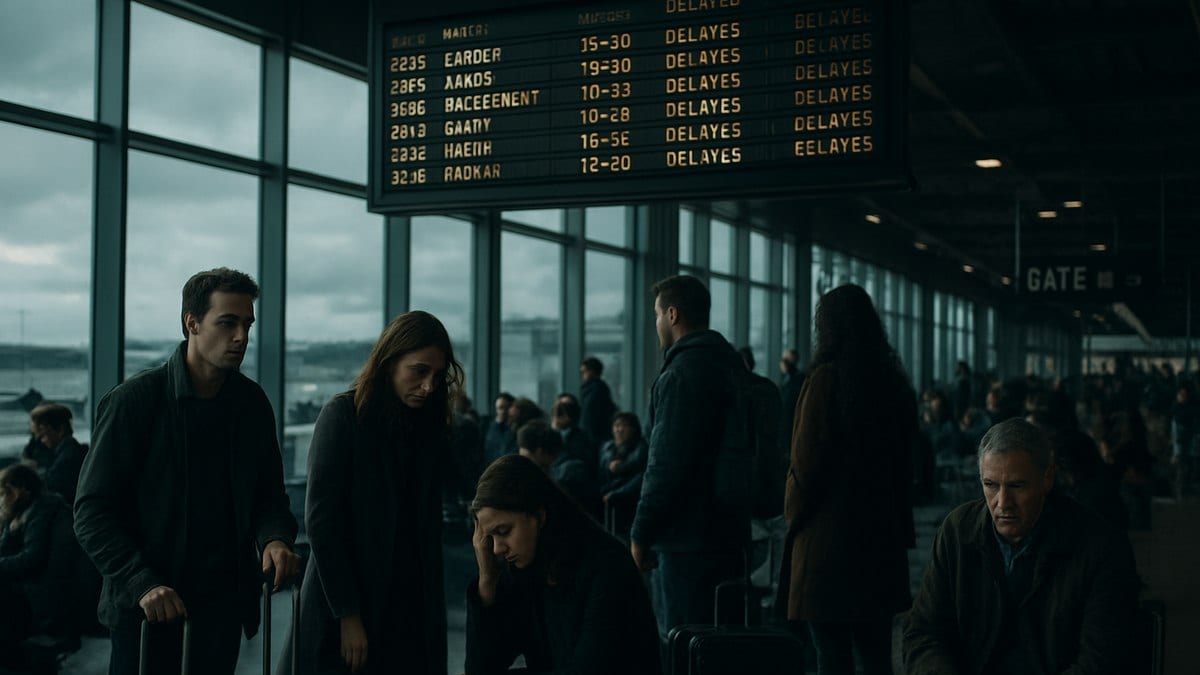
Europe’s air travel network faced another heavy day of disruption on 10 April 2026, with more than 1,100 flights across Germany, Portugal and France delayed or cancelled amid strikes and severe weather.
Get the latest news straight to your inbox!
Lufthansa Strike Ripples Across German Hubs
Germany experienced the most concentrated impact as cabin crew at Lufthansa and its regional unit Lufthansa CityLine staged a one day strike on Friday, focusing on the carrier’s Frankfurt and Munich hubs. Publicly available information from the airline and airport operators indicates that hundreds of flights were removed from schedules or operated with extended delays as the walkout progressed through the day.
Reports from German media and international outlets describe widespread disruption to domestic and European services, with long queues forming at rebooking desks and self service kiosks as passengers sought alternative connections. With Lufthansa acting as a key transfer carrier in the region, cancellations on core routes through Frankfurt and Munich quickly translated into missed onward flights across the continent.
Independent passenger rights platforms tracking the action estimate that the strike affected tens of thousands of travelers, with many facing delays of three hours or more on both short and medium haul sectors. The work stoppage marked the third significant industrial action involving the airline’s staff in recent months, underlining continuing tensions over pay and working conditions as the summer peak season approaches.
Operational data from recent years shows that Germany consistently accounts for a large share of Europe’s air traffic flow management delays, and the latest strike placed additional strain on an already sensitive system. Disruption at Frankfurt and Munich fed into knock on delays at secondary airports as aircraft and crew rotated through the network behind schedule.
Weather Turbulence Adds Pressure in Portugal and France
While Germany grappled with industrial action, parts of Portugal and France contended with unsettled spring weather that complicated operations for airlines and air traffic controllers. In Portugal, recent days have brought periods of strong winds and low visibility along the Atlantic coast, particularly around island and coastal airports that are already known for challenging approaches.
Regional coverage from Portuguese outlets highlights how gusty conditions have forced diversions and go arounds at airports such as Madeira in the run up to the April travel period, with some flights rerouted to alternative airports in Faro, Porto Santo and the Canary Islands. Although conditions varied by hour, the pattern of weather related adjustments contributed to a steady build up of delays as airlines worked to recover planned rotations.
Further north, France has been managing the tail end of an active European windstorm season that has periodically affected operations at major hubs and regional fields alike. Earlier in the year, systems moving in from the Atlantic produced heavy rain, crosswinds and occasional snowfall, particularly across western France, prompting precautionary spacing of arrivals and departures in busy airspace.
According to published aviation performance analyses, France and Portugal rank among the European countries most exposed to weather driven air traffic flow restrictions, especially during transitional seasons. On days when storms intersect with already high traffic volumes, average delays per flight can rise sharply, even when outright cancellations remain limited.
Interconnected Network Spreads Delays Across Europe
The combination of a targeted strike in Germany and weather related constraints in Portugal and France illustrates how quickly disruption in Europe can spread beyond national borders. Airline scheduling data and flight tracking services show that when major hubs such as Frankfurt or Paris begin to run behind schedule, aircraft and crews arriving from secondary cities often miss their planned departure slots, pushing delays into the next wave of flights.
On 10 April, this effect was visible on intra European routes linking Germany, Portugal and France with neighboring markets including Spain, Italy, Belgium and the Netherlands. Short haul services that rely on tight turnaround times at intermediate airports were particularly vulnerable, with even minor ground handling delays compounding the wider congestion.
Travel industry commentary published in recent months stresses that Europe’s aviation system is operating close to capacity on many key corridors, leaving limited room to absorb shocks caused by industrial action or sudden weather changes. When multiple factors coincide, as happened with the Lufthansa strike and coastal storms, the result can be a rapid increase in both the number of delayed flights and the average length of each delay.
Historical data from Eurocontrol and airport performance reports underscores this fragility, noting that Germany and France alone account for a substantial share of Europe’s en route delay minutes in a typical year. With Portugal also appearing among the countries with higher disruption rates, the convergence of events in these three markets created a particularly challenging operational environment.
Passenger Rights and Practical Options Under EU Rules
For travelers caught up in the latest wave of disruption, European passenger protection rules provide a framework for assistance and potential compensation. Regulation EC 261/2004, which remains in force across the European Union, sets out common rules for care, rerouting and financial redress in cases of long delays, cancellations or denied boarding on eligible flights.
Under these rules, passengers facing significant delays are generally entitled to meals, refreshments and access to communication once waiting times cross defined thresholds based on flight distance. In the case of cancellations, airlines must offer rerouting at the earliest opportunity or a refund, although seat availability can be limited on peak travel days when many services are already full.
Compensation in the form of fixed cash payments may be available when disruption is directly linked to airline controlled factors such as staffing disputes, provided that notice periods and delay durations meet regulatory criteria. Legal analyses and advisory platforms note that strikes involving an airline’s own workforce are often treated as within the carrier’s control for the purpose of compensation decisions, though individual cases may vary.
By contrast, delays caused primarily by severe weather or air traffic control restrictions typically fall under the category of extraordinary circumstances, where compensation is not due even if schedules are heavily affected. In such situations, passengers can still expect care and assistance, but not the additional cash payments associated with airline controlled disruption.
What Travelers Can Expect in the Coming Weeks
The timing of the latest disruptions is especially sensitive as Europe moves into the busy spring and early summer travel period, when leisure demand rises and capacity at many airports is already stretched. Travel trend reporting in recent weeks points to strong booking levels across German, Portuguese and French gateways, driven by holidaymakers and a gradual recovery in business travel.
Airlines and airport operators are publicly emphasizing efforts to strengthen resilience through additional staffing, revised schedules and closer coordination with air navigation services. However, industry data from recent summers suggests that industrial disputes, weather volatility and airspace constraints remain recurring risks that are unlikely to disappear in the short term.
Travel experts and consumer organizations continue to advise passengers to build extra time into itineraries that involve tight connections, particularly when transiting through major hubs such as Frankfurt, Munich, Paris or Lisbon. Early morning departures are often highlighted as less vulnerable to accumulated delays, although they can be affected when disruption from the previous day has not fully cleared.
With more strike ballots and potential weather systems on the horizon, the experience of 10 April serves as another reminder of how quickly conditions can change for travelers in Europe. Monitoring airline notifications, consulting real time flight tracking tools and understanding basic rights under EU regulations remain key steps for anyone planning journeys through Germany, Portugal or France in the weeks ahead.