

More news on this day
A one day strike by Lufthansa cabin crew on Friday, April 10 is disrupting flight schedules across Germany, with services from major hubs such as Frankfurt, Munich, Berlin and Hamburg significantly reduced and passengers urged to prepare for cancellations, delays and last minute rebookings.
Get the latest news straight to your inbox!
Cabin Crew Walkout Hits Key German Hubs
The strike has been called by the Independent Flight Attendants’ Organisation UFO after months of stalled talks over a new collective agreement for cabin crew. Publicly available information indicates that the walkout runs from 00:01 to 22:00 local time on Friday, targeting Lufthansa departures from Frankfurt and Munich and extending to regional operations at Lufthansa CityLine.
Reports indicate that all Lufthansa operated departures from Frankfurt and Munich during the strike window are affected to varying degrees, with a mixture of cancellations and reduced frequencies. Regional services feeding the hubs are also being trimmed, creating a ripple effect for domestic and European connections throughout the day.
According to published coverage, UFO has framed the work stoppage as a last resort after what it describes as months of unsuccessful negotiations on working conditions, pay and job security for crew both at Lufthansa and at CityLine. The union has highlighted concerns around scheduling predictability, roster notice periods and protections for staff affected by restructuring within the group.
Information available from German and international outlets indicates that Lufthansa maintains it remains open to talks and is working to stabilize an emergency timetable. However, the carrier is operating a substantially reduced schedule during the strike period, with further short notice disruptions still possible as the day progresses.
Airports Across Germany See Cancellations Mount
The effects of the strike are being felt across the German airport network. Frankfurt and Munich, Lufthansa’s two main hubs, are bearing the brunt of cancellations, with many short haul services to European destinations grounded and selected long haul connections rescheduled or consolidated.
Regional airports are also reporting significant disruption. Hamburg Airport, for example, has published details showing that all planned Lufthansa flights to and from Frankfurt on April 10 have been cancelled, while only a limited number of services to and from Munich are still scheduled to operate. Similar patterns are being reported at other airports served by Lufthansa CityLine, including Berlin.
Published coverage suggests that some long haul flights operated by partner or code share airlines are continuing, while others have been cancelled or rerouted depending on crew availability and aircraft positioning. This patchwork of operations is leaving many travelers uncertain about whether their specific flight will depart as planned until relatively close to departure time.
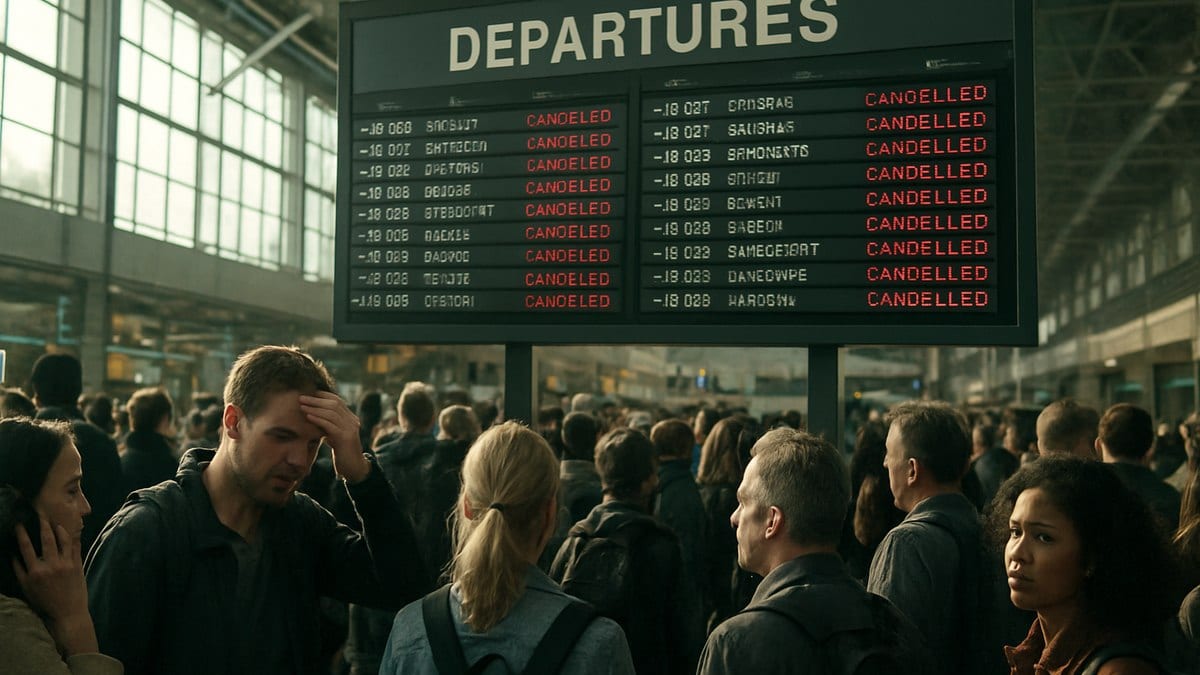
Airport authorities are advising passengers to allow extra time for check in and security, as rebooked customers and those seeking assistance converge on service desks. Screens at several airports show dense clusters of cancellations around Lufthansa and Lufthansa CityLine services, while flights by other carriers largely continue to operate normally.
Passenger Options Include Rebooking, Refunds and Rail
Lufthansa has activated flexible rebooking options for affected travelers. According to travel advisories and information published on airline and airport channels, passengers booked on Lufthansa Group carriers for travel on April 10 are generally being offered the choice of rebooking at no additional cost or requesting a refund, subject to fare conditions.
For journeys within Germany, the airline is again turning to its longstanding cooperation with Deutsche Bahn. Publicly available information shows that many passengers whose domestic or feeder flights have been cancelled can exchange their flight tickets for rail vouchers under the group’s rail substitution scheme, enabling them to complete their trips by train instead of air.
Travel industry reports indicate that some passengers are being rebooked to operate one day earlier or later, particularly on long haul routes where capacity is constrained and aircraft rotations are tightly scheduled. Others are being rerouted via alternate European hubs on partner airlines, although seats on popular routes around the end of the Easter holiday period are in short supply.
Advisories circulated through airlines and travel agents emphasize that travelers should not go to the airport without a confirmed rebooking if their original flight shows as cancelled. With customer service channels under heavy pressure, many passengers are turning to airline apps and online tools as the fastest way to secure new itineraries.
Strike Timed Around Easter Travel Peak
The strike falls just after the main Easter holiday period in Germany, a time when leisure traffic typically remains high as travelers return from vacations and short breaks. Reports from business media note that demand on many routes is still elevated on the second Friday after Good Friday, increasing the impact of any large scale disruption.
Labor coverage points out that UFO had previously held off on strike action during the core Easter weekend to avoid peak holiday chaos, but has now chosen April 10 to increase pressure on management while still affecting a substantial number of passengers. The timing means that both families returning from school holidays and business travelers heading to end of week meetings are among those caught up in the cancellations.
Industry analysts cited in public reporting suggest that the dispute reflects broader tensions within the European airline sector, where carriers are seeking to maintain cost controls and improve profitability while staff push for better conditions after years of operational strain. Lufthansa’s ongoing fleet and network restructuring, including changes at regional subsidiary CityLine, has become a focal point in these negotiations.
While the current walkout is limited to a single day, observers note that further industrial action later in the spring cannot be ruled out if talks do not progress. For travelers planning trips involving Lufthansa or German airports in the coming weeks, keeping a close eye on developments around labor negotiations is being widely recommended by travel advisors.
What Travelers Should Watch For Today
As Friday progresses, the practical impact of the strike is becoming clearer route by route. Passengers with departures from Frankfurt and Munich are being advised in public travel updates to check their flight status repeatedly, as additional cancellations or aircraft swaps may occur even close to departure.
Travel forums and consumer channels indicate that connecting passengers are particularly exposed to disruption, since the loss of one short haul leg can break an entire long haul itinerary. Some travelers report being offered overnight accommodations and rebookings for the following day, while others are self arranging alternate routes via nearby countries where more capacity is available.
Travel experts quoted in published coverage recommend that passengers retain receipts for any additional costs such as hotels, meals and surface transport, in case they are later able to claim reimbursement under European air passenger regulations or from travel insurance policies. However, exact entitlements depend on individual circumstances and are being assessed on a case by case basis.
With Lufthansa signaling that schedules should largely normalize from Saturday, April 11, most of the disruption is expected to be concentrated on the single strike day. For many travelers across Germany and beyond, however, Friday’s cabin crew walkout is delivering an unwelcome reminder of how quickly labor disputes can upend even well planned itineraries.