

More news on this day
A large scale cabin crew strike at Lufthansa has caused the cancellation of more than 580 flights across Germany’s major hubs in April 2026, severely disrupting Easter season travel and stranding tens of thousands of passengers across Europe and beyond.
Get the latest news straight to your inbox!
Frankfurt and Munich Bear the Brunt of Cancellations
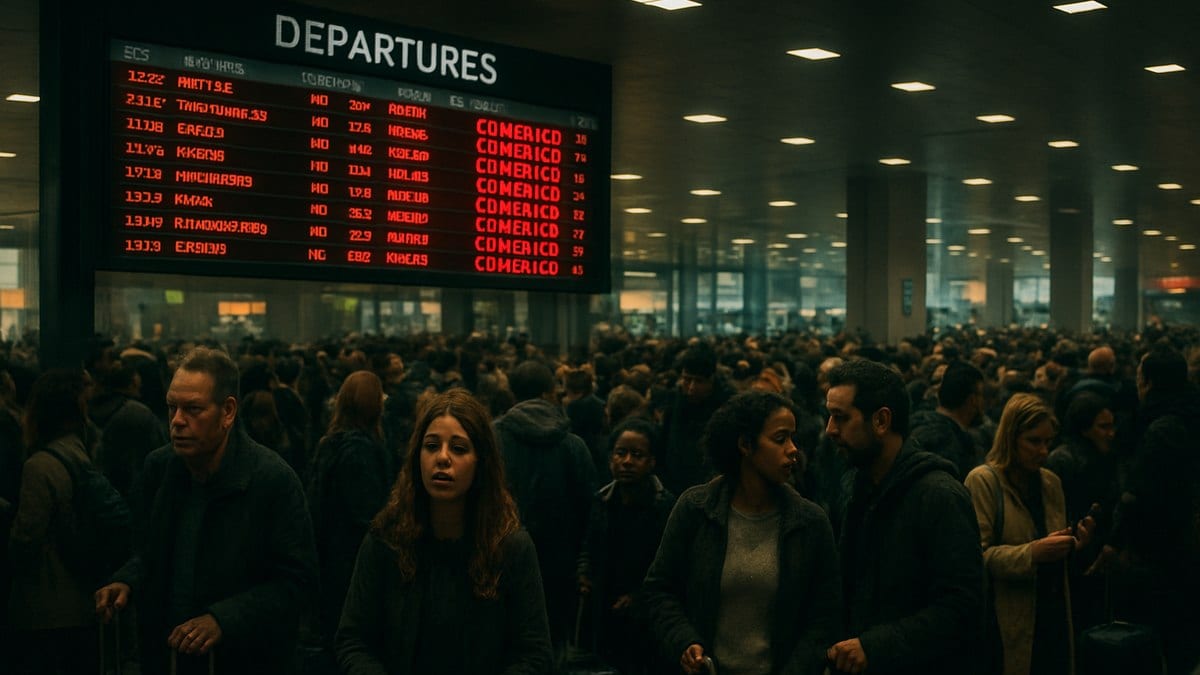
Frankfurt Airport, Germany’s largest aviation hub, has been the focal point of the disruption. Publicly available traffic data and airport operator updates indicate that around 580 of roughly 1,350 scheduled take offs and landings were canceled on the main strike day, affecting an estimated 70,000 passengers or more. Reports describe departure boards heavily dominated by cancellations, particularly on short and medium haul routes within Europe.
Munich, Lufthansa’s second major hub, also experienced extensive cancellations and delays. While the number of scrapped flights there is lower than at Frankfurt, published coverage notes that departures operated by Lufthansa and its regional arm Lufthansa CityLine were significantly reduced for much of the day. The impact radiated across the domestic network, with connections between the two hubs among the most affected.
Industrial action extended to additional German airports, including Berlin, Stuttgart, Leipzig/Halle and several regional bases where CityLine crews are stationed. As departures from Germany formed the core of the walkout, disruptions spread quickly into the wider European network, affecting flights to destinations such as Budapest and Vilnius as schedules unraveled.
Travel industry briefings describe a cascade effect typical of large hub strikes. Even flights that technically remained in service often departed with substantial delays, as aircraft and crews were out of position and airport handling teams struggled to manage repeated schedule changes throughout the day.
Union Dispute Escalates After Months of Tension
The latest walkout was organized by the Independent Flight Attendants’ Organization, known by its German acronym UFO, which represents a large share of Lufthansa’s cabin crew. According to union statements cited in published reports, the strike marks at least the third work stoppage at the airline in two months, following earlier action by cockpit crews in March. The escalation highlights unresolved tensions over pay, working conditions and staffing in a period of high demand but persistent cost pressures.
Publicly available information shows that the cabin crew strike was timed as a full day action, generally spanning from shortly after midnight to late evening local time. This scheduling maximized its impact on outbound rotations from Germany, particularly morning and early afternoon departures from Frankfurt and Munich that feed the long haul network. Travel advisories issued in advance warned that the effects could extend beyond the official strike window as aircraft and crews required time to reposition.
While all Lufthansa branded departures from German hubs were within the scope of the strike, long haul services appear to have been less heavily affected than short haul routes. Earlier in March, during a separate cockpit strike, Lufthansa reported that it was able to maintain around 60 percent of long haul flights. Travel analysts suggest a similar prioritization pattern in April, with the airline focusing limited staffing resources on intercontinental services while pruning regional frequencies.
The dispute arrives at a sensitive moment for the carrier, which has been rebuilding its network and reopening long haul destinations in Asia and the Middle East. Recent schedule announcements indicate an intention to expand premium long haul capacity later in 2026, even as domestic and intra European services face pressure from labor costs, high airport fees and increased competition from rail on shorter sectors.
Passenger Impact Spreads Across Europe and Beyond
The strike’s effects were not confined to Germany. Flight schedules and airport statements from neighboring countries show cancellations on Lufthansa services linking hubs such as Frankfurt with regional cities including Budapest and Vilnius. Several airports reported multiple round trip flights to Germany being scrapped, leaving travelers facing unexpected overnight stays or lengthy surface detours.
Travel forums and customer reports describe passengers on multi segment itineraries, often booked via partner airlines, discovering that their German connection had been canceled even as other parts of their journey remained intact. This resulted in complex rebooking scenarios, particularly for those traveling between North America or Asia and smaller European destinations that rely on Frankfurt or Munich as gateways.
Publicly available guidance from travel advisors stresses that a hub focused strike can be more disruptive than localized airport actions. When an airline’s core bases are affected, a high proportion of its network is exposed, and the knock on effects can last for several days. Aircraft may end up in the wrong locations, and crews can exceed duty time limits while waiting for revised schedules, further constraining capacity.
Passenger accounts also highlight confusion over which flights would operate. Although the strike call formally covered all Lufthansa departures from German airports, some flights still took off, particularly long haul sectors and services operated by partner carriers. This partial schedule made it harder for travelers to predict whether their journeys would proceed as planned until final cancellation notices were issued.
Rebooking, Compensation and Travel Advisory Guidance
Lufthansa published a special disruption timetable and encouraged customers to check their bookings digitally rather than at airport counters. Travel advisories compiled by industry sources indicate that affected passengers were offered complimentary rebooking on alternative dates, subject to availability, or the option to request refunds if their flights were canceled. For itineraries originating in the European Union, standard passenger rights regulations continue to apply regarding care and assistance.
Consumer organizations note that while airlines are generally not required to pay cash compensation when cancellations are caused by strikes involving their own staff, passengers remain entitled to rerouting or refunds and to basic support such as meals and accommodation during extended waits. However, the practical delivery of these rights can be challenging in a large scale disruption when call centers and airport service desks are overwhelmed.
Travel experts recommend that passengers who had flights canceled during the April strike retain all documentation, including booking confirmations, cancellation notices and receipts for additional expenses. These records may be needed when submitting claims for reimbursement of costs such as hotels or ground transportation that were incurred as a direct result of the disruption.
For future travel, industry guidance suggests that passengers booked on itineraries involving Lufthansa’s German hubs in the weeks after the strike should monitor their flights closely. Although operations are expected to normalize, residual schedule adjustments and aircraft rotations may still result in short notice changes, particularly on routes that were already operating with reduced frequencies in the summer timetable.
Ongoing Labor Pressures Raise Questions for Summer Travel
The April cabin crew walkout follows earlier industrial action by pilots in March, pointing to a broader pattern of labor disputes within the Lufthansa Group. Public commentary from aviation analysts suggests that negotiations over pay and working conditions are likely to continue in the coming months, raising questions about the stability of the airline’s schedule heading into the peak summer holiday period.
Recent timetable changes have already reduced some domestic German services and feeder connections to major hubs, as the carrier responds to structural shifts in demand and high operating costs. Additional disruption linked to labor disputes could further test traveler confidence, especially among those relying on tight connections through Frankfurt or Munich to reach long haul destinations.
For now, published coverage indicates that the April strike was limited to a single day, with no immediate follow up action announced. However, union representatives have previously signaled a willingness to escalate if contract talks fail to produce agreements they consider acceptable. Any renewed strike calls would likely focus again on the German hubs, where the leverage over the wider network is greatest.
Travel planners and corporate travel departments are watching developments closely, factoring the possibility of further industrial action into risk assessments for itineraries that depend on Lufthansa’s German operations. For leisure travelers, particularly those heading to or transiting via Germany in late spring and summer 2026, the episode serves as a reminder to leave additional buffer time for connections and to stay alert to schedule updates in the days before departure.