

More news on this day
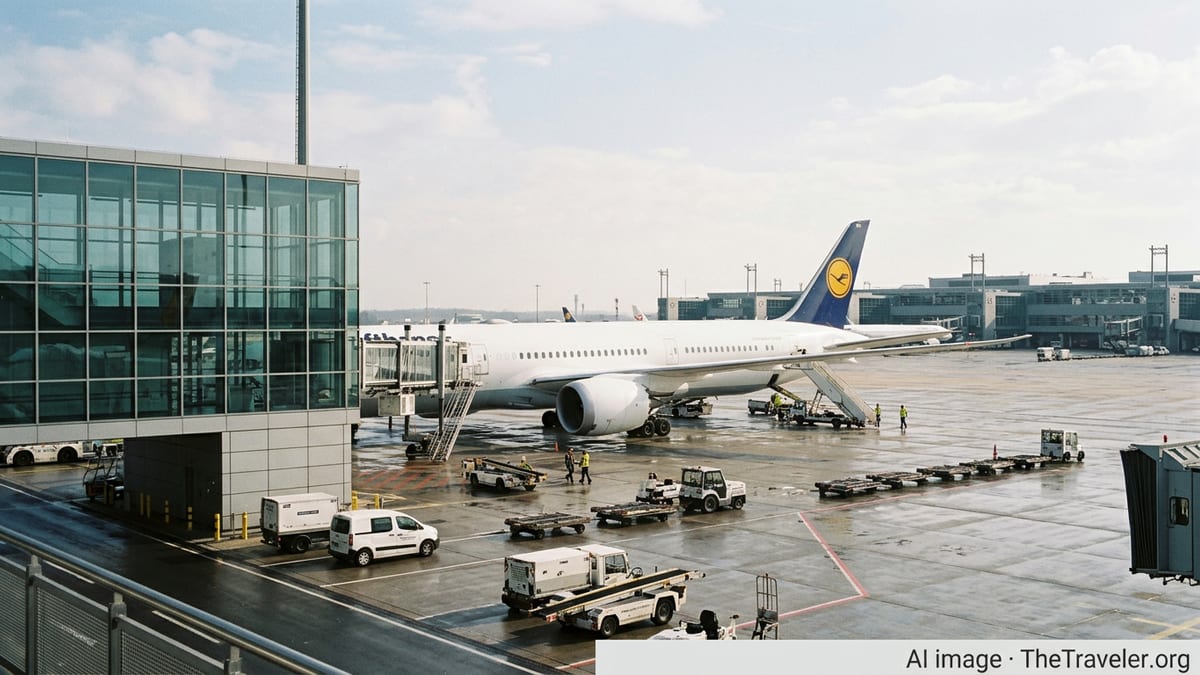
Lufthansa is strengthening its foothold in Southeast Asia with the launch of nonstop Frankfurt–Kuala Lumpur flights in late October 2026, a new long-haul link that promises faster access between Europe’s largest hub and one of the region’s fastest‑growing capitals.
Details of the New Long-Haul Connection
The German carrier will inaugurate the Frankfurt–Kuala Lumpur route on October 25, 2026, as part of its Winter 2026/27 schedule. The service is planned to operate five times weekly year-round, offering a direct link between Germany’s primary intercontinental hub and Malaysia’s main gateway.
Flight LH704 is scheduled to depart Frankfurt at 9:30 p.m., arriving at Kuala Lumpur International Airport at 4:40 p.m. local time the following day. The return service, LH705, will leave Kuala Lumpur at 11:55 p.m. and touch down in Frankfurt at 6:00 a.m., enabling travelers to make early-morning connections across Europe and North America.
Lufthansa will operate the route with the Boeing 787-9 Dreamliner, configured with 287 seats across Economy, Premium Economy and Business Class. The aircraft will feature the airline’s new Allegris long-haul cabin, which is being introduced across the fleet as Lufthansa’s flagship interior for premium and leisure travelers.
Schedules indicate that the flights will run daily except Tuesdays and Thursdays, balancing frequency with aircraft availability on other long-haul rotations. Tickets are already on sale, giving corporate travel planners and tour operators ample time to incorporate the new nonstop option into 2026 and 2027 itineraries.
Strategic Bet on a Fast-Growing Southeast Asian Hub
The move marks a renewed push into Southeast Asia for Lufthansa, which has been gradually rebuilding and reshaping its long-haul network in the region. Kuala Lumpur will become the third Southeast Asian destination for the Lufthansa Group after Bangkok, Singapore and Phuket, reinforcing the airline’s view of the region as a key growth market.
Malaysia has recorded robust visitor numbers in recent years, positioning itself as one of Southeast Asia’s busiest tourism markets. At the same time, Germany has emerged as Malaysia’s most significant trading partner in the European Union, with more than 700 German companies maintaining a presence in the country. The new nonstop flight is expected to support both inbound investment and outbound expansion for firms operating between the two economies.
Lufthansa executives have framed the route as a natural extension of the airline’s strategy to concentrate intercontinental services at its core hubs while targeting destinations with a blend of corporate demand and resilient leisure traffic. Kuala Lumpur fits that profile, serving as a political and financial capital, a manufacturing center and a launchpad to Malaysia’s islands and national parks.
Analysts note that the route also leverages Kuala Lumpur’s role as a secondary regional hub. From there, travelers from Europe can connect onward on other carriers to destinations across Malaysia, Borneo and the wider ASEAN region, without routing through larger and often more congested gateways such as Singapore or Bangkok.
What the Route Means for Travelers
For passengers, the return of a direct Frankfurt–Kuala Lumpur link significantly reduces travel time and complexity compared with itineraries that require a change of aircraft in the Middle East or elsewhere in Asia. Business travelers in particular gain a same-airline, overnight option in both directions, allowing for maximum productivity on workdays at either end of the trip.
The late-evening departure from Frankfurt is designed for convenient onward feed from markets across Europe and North America, many of which already enjoy daily or multiple-daily services into Lufthansa’s main hub. Upon arrival in Kuala Lumpur in the late afternoon, travelers can connect to domestic flights or head directly into the city for evening meetings or hotel check-in.
On the westbound leg, the near-midnight departure from Kuala Lumpur allows travelers to finish a full business day or conclude leisure activities before heading to the airport. An early-morning arrival in Frankfurt offers smooth onward connections across the Lufthansa and Star Alliance networks, opening up options to major cities in the United States, Canada and throughout Europe.
The use of the Boeing 787-9 is also likely to appeal to long-haul passengers. The type is known for its lower cabin altitude, improved humidity and quieter interior, all of which contribute to reduced fatigue on 13-hour flights. With the Allegris cabin, travelers can expect a more granular choice of seating, particularly in Business Class, where Lufthansa is introducing a range of seat types and enhanced privacy features.
Competitive Landscape in the Europe–Malaysia Market
Lufthansa’s new flight will make it the only airline offering a nonstop connection between Germany and Malaysia, a market currently dominated by one-stop itineraries via Middle Eastern and Asian hubs. Competing carriers such as Qatar Airways, Emirates and Turkish Airlines have long attracted travelers with extensive networks and aggressive fares, but their itineraries typically require a transfer in Doha, Dubai or Istanbul.
The Frankfurt–Kuala Lumpur nonstop service provides a time-saving alternative, especially for corporate accounts that prioritize minimized travel time and reduced disruption. For leisure travelers, the attraction lies in a single boarding and a continuous overnight journey rather than a multi-leg itinerary that might involve lengthy layovers.
The move also strengthens Lufthansa’s position as a gateway carrier for travelers heading to Europe from Malaysia and neighboring countries. With Frankfurt serving as a major connection point to destinations across the continent, the airline aims to recapture traffic that might otherwise flow over rival hubs in the Gulf or through competing European gateways.
While pricing strategies have not yet been fully revealed, the combination of a new product in the form of the Allegris cabin and the convenience of a nonstop flight suggests that Lufthansa will aim for a premium positioning, particularly in Business and Premium Economy. Nevertheless, competitive pressure from one-stop operators is likely to keep fares keen, especially during off-peak seasons.
Economic and Tourism Implications for Malaysia
The new route is expected to deliver a measurable boost to Malaysia’s tourism and trade sectors. A direct link to Frankfurt connects Kuala Lumpur not only to Germany but also to a broad swath of secondary European cities that feed into Lufthansa’s hub. This enhanced accessibility could encourage more first-time visitors from across Europe to consider Malaysia for business trips, conferences and holidays.
Industry observers in Malaysia highlight the potential benefits for sectors such as advanced manufacturing, renewable energy, automotive components and professional services, where German and Malaysian companies already have substantial partnerships. Simplified travel logistics can make it easier to schedule project visits, technical support and executive-level engagements.
On the tourism front, a nonstop service from Europe’s heartland to Malaysia’s capital is likely to support growth targets for visitor arrivals. Kuala Lumpur functions as the main stepping stone to coastal and nature destinations such as Langkawi, Penang and Sabah, where local authorities have been investing in infrastructure and marketing campaigns aimed at long-haul travelers.
For German travelers, the new flight also strengthens connections to Southeast Asia at a time when demand for long-haul leisure travel remains resilient. With a single overnight flight, passengers can exchange central Europe’s autumn and winter for tropical heat, urban street food and rainforest excursions, a proposition that tourism boards and tour operators on both sides are expected to promote vigorously as October 2026 approaches.