

More news on this day
Lufthansa will return to the Malaysian market in winter 2026/27 with a new nonstop Frankfurt to Kuala Lumpur service, restoring direct air links between Germany and Malaysia for the first time in a decade.
Five Weekly Flights From October 25, 2026
The German carrier confirmed it will launch the long-haul route on October 25, 2026, at the start of the IATA winter 2026/27 season. The service will operate five times per week year-round, marking a strategic expansion of Lufthansa’s Southeast Asia network and a renewed bet on Malaysia’s tourism and trade potential.
According to the schedule filed by the airline, flight LH704 will depart Frankfurt at 9.30 p.m. local time and arrive in Kuala Lumpur at 4.40 p.m. the following day. The return leg, LH705, is set to leave Kuala Lumpur at 11.55 p.m., touching down in Frankfurt at 6.00 a.m. the next morning, offering overnight connections in both directions.
The timing is designed to plug seamlessly into Lufthansa’s broader hub network in Frankfurt, giving passengers from across Europe and North America one-stop access to Malaysia. For Malaysian travelers, the early-morning arrival into Frankfurt opens up a bank of onward flights across the continent as well as to the Americas and Africa.
Seats on the route have already been made available for booking, with the airline positioning the launch as a key highlight of its upcoming winter long-haul program.
Dreamliner Service With New Allegris Cabin
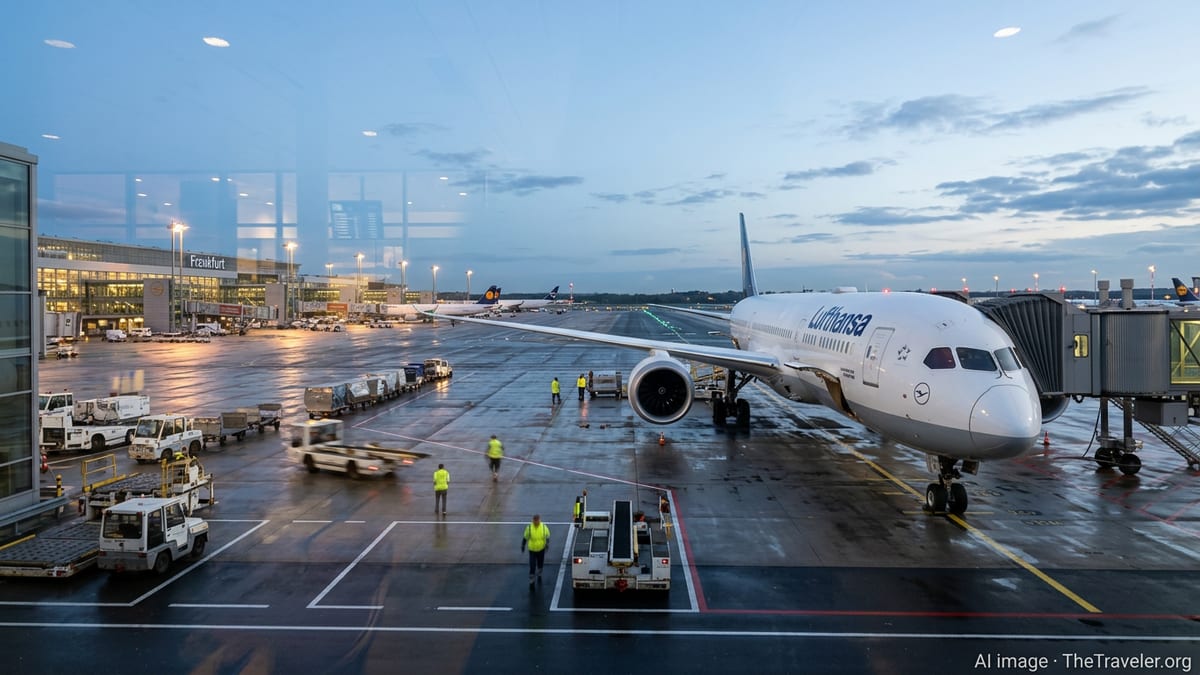
The revived Frankfurt–Kuala Lumpur route will be operated by Lufthansa’s Boeing 787-9 Dreamliner, one of the newest additions to the group’s long-haul fleet. Configured with 287 seats across Business, Premium Economy and Economy classes, the aircraft will showcase the carrier’s next-generation Allegris cabin on this sector.
The Allegris product introduces a reworked Business Class with direct aisle access for every passenger, upgraded Premium Economy seating and refreshed long-haul Economy cabins. Lufthansa is using the rollout of this cabin concept to reinforce its premium positioning on competitive intercontinental routes.
The choice of the fuel-efficient 787-9 reflects the airline’s focus on balancing capacity with operating economics on longer thin routes. The aircraft’s lower fuel burn and extended range make it well-suited to the roughly 10,000-kilometre sector linking Germany’s financial capital with Malaysia’s main gateway.
Onboard, travelers can expect modern inflight entertainment systems, improved cabin lighting and higher humidity levels typically associated with the Dreamliner, which collectively aim to reduce fatigue on overnight flights and appeal to both business and leisure markets.
Third Southeast Asian Gateway for Lufthansa Group
The new service will position Kuala Lumpur as the Lufthansa Group’s third Southeast Asian destination, alongside Bangkok, Singapore and Phuket. It also makes Lufthansa the only airline operating nonstop flights between Germany and Malaysia, after a prolonged absence of direct services on the city pair.
Lufthansa previously served Kuala Lumpur but withdrew from the market in 2016 amid a broader restructuring of its long-haul network. Since then, passengers traveling between Germany and Malaysia have relied on one-stop options via Gulf and Asian hubs, or on European partners routing through other cities.
The latest move underscores the group’s renewed confidence in Southeast Asia as a growth region, with Malaysia emerging as an increasingly important node for both inbound tourism and regional connectivity. For Kuala Lumpur International Airport, the return of a major European flag carrier enhances its long-haul portfolio and strengthens its status as a transit gateway.
The route will also complement existing capacity offered by other Star Alliance members in the region, creating additional connection options for frequent flyers and corporate travel accounts tied to alliance-wide agreements.
Boost for Tourism, Trade and Corporate Travel
The restoration of direct Germany–Malaysia flights is expected to deliver benefits well beyond aviation. Tourism officials and business groups in both countries have long argued that nonstop links are critical for stimulating visitor numbers, investment flows and corporate travel.
Germany is one of Malaysia’s most important economic partners in Europe, with hundreds of German companies active in sectors ranging from manufacturing and engineering to renewable energy and services. A nonstop Frankfurt–Kuala Lumpur link is likely to be attractive to export-oriented firms, project managers, and small and medium-sized enterprises looking for reliable connections between the two markets.
On the leisure side, the route opens up easier access for German and European travelers to Malaysia’s mix of city, beach and nature destinations, from Kuala Lumpur’s urban attractions to the islands and rainforests of Peninsular and East Malaysia. In turn, Malaysian travelers gain a more direct path into central Europe, with Frankfurt acting as a launchpad for city breaks and longer itineraries across the continent.
Travel industry analysts expect the service to stimulate competition on fares for Germany–Malaysia traffic, particularly against one-stop itineraries via the Middle East and other Asian hubs, while also supporting higher-yield premium demand from corporate clients.
Sign of Renewed Confidence in Long-Haul Recovery
Lufthansa’s decision to resume Kuala Lumpur service in 2026 fits into a wider trend of European and Asian carriers rebuilding and expanding long-haul networks as international air travel normalizes and demand patterns stabilize. The inclusion of Malaysia in the airline’s future schedule suggests confidence in sustained recovery on routes connecting Europe with Southeast Asia.
By announcing the route nearly 18 months ahead of launch, the airline is giving corporate travel planners, tour operators and individual passengers ample lead time to incorporate the new option into their 2026 and 2027 travel plans. It also allows Lufthansa to ramp up marketing in both markets and coordinate schedules with partners and feeder services.
The Frankfurt–Kuala Lumpur launch will be closely watched by the industry as a test of how quickly point-to-point demand between secondary intercontinental markets can rebuild. If successful, it may encourage further network expansion or additional frequencies in subsequent seasons as capacity and fleet deliveries allow.
For now, the announcement signals a clear message from Germany’s largest airline: Southeast Asia, and Malaysia in particular, are firmly back on its long-haul growth map.