

More news on this day
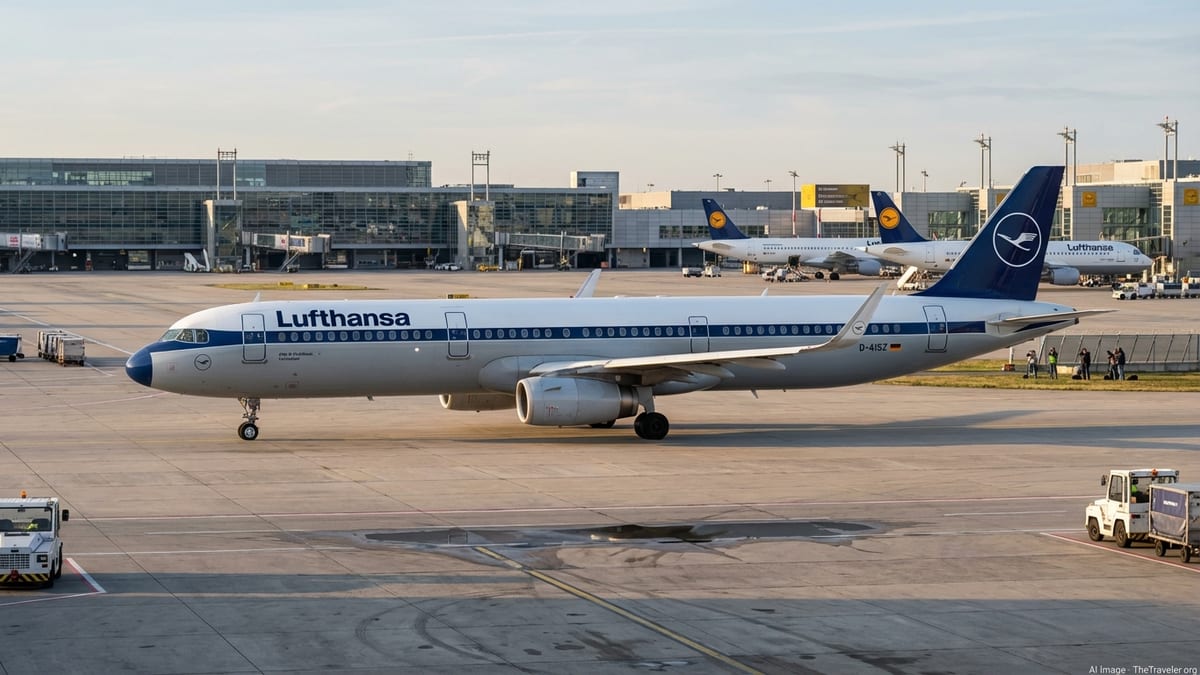
Lufthansa is marking the centenary of its original founding with a striking nod to the jet age, unveiling a retro “parable” livery on an Airbus A321 that recreates the look of the legendary Lockheed Super Star.
The freshly painted narrowbody, registered D-AISZ, is debuting as part of the airline’s broader 100th anniversary celebrations and is already attracting attention from aviation enthusiasts across Europe for its meticulous homage to one of the most recognizable designs in the carrier’s history.
More News
- Caribbean Travel to U.S. Upended by New Visa Freezes and Expanded Bans
- Mexico Restores E-Visas for Brazilians, Paving the Way for Borderless Tourism
- Philippine Airlines Joins Regional Carriers Powering Southeast Asia’s Tourism Boom
A Retro Star Returns to the Skies
The newly repainted Airbus A321 carries the historic Lufthansa parable design that once graced the Lockheed L‑1049G Super Star at the dawn of the postwar transatlantic era. The “parable” reference comes from the sweeping, curved cheatline and stylized shapes that trace a dynamic arc along the fuselage, a hallmark of mid‑20th‑century airline branding. On D-AISZ, that look has been carefully adapted to fit the proportions of a modern single-aisle jet while remaining immediately recognizable to aviation historians.
Lufthansa completed the repainting at facilities in Norwich, England, before positioning the aircraft back to Germany for its ceremonial introduction. The short and medium haul workhorse is slated to serve regular scheduled flights across Europe, turning everyday routes into moving tributes to the airline’s past. For many travelers, it will be the first tangible contact with a livery that previously existed only in photographs and museum exhibits.
The retro A321 joins a growing global trend among airlines to revisit iconic color schemes, but for Lufthansa the timing is particularly symbolic. The carrier is entering its centennial year in 2026, counting from the founding of the first Deutsche Luft Hansa in 1926, and is using the milestone to spotlight both its heritage and its current transformation into a leaner, more modern group airline.
Marking 100 Years of Lufthansa Heritage
Lufthansa’s decision to revive a Super Star-inspired livery underscores the central role that aircraft once played in the airline’s rebuilding and international expansion after the Second World War. In the 1950s and 1960s, the distinctive cheatline, bare-metal tones, and blue-and-yellow branding came to symbolize German civil aviation’s return to the global stage. By recreating that aesthetic on a 21st‑century Airbus, Lufthansa is effectively bridging one hundred years of commercial aviation history.
The centenary itself focuses on the foundation of the first Lufthansa in 1926 and the official commencement of operations in April of that year. Over the decades, various incarnations of the airline have navigated geopolitical upheaval, economic cycles, and technological revolutions. Today’s anniversary campaign, including the retro A321, is positioned not just as nostalgia but as a narrative about continuity: the crane logo, the emphasis on engineering reliability, and the carrier’s role as a connector between Germany and the world.
The airline is also using the anniversary year to showcase its broader brand refresh and fleet modernization. Alongside heritage designs like the parable A321, Lufthansa is rolling out next-generation cabins and long haul products, underlining that looking back at its history does not mean standing still. The retro livery becomes a visual anchor for a year filled with product launches, route announcements, and corporate storytelling.
Inside the “Parable” Design on the Airbus A321
Translating a mid-century Lockheed Super Star paint scheme onto a stretched Airbus A321 body required careful tweaking of lines, proportions, and color balance. The hallmark feature is the sweeping cheatline that runs from the nose to the tail, curving gently upward in a parabolic arc that lends the aircraft a sense of motion even on the ground. This visual device, once meant to suggest speed and modernity in the propeller era, finds new resonance on a contemporary jetliner.
At the nose, the designers have recreated the characteristic blue mask and metallic tones that were iconic on historic Lufthansa propliners, adapting the hues to modern paint technologies and regulatory requirements. Observers note subtle differences from earlier retro jets that Lufthansa has flown in recent years, including updated grey areas in place of polished silver and slight refinements around the cockpit windows to better fit the A321’s shape.
The fuselage features the classic Lufthansa wordmark and crane logo in a style closely resembling mid-century branding, though executed with today’s materials and branding guidelines. The tail retains the airline’s familiar crane emblem, providing a visual link to current liveries while the rest of the aircraft leans firmly into its heritage role. Spotters and design enthusiasts are already dissecting the finer details, from font choices to the exact placement of striping relative to the passenger windows.
A Highlight of the 100th Anniversary Fleet Program
The retro A321 is one piece in a larger Lufthansa initiative to create what it calls an anniversary fleet, a group of aircraft across key sub-fleets carrying special designs to mark 100 years of the brand. Long haul types such as the Boeing 787‑9, Airbus A350‑900 and A350‑1000, as well as the Boeing 747‑8 and Airbus A380, are receiving an entirely different but equally striking anniversary scheme featuring an XXL crane and bold centennial markings.
In that modern centennial design, the fuselage is painted deep blue and dominated by an oversized white crane whose wings blend into the aircraft’s own wings. The numerals “100” and the dates “1926 / 2026” are integrated on opposite sides of the fuselage, with an additional “100” painted on the belly for dramatic impact during takeoff and landing. The first of these, a Boeing 787‑9 registered D‑ABPU and nicknamed “Berlin,” has already entered service, with more aircraft following through 2026.
Within this broader context, the parable A321 serves as the heritage counterpart to the futuristic anniversary jets. While the long haul fleet carries the story of Lufthansa’s future ambitions, the retro narrowbody represents where the airline has come from. Together, they are designed to create a moving exhibition that passengers can encounter across the global network, either on intercontinental journeys or short European hops.
Passenger Experience and Route Deployment
The A321 wearing the parable livery will be used on short and medium haul European routes, giving a wide cross-section of passengers the chance to experience the centenary aircraft in person. Unlike one-off charter showcases, Lufthansa intends to integrate D‑AISZ into its standard schedule from its Frankfurt hub, meaning travelers may find themselves unexpectedly boarding a piece of flying history when traveling for business or holidays.
Onboard, the passenger experience remains fully modern. The interior matches Lufthansa’s current continental product standards rather than attempting a retro re-creation. That contrast between heritage exterior and contemporary cabin is intentional: the airline wants the aircraft to photograph like a classic from the outside while delivering today’s comfort, safety features, and digital services on the inside.
For crew and regular flyers, the appearance of the parable livery on familiar city pairs adds a layer of storytelling to otherwise routine operations. Expect social media posts, special announcements by flight attendants, and appearances in marketing campaigns targeting both aviation enthusiasts and the general public. The aircraft is also likely to be in high demand for charter flights, promotional events, and airshow flybys during the centenary year.
Why Retro Liveries Matter for Airlines Today
Lufthansa’s decision to invest in a Super Star-inspired scheme illustrates how retro liveries have become powerful tools in airline branding. In a market where most carriers deploy sleek, minimalist designs, a historically informed paint job can instantly differentiate an aircraft on the ramp, generating free publicity and emotional engagement. For Lufthansa, the parable livery taps into nostalgia among older travelers and aviation fans while offering younger passengers a visual story about the airline’s origins.
From a commercial standpoint, these special designs also feed a broader ecosystem of limited-edition models, branded merchandise, and social content. Enthusiast communities track the movements of special aircraft, share photography, and even plan trips specifically to fly them. That creates a halo effect for the airline’s wider brand, particularly in a milestone year when corporate messaging focuses heavily on values like continuity, reliability, and innovation.
The retro A321 also allows Lufthansa to position itself within a wider European and global tradition. Other legacy carriers have similarly brought back heritage designs to celebrate anniversaries or fleet milestones, and the German airline’s contribution leans into its distinctive crane emblem and postwar reconstruction narrative. In that context, the parable livery is not simply a look backward but part of a broader conversation about what national carriers represent in an era of consolidation and intense competition.
Spotter Reactions and Industry Response
Early images of D‑AISZ in its parable livery have quickly circulated among plane spotter forums and aviation news outlets. Enthusiasts have compared the design with previous Lufthansa retro jets, including earlier Airbus aircraft that wore classic schemes, noting incremental refinements in color tones and striping layouts. Some observers highlight the slightly more muted metallics and grey accents adapted for modern paint and maintenance standards, as well as subtle changes around the nose profile to better suit the A321’s geometry.
Within the industry, the livery is being interpreted as a confident statement about Lufthansa’s resilience and long-term positioning. At a time when airlines continue to recover from the pandemic and invest heavily in new-generation fleets, choosing to dedicate aircraft to heritage designs sends a message about financial stability and brand pride. It also underscores the competitive importance of emotional connection in an era when many core services are perceived as increasingly commoditized.
Airport operators and tourism bodies are also keen to leverage the appeal of such special aircraft. Expect coordinated photography sessions, tarmac events, and local promotions in key Lufthansa markets as the anniversary fleet, including the parable A321, cycles through major airports. For regional destinations, a visit from the retro jet can become a small media event, underlining the enduring draw of distinctive airline liveries even for travelers who rarely look beyond their boarding pass.
FAQ
Q1. What exactly is Lufthansa’s new “parable” livery on the Airbus A321?
The parable livery is a retro-inspired paint scheme on Airbus A321 D‑AISZ that recreates the look of Lufthansa’s historic Lockheed Super Star aircraft, featuring a sweeping curved cheatline, classic colors, and vintage branding elements adapted to a modern jet.
Q2. Why did Lufthansa choose a retro design to mark its 100th anniversary?
Lufthansa is using the retro design to celebrate its heritage as it approaches the 100th anniversary of the first Lufthansa founded in 1926, connecting today’s passengers with the airline’s postwar expansion era and long history of international service.
Q3. On which routes will the retro A321 be flying?
The aircraft is scheduled to operate short and medium haul routes across Europe from Lufthansa’s hubs, particularly Frankfurt, appearing on regular scheduled services rather than being limited to occasional charter or showcase flights.
Q4. Is the interior of the retro A321 also designed in a vintage style?
No, the interior remains fully modern and in line with Lufthansa’s current continental product standards; only the exterior livery is retro, allowing passengers to enjoy contemporary comfort and technology inside a heritage-themed aircraft.
Q5. How does the parable livery fit into Lufthansa’s wider anniversary fleet plans?
The A321 joins a broader anniversary fleet that includes long haul aircraft such as the Boeing 787‑9 and Airbus A350, many of which carry a separate centennial design with an oversized crane and “1926 / 2026” branding, together forming a moving anniversary showcase.
Q6. What is special about the Lockheed Super Star that inspired this livery?
The Lockheed Super Star was a flagship Lufthansa aircraft in the 1950s and 1960s, symbolizing the airline’s return to international service; its distinctive cheatline and branding became iconic, making it a natural choice for a modern heritage tribute.
Q7. Will there be more retro liveries from Lufthansa in the future?
Lufthansa has not detailed additional retro schemes beyond the current parable A321, but the strong interest in this aircraft and the broader anniversary program means further heritage-inspired designs remain a possibility.
Q8. How long is the retro A321 expected to stay in service with this livery?
While Lufthansa has not announced a fixed end date, special liveries typically remain in service for several years, so passengers can expect to see the parable A321 on European routes throughout the centenary period and likely beyond.
Q9. How can passengers find out if their flight is operated by the retro A321?
Flights operated by D‑AISZ will be listed under the usual flight numbers; aviation apps and enthusiast tracking sites that show aircraft registrations can help travelers identify when the retro jet is scheduled to operate a particular service.
Q10. Is the parable livery part of Lufthansa’s sustainability or fleet modernization efforts?
Indirectly, yes: while the livery itself is primarily a branding project, it is applied to an efficient Airbus A321 that is part of Lufthansa’s modern narrowbody fleet, illustrating how the airline is combining heritage storytelling with an updated, more sustainable aircraft lineup.