

More news on this day
Lufthansa will launch a new nonstop route between Frankfurt and Kuala Lumpur on October 25, 2026, a strategic move that tightens air links between Europe and Southeast Asia’s fastest-growing tourism market.
Year-Round Link Between Germany and Malaysia
The German carrier has confirmed that flights on the Frankfurt–Kuala Lumpur route will operate five times weekly from the start of the northern winter 2026/27 season. The service will run year-round, with departures scheduled daily except Tuesdays and Thursdays, positioning the route as a permanent pillar of Lufthansa’s long-haul network rather than a seasonal experiment.
Flight LH704 will depart Frankfurt in the late evening, arriving in Kuala Lumpur mid-afternoon the following day, while the return service LH705 leaves the Malaysian capital just before midnight and lands in Frankfurt early the next morning. The overnight timings are designed to maximise sleep time on board and align with onward connections across Europe and North America via Lufthansa’s main hub.
From its core home markets in Germany, Austria, Switzerland, Belgium and Italy, the Lufthansa Group will be the only airline offering a nonstop connection to Malaysia. That exclusivity strengthens Frankfurt’s role as a gateway between continental Europe and Southeast Asia and gives Malaysian travellers a direct alternative to one-stop options via Middle Eastern or Asian hubs.
Boeing 787 Dreamliner with Allegris Cabin
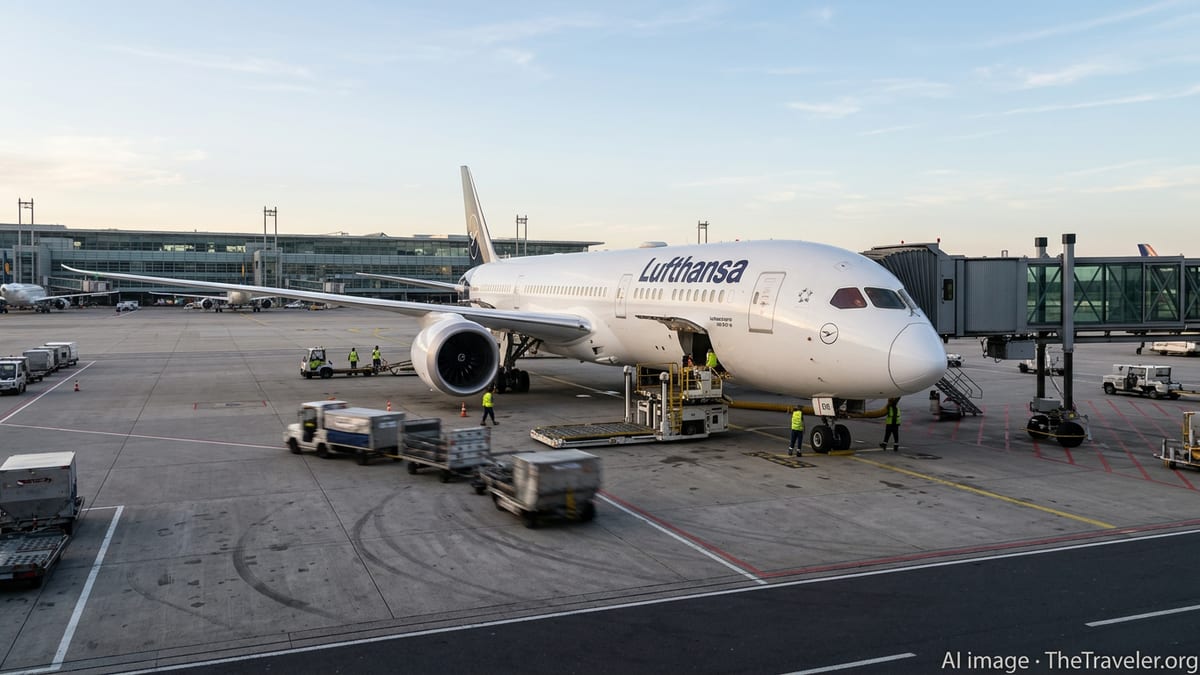
The new route will be operated by Boeing 787-9 Dreamliner aircraft configured with 287 seats across Business, Premium Economy and Economy Class. Lufthansa is using the service to showcase its latest-generation Allegris long-haul cabin, which the airline is gradually rolling out across its widebody fleet as part of a multibillion-euro product upgrade.
In Business Class, passengers can expect a choice of different seat types, including options with extra-long beds, greater privacy or additional workspace, reflecting a more flexible, customer-centric approach. Premium Economy offers wider seats and an enhanced dining experience, while the redesigned Economy cabin focuses on improved ergonomics, larger entertainment screens and better lighting, aimed at making the 12-hour journey more comfortable.
The fuel-efficient Dreamliner is also central to Lufthansa’s decarbonisation strategy. The aircraft’s lower fuel burn compared with older widebodies is expected to reduce emissions per passenger kilometre on the Frankfurt–Kuala Lumpur sector, even as overall capacity on the Europe–Malaysia corridor increases. For corporate customers and leisure travellers increasingly attentive to sustainability metrics, the combination of modern aircraft and non-stop routing is a strong selling point.
Strengthening Trade, Investment and Tourism Flows
Lufthansa’s return to the Malaysian market comes at a time when economic ties between Germany and Malaysia are intensifying. Germany is Malaysia’s largest trading partner within the European Union, with more than 700 German companies operating in the country in sectors ranging from manufacturing and engineering to chemicals and renewable energy. A direct connection between Frankfurt and Kuala Lumpur is expected to support executive travel, technical staff rotations and project-based mobility in both directions.
On the tourism side, Malaysia is emerging as Southeast Asia’s standout growth story. The country welcomed more than 42 million visitors in 2025, making it the most visited destination in the region and underscoring sustained demand from Europe for beaches, rainforests and cultural attractions beyond the traditional gateways of Thailand and Indonesia. A nonstop flight from Frankfurt significantly reduces travel time for holidaymakers heading to Kuala Lumpur and onwards to islands such as Langkawi, Penang and the east coast.
For Malaysia, direct air access to Europe’s largest economy is equally important. The new service broadens the country’s reach into secondary European cities connected to Frankfurt by Lufthansa and rail partners, which could help diversify arrival markets beyond traditional strongholds like the United Kingdom and the Netherlands. Tourism officials have signalled that they see the route as a catalyst for higher-spending, longer-stay visitors from across the continent.
Frankfurt Hub Connectivity and Competitive Landscape
The schedule has been built to plug seamlessly into Lufthansa’s Frankfurt hub, one of Europe’s busiest transfer nodes. Passengers arriving from Kuala Lumpur on the early-morning LH705 will be able to connect the same day to a wide network of destinations across Europe, North America and parts of Africa, while evening departures on LH704 will capture feed from regional German and intra-European flights.
In competitive terms, Lufthansa’s move positions Frankfurt and Kuala Lumpur more squarely on the map in a market long dominated by one-stop options via the Gulf, Istanbul and major Asian hubs. Carriers such as Qatar Airways, Emirates, Etihad, Turkish Airlines and Singapore Airlines have historically captured a large share of Europe–Malaysia traffic by offering flexible connection patterns. The new nonstop option, particularly on a modern aircraft with an upgraded cabin, gives time-sensitive business travellers and premium leisure customers a compelling alternative.
The airline also gains a strategic foothold in a region where rivals from Asia and the Middle East are expanding aggressively. By adding Kuala Lumpur to existing Southeast Asian destinations such as Bangkok, Singapore and Phuket, Lufthansa strengthens its brand presence in the ASEAN bloc and creates more options for complex itineraries that combine multiple countries in a single trip.
Wider Implications for Europe–Southeast Asia Air Links
The Frankfurt–Kuala Lumpur launch is part of a broader trend of renewed long-haul investment between Europe and Southeast Asia as travel demand normalises and tourism boards push for higher visitor numbers. Airlines on both sides are adding capacity or restoring pre-pandemic routes, responding to resilient leisure traffic, a rebound in corporate travel and growing international student flows.
For Europe, better direct links to Malaysia and its neighbours reinforce access to one of the world’s most dynamic economic regions, where intra-ASEAN trade and infrastructure investment continue to expand. For Southeast Asian countries, meanwhile, new nonstop services into major European hubs deepen integration with the EU single market and facilitate greater two-way tourism outside peak seasons.
With Lufthansa committing a state-of-the-art aircraft and a year-round schedule to the Frankfurt–Kuala Lumpur corridor, the route is widely seen by industry analysts as a long-term strategic play rather than a short trial. If demand evolves as expected, the connection is likely to become a key artery in the airline’s Asian portfolio and a visible symbol of strengthening ties between Europe and Southeast Asia.