

More news on this day
Budget-conscious travelers heading between London and Scotland now have a powerful new ally, as all-electric operator Lumo expands its low-cost services with advance fares dropping below thirty pounds.
Get the latest news straight to your inbox!
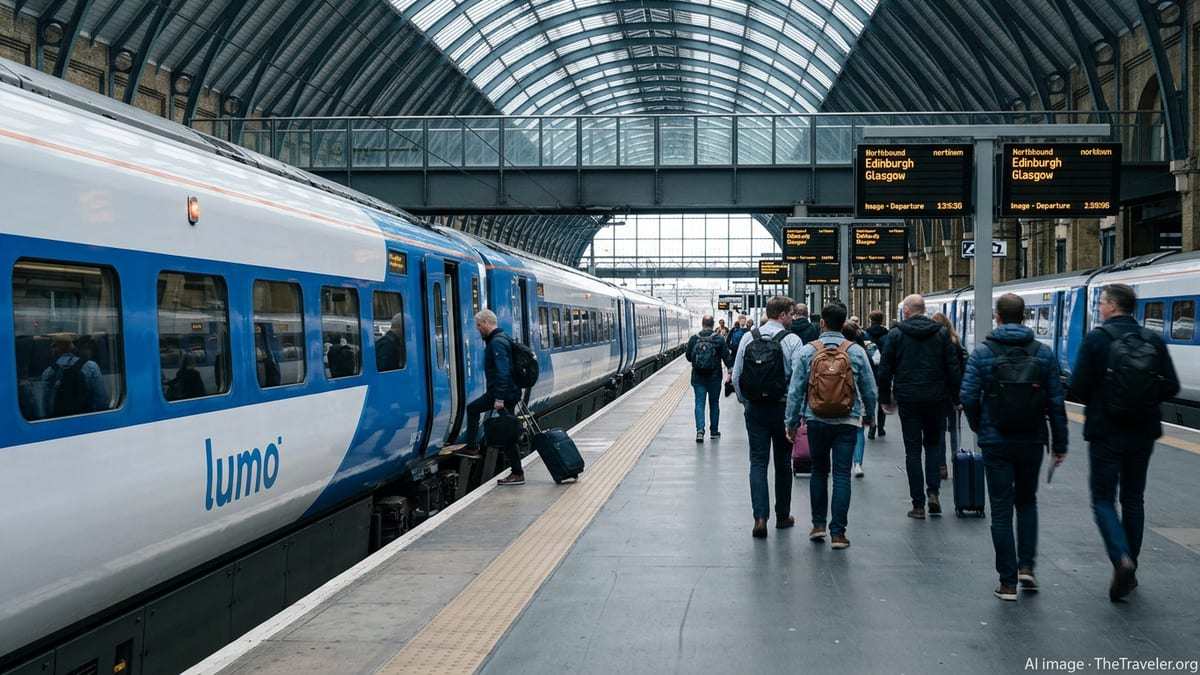
All-Electric Trains Target Price-Sensitive Travelers
Lumo, owned by FirstGroup, has positioned itself as a no-frills, low-cost alternative on the busy East Coast Main Line, running between London King’s Cross and key Scottish destinations. Publicly available information shows that its core London to Edinburgh service uses a fleet of modern all-electric trains with a simplified, single-class onboard layout designed to maximize capacity and keep operating costs down.
Reports indicate that Lumo’s model mirrors low-cost airlines more than traditional rail operators, with a focus on sharp advance pricing, high seat density, and paid extras such as additional luggage or seat selection. This structure allows base fares to remain competitive, particularly for passengers who can book well ahead and travel at off-peak times.
Published coverage of the East Coast corridor notes that competition between Lumo and long-established operators has intensified since Lumo entered the market, with lower entry-level fares emerging on some dates. The availability of sub-thirty-pound tickets on select London to Scotland journeys has become a major selling point for budget travelers weighing rail against domestic flights.
Travel data aggregators show that journey times on Lumo services between London and Edinburgh typically fall in the region of four and a half hours, making the trains a practical alternative to flying once airport transfers and security queues are factored in. The all-electric operation also appeals to passengers seeking lower-carbon options for long-distance travel within Britain.
Sub-£30 Fares and How to Find Them
Lumo’s own fare tables indicate that its fixed advance tickets on the London to Edinburgh route start from around £19.90 when booked well ahead, comfortably under the thirty-pound mark. Similar advance offers appear on connecting flows such as London to Newcastle, often hovering just under twenty pounds for those willing to commit to specific departure times.
According to journey planners and ticketing platforms, the lowest fares tend to appear when bookings open several weeks in advance, with limited quotas for each train. Once those cheapest seats sell out, prices rise in stages, meaning that sub-thirty-pound deals are most reliably found outside the busiest Friday and Sunday travel peaks and away from major holiday periods.
Consumer reports suggest that travelers who are flexible on time and day, and who can avoid last-minute bookings, are the most likely to benefit from the headline prices. While walk-up fares on the same corridor can be many times higher, early-bird Lumo tickets have become a favored tactic for students, backpackers, and price-sensitive leisure travelers connecting London with Edinburgh, Glasgow and other Scottish destinations via onward links.
Public transport advocacy groups have highlighted these lower advance fares as an example of how open-access competition can nudge prices down on key intercity corridors. Travel guides point out, however, that the very cheapest seats are not guaranteed and can sell out quickly on popular dates, requiring a measure of planning and flexibility.
New Low-Cost Links Beyond Edinburgh
Recent timetable documents and network maps show that Lumo’s original core link between London King’s Cross and Edinburgh Waverley has now been extended beyond the Scottish capital, with services running via Falkirk High and Haymarket to reach Glasgow Queen Street. This creates a direct, single-train journey from London into Scotland’s largest city under the same low-cost brand.
Information from independent timetable sites indicates that the London to Glasgow services operate a small number of trains per day, slotting into the existing East Coast Main Line pattern. Journey times from King’s Cross to Glasgow Queen Street are typically just over five hours, making the new route competitive with existing West Coast services for some travelers, especially when considering the lower starting fares.
Transport commentary notes that this expansion effectively broadens the low-cost rail corridor beyond Edinburgh, connecting London not only with Scotland’s political capital but also its commercial hub. For travelers in central Scotland, the ability to board a through Lumo service in Glasgow or at intermediate stops such as Falkirk High offers an attractive alternative to splitting tickets or relying on more expensive operators.
Reports also highlight that these new services maintain Lumo’s all-standard-class approach, meaning that passengers traveling from London to Glasgow via Lumo experience the same pared-back, economy-focused product that has defined the brand on the London to Edinburgh route.
Balancing Comfort With Budget-Friendly Service
Onboard, Lumo trains are configured with a high-density seating plan comparable to that of low-cost airlines, according to operator literature and passenger accounts. Seats are generally slimline with limited recline, and luggage space is carefully managed, with some baggage allowances and extras subject to additional fees. This approach is aimed at keeping base fares low while allowing travelers to pay only for the extras they value.
Published reviews describe reliable onboard Wi-Fi, power sockets at most seats, and a digital-first approach to ticketing, with a heavy emphasis on e-tickets and barcode scanning at the gate. Catering typically relies on trolley service or a modest selection of snacks and drinks, reflecting the company’s focus on efficiency and fast turnaround times at terminal stations.
Passenger feedback shared in public forums often frames Lumo as a solid value option rather than a premium experience. Travelers frequently compare the service to budget airlines, praising the low fares while noting that legroom and luggage policies may feel restrictive for those carrying multiple bags or seeking extra comfort.
Despite the stripped-back approach, observers point to the appeal of a single-class, straightforward product for many travelers, especially on journeys of four to five hours where affordability outweighs the desire for luxury. For visitors planning multi-city trips between London, Edinburgh and Glasgow, the ability to string together low-cost rail legs has become an important factor in itinerary planning.
Impact on Domestic Flights and Regional Tourism
Transport research and environmental advocacy reports have identified Lumo’s pricing strategy as part of a broader shift aimed at moving passengers from short-haul flights to rail. Comparative fare studies show that on some dates, Lumo’s lowest London to Edinburgh or Glasgow tickets undercut budget airline fares once baggage and airport transfers are included.
Studies of domestic travel trends indicate that younger travelers and international visitors are particularly responsive to simple, low advertised fares when choosing between rail and air. Visible sub-thirty-pound tickets on a prominent London to Scotland route help raise the profile of rail as a budget-friendly option, especially among travelers who might otherwise default to flying.
Tourism boards and local businesses along the route stand to benefit from the increased accessibility created by cheaper long-distance rail. Easier, lower-cost connections between London, the North East of England and central Scotland encourage weekend city breaks, cultural visits and extended itineraries that combine multiple urban hubs in a single trip.
Industry analysts suggest that as open-access operators like Lumo expand and refine their networks, travelers can expect more aggressive pricing on certain flows, but also greater variability depending on demand and booking patterns. For now, those planning a journey between London and Scotland who are willing to book early and travel light have a new opportunity to keep costs under thirty pounds while staying on the rails.