

More news on this day
London Luton Airport has unveiled a game-changing careers initiative that combines revamped apprenticeships, school outreach and AI-led training partnerships to build a new talent pipeline for the fast-growing aviation hub and its surrounding communities.
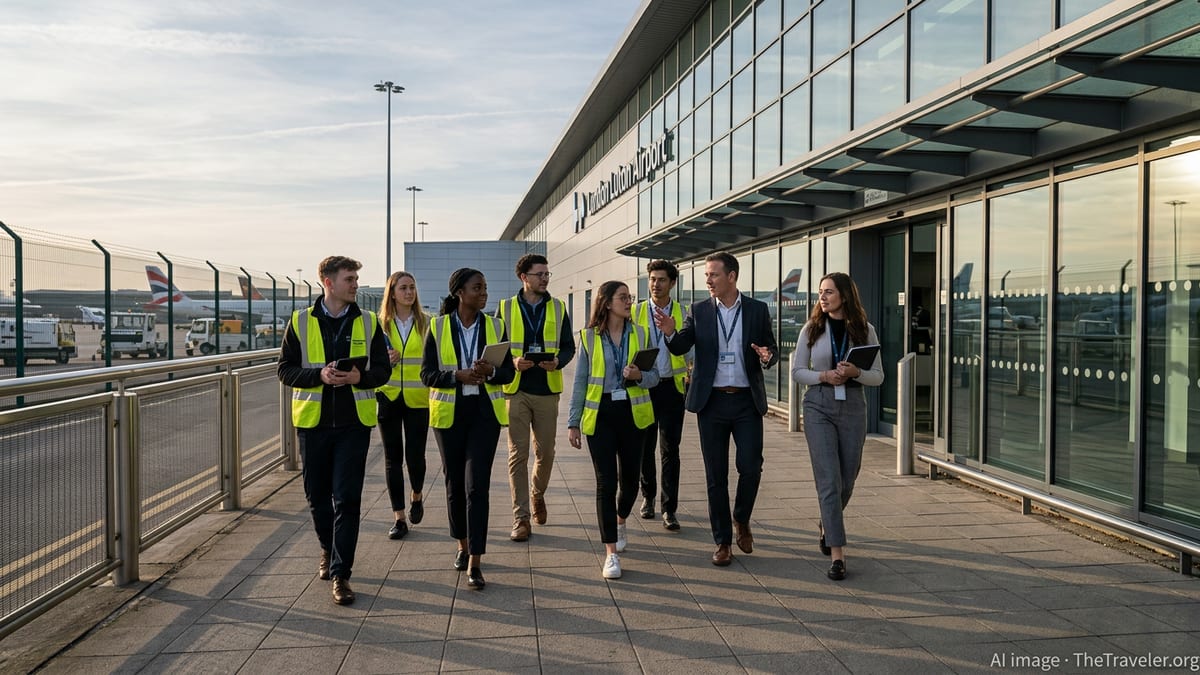
Revamped Apprenticeships Put Local Talent at the Centre
London Luton Airport has launched a significantly expanded apprenticeship scheme aimed at residents in Luton, Bedfordshire and Hertfordshire, positioning skills development as a core pillar of its long-term growth plans. The programme offers structured 12 to 18‑month roles in areas such as sustainability, health and safety, digital marketing, guest experience and commercial operations, all leading to industry-recognised qualifications.
The scheme, introduced in late 2025, targets people aged 18 and over living in postcodes closest to the airport. By focusing on local candidates, the airport is seeking to ensure that the economic benefits of expansion translate directly into new careers and higher-skilled jobs for nearby communities. Apprentices are employed on real roles from day one, combining paid work with formal training delivered through partner colleges and specialist providers.
Qualifications on offer range from Level 2 customer service to Level 4 corporate responsibility and sustainability, reflecting the sector’s growing emphasis on service excellence and environmental performance. Airport leaders say these pathways are designed to build long-term careers rather than short-term placements, giving participants a route into supervisory and specialist roles across the airport campus.
The apprenticeship drive is closely aligned with wider regional economic ambitions. With government approval for London Luton Airport’s expansion and plans for thousands of additional jobs, local officials view structured training and clear entry routes as vital to ensuring residents are ready to take up new roles as they come on stream.
Classroom to Careers: Inspiring the Next Generation
The apprenticeship scheme forms part of a broader “classroom to careers” approach that London Luton Airport has been developing over recent years. Working with not-for-profit education specialists and local schools, the airport has hosted workshops, skills sessions and careers events for students in Key Stage 3 and beyond, aimed at demystifying aviation and showcasing the breadth of roles available.
Through partnerships with organisations such as Skills Builder, volunteers from departments including operations, security, sustainability, health and safety and guest experience deliver interactive sessions that focus on core workplace skills. These workshops, branded around “essential skills in aviation,” are designed to help young people understand how communication, teamwork and problem-solving translate into real jobs at a busy international airport.
Sessions are offered under themes such as early careers talent attraction, sustainability and accessibility, giving schools the flexibility to link airport activity to curriculum priorities. Students visit the airport’s dedicated learning and training spaces, where they can experience a simulated office environment, meet staff and explore possible career journeys.
Airport management argues that engaging pupils early is crucial for diversifying the talent pipeline and tackling misconceptions about who aviation is for. By combining hands-on experiences with sustained contact through secondary school, the programme aims to make careers in airports, airlines and support services a realistic option for students who might not otherwise consider the sector.
AI Partnership Turns the Airport into a Living Lab
In a further move that underlines its ambitions, London Luton Airport has entered into an artificial intelligence partnership with the University of Bedfordshire, transforming the site into a live testbed for next-generation digital tools. A memorandum of understanding signed in December 2025 sets out plans for joint research, pilots and innovation projects focused on passenger experience, operational efficiency and data-led decision making.
Under the agreement, students and researchers from the university’s civic AI initiative will work alongside airport teams on challenges such as passenger flow management, predictive maintenance and smart resource allocation. The airport becomes a real-world laboratory, where academic ideas can be trialled in a live operational environment serving millions of passengers each year.
Leaders on both sides say the collaboration is intended to create a virtuous circle of skills and innovation. Students gain access to applied projects and industry contacts that strengthen their employability, while the airport benefits from specialist expertise in data science and digital transformation. The partnership is explicitly framed as a way of shaping future aviation careers, equipping graduates with experience in responsible AI applications at a major transport hub.
The initiative also reinforces Luton’s position as a regional technology cluster. With the airport just a short distance from the university campus, both institutions are promoting the town as a focal point for AI and aviation, hoping to attract further investment and high-skilled jobs linked to data-driven transport systems.
Industry Partners Boost Engineering and Technical Pathways
Beyond its own programmes, London Luton Airport is benefiting from a wave of industry investment in training facilities and apprenticeships at and around the site. Airlines and aviation businesses are increasingly using Luton as a base for engineering, maintenance and technical roles, expanding the range of career options available to local people.
Low-cost carrier easyJet has committed to a new maintenance hangar and training campus at the airport, creating additional skilled jobs and providing a central hub for its engineering apprenticeship scheme. The facility is expected to support dozens of apprentices each year once fully operational, giving trainees hands-on experience maintaining a large commercial fleet in a live hangar environment.
Other operators have also opened or expanded apprenticeship opportunities linked to Luton, particularly in aircraft maintenance and base engineering. These programmes typically blend college-based study with on-the-job learning over several years, leading to recognised technical qualifications and, in some cases, routes towards licensed engineer status. Together, they strengthen the airport’s reputation as a centre for engineering training as well as passenger operations.
Airport officials say such partnerships are central to meeting looming industry skills gaps. With many experienced engineers nearing retirement and airlines modernising their fleets, training new cohorts of technicians has become a strategic priority. By anchoring these schemes in Luton, the airport and its partners aim to secure a pipeline of highly skilled staff while offering residents access to stable, well-paid technical careers.
Local Communities Poised to Benefit from Long-Term Growth
The careers initiative comes as London Luton Airport prepares for a period of sustained expansion, with plans to increase passenger capacity and develop additional infrastructure. Proponents argue that the combination of growth and targeted skills programmes could provide a once-in-a-generation opportunity for the surrounding area, boosting employment and raising aspirations among young people.
Community-focused owners and local authorities have long positioned the airport as a driver of social as well as economic value, directing a share of aviation revenues into local projects and services. The new focus on structured apprenticeships, education partnerships and AI-enabled training is seen as an evolution of that model, aligning future job creation with the capabilities that modern aviation employers need.
For schools and colleges in Luton, Bedfordshire and Hertfordshire, the airport’s strategy opens up new avenues for collaboration, from curriculum-linked workshops to longer-term placement schemes and research projects. Educators say that having a major international airport on the doorstep, actively seeking to engage with learners, gives students a tangible sense of how subjects such as STEM, digital skills and sustainability translate into real-world opportunities.
As airlines, service companies and education providers deepen their ties to London Luton Airport, the site is emerging as a regional hub for aviation careers that extend far beyond the terminal. From customer-facing roles and digital marketing to engineering, data science and environmental management, the airport’s leaders insist that the latest initiative is just the start of a broader transformation in how aviation talent is identified, trained and supported.