

More news on this day
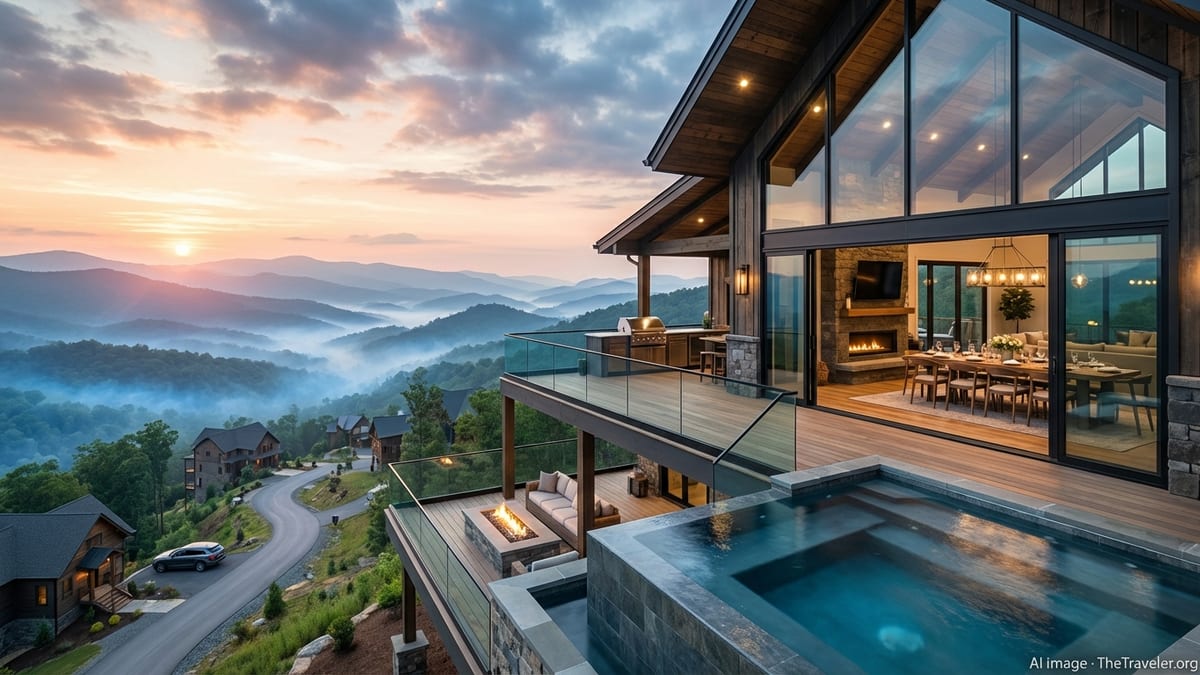
In the shadow of the Great Smoky Mountains, luxury homes with infinity decks, glass-walled great rooms and designer bunk suites are rising almost as fast as the mist that gives the range its name.
From Gatlinburg to Pigeon Forge and Wears Valley, builders, investors and second-home buyers are fueling a construction boom in high-end cabins and chalets, betting that America’s most-visited national park and a record-breaking tourism economy will keep demand strong for years to come.
More News
- TSA Rolls Out $45 ConfirmID Fee for Travelers Without REAL ID at Security
- Flying Blue Launches February 25% Promo Rewards on Transatlantic and Regional Routes
- United Fast-Tracks Starlink Wi‑Fi Across Fleet, Free for MileagePlus Members
A Record Tourism Engine Behind the Building Boom
Great Smoky Mountains National Park has cemented its status as the country’s top national park draw, welcoming more than 12 million visitors in 2024 according to the National Park Service. While attendance dipped modestly from 2023’s peak, the park still towers over other destinations in overall visitation. That steady stream of travelers has underpinned a broader tourism surge across East Tennessee, where visitor numbers are now closely watched by real estate investors weighing new luxury developments around the park.
Statewide, Tennessee tourism set another record in 2024, generating an estimated 31.7 billion dollars in direct visitor spending and attracting 147 million visits, according to the Tennessee Department of Tourist Development. Localized figures tell a similar story in Sevier County, the tourism hub that includes Gatlinburg, Pigeon Forge and Sevierville. Newly released county data show visitor spending approaching 4 billion dollars in 2024, ranking Sevier third among Tennessee’s 95 counties for tourism impact and reinforcing its position as a national leisure heavyweight.
For developers and high-net-worth buyers, those numbers translate into confidence that the Smokies are not a passing fad. Long known for its family-friendly attractions and affordable cabins, the region is transitioning into a more diversified market that includes upscale retreats, destination resorts and branded luxury communities. The new wave of construction reflects that shift, with projects designed from the outset for affluent travelers seeking amenities that rival those in coastal resort towns and ski destinations.
From Rustic Cabins to Resort-Level Luxury
For decades, the Smokies’ rental stock leaned heavily on compact log cabins and simple chalets built to deliver a basic mountain experience at a budget-conscious price. Today’s luxury builds are different in scale, finish and ambition. Five and six-bedroom homes with theater rooms, chef’s kitchens, spa-style bathrooms and expansive outdoor living spaces are becoming the new standard at the upper end of the market, often perched on ridgelines to capture panoramic park and valley views.
Builders describe a new buyer profile driving those specifications. Instead of retiring couples seeking modest second homes, many are catering to investors and families from Florida, Texas and the Midwest looking for properties that can host multi-generational gatherings or high-yield short-term rentals. That has led to floorplans designed around large common areas, multiple king suites, dedicated children’s bunk rooms and entertainment zones featuring arcades, bars and indoor pools.
The aesthetics are evolving as well. While timber and stone remain popular, newer projects increasingly adopt a contemporary “mountain modern” look, with cleaner lines, bigger windows and lighter interior palettes. Upscale finishes such as quartz countertops, custom cabinetry and designer lighting are now typical in the luxury bracket. Outdoor spaces, ranging from covered kitchens to firepit terraces and hot tub decks strategically oriented toward sunset views, are treated as essential extensions of the homes rather than afterthoughts.
Short-Term Rentals and Investor Appetite
Short-term rentals sit at the heart of the demand story in the Smokies, and they are a critical factor behind the surge in luxury new builds. Platforms such as Airbnb and Vrbo have turned mountain cabins into income-producing assets, and the region’s high year-round visitation means occupancy rates that are the envy of many other U.S. vacation markets. Even as national headlines warn of saturation in some destinations, local data in and around Sevier County show continued increases in visitor spending and a deep pipeline of travelers seeking large, amenity-packed accommodations.
Investors entering the market in 2024 and 2025 are increasingly focused on scale. Rather than acquiring single, smaller cabins, many buyer groups are targeting portfolios of luxury homes capable of commanding nightly rates well above 500 dollars during peak seasons. Lenders and specialty vacation-rental management companies have moved in to support that model, offering performance data, revenue projections and turnkey services that make it easier for out-of-state owners to purchase high-end properties with confidence.
This environment has encouraged builders to push into more ambitious price points. New luxury cabins in prime view corridors regularly list in the seven-figure range, with top-tier properties approaching two million dollars or more. While that may represent a sharp premium over traditional Smokies cabins, developers argue that robust rental income can offset carrying costs and, in some cases, generate positive cash flow. For many buyers, particularly those building diversified real estate portfolios, the Smokies now look like an attractive blend of lifestyle asset and business venture.
Remote Work, Migration Trends and Lifestyle Shifts
The pandemic-era shift toward remote and hybrid work continues to ripple through the Smoky Mountains real estate market. Professionals who once needed to live within commuting distance of major urban centers now enjoy far more flexibility, and some are choosing to spend extended periods or relocate entirely to mountain communities. That has amplified demand for luxury homes that function equally well as primary residences, long-stay retreats and high-end rentals when owners are away.
Many new luxury builds reflect this change with dedicated office spaces, robust connectivity infrastructure and layouts that support both work and play. Fast fiber internet, sound-insulated work nooks and multiple flex rooms are now commonly requested features in custom and semi-custom homes. Buyers say they want to be able to step from a video call directly onto a deck overlooking the national park, blending career obligations with access to hiking, fishing and other outdoor pursuits.
Migration trends within Tennessee and from neighboring states also play a role. As housing costs climb in larger metro areas, affluent households are seeking alternatives that offer a lower cost of living without sacrificing amenities. Towns like Sevierville and communities along the foothills have benefited, marketing themselves as gateways to the park with improving dining, retail and healthcare infrastructure. Luxury-build neighborhoods and master-planned communities often anchor this growth, promising a curated lifestyle that feels both secluded and connected.
Infrastructure, Attractions and the “Always Something New” Effect
The Smokies’ luxury real estate surge does not exist in a vacuum. It coincides with substantial investment in local attractions, roads and visitor infrastructure that keep the region on travelers’ radar. Pigeon Forge and Gatlinburg continue to add entertainment venues, restaurants and family experiences, reinforcing the perception that the area offers far more than a scenic backdrop. Large-scale attractions, from theme parks to immersive experiences, encourage repeat visitation and longer stays.
On the public side, ongoing improvements within Great Smoky Mountains National Park and surrounding road networks aim to better manage congestion while preserving access. Even through the turbulence of a prolonged federal government shutdown in late 2025, local and state partners pooled funds to keep much of the park operating during the crucial fall foliage season, underscoring how vital tourism has become to the regional economy. That pragmatic cooperation has reassured investors that local leaders are committed to protecting the visitor experience that underpins property values.
As the area’s tourism offering becomes more sophisticated, so too do guests’ expectations for where they stay. Travelers used to high-end hotels in major cities now expect similar standards from mountain rentals: well-furnished interiors, curated décor, concierge-style services and seamless digital booking. Luxury builds that can deliver that experience are more likely to stand out in a crowded marketplace, command premium rates and maintain strong occupancy, reinforcing the business case for continued high-end construction.
Risks, Regulation and Sustainability Concerns
Behind the enthusiasm, there is growing discussion about how much luxury construction the Smokies can absorb. Some local residents and environmental groups warn that unchecked building along ridgelines and in forested hollows could alter the region’s character, strain infrastructure and heighten wildfire and erosion risks. Questions over road capacity, emergency services and water systems have entered planning debates in fast-growing corners of Sevier County and neighboring foothill communities.
Short-term rental regulations present another variable. While the Smokies remain comparatively hospitable to vacation rentals, local governments have begun to refine rules on permitting, occupancy and noise in response to residents’ concerns. For investors pursuing multi-million-dollar luxury properties, any shift in rental policy can be a material risk. Real estate professionals now routinely advise buyers to pay close attention to zoning, homeowners association covenants and county-level discussions that could affect future operating rights.
The threat of extreme weather and wildfire is also influencing design and location decisions. Builders are increasingly incorporating fire-resistant materials, defensible-space landscaping and backup power options into luxury projects. Some high-end communities advertise private security and emergency planning as part of their amenities. As climate-related disruptions become a more common consideration in real estate, the Smokies’ luxury segment is being tested on its ability to balance growth with resilience and stewardship of the natural environment that makes the area so desirable.
Outlook: Can the Smokies Sustain Luxury Momentum?
Looking ahead, most analysts expect demand for high-end properties in the Smoky Mountains to remain solid, even as national real estate markets grapple with higher borrowing costs and shifting buyer sentiment. The region’s underlying drivers remain powerful: a top-ranked national park, record tourism spending in Tennessee, a central location within a day’s drive of much of the eastern United States and a lifestyle proposition that blends outdoor recreation with an expanding roster of attractions.
However, the pace and shape of new luxury builds are likely to evolve. Developers report that land with iconic, unobstructed views is increasingly scarce and expensive, pushing projects further from traditional tourism corridors and into emerging submarkets. That could create new growth nodes while raising fresh infrastructure and conservation questions. At the same time, higher construction and financing costs are nudging some projects toward smaller footprints or more compact clusters of homes, with shared amenities designed to deliver a luxury feel without requiring each property to stand alone as a private resort.
For buyers, the Smokies now resemble other mature destination markets: opportunities remain, but success hinges on careful due diligence and an understanding of local dynamics. Those entering the luxury tier are not only purchasing a mountain home, they are buying into a complex ecosystem shaped by tourism policy, environmental stewardship, community sentiment and the broader trajectory of national leisure travel. How that ecosystem is managed in the next decade will determine whether the current boom becomes a long-term chapter in the Smokies story or a brief, if spectacular, surge in the clouds.
FAQ
Q1. Why are luxury homes suddenly so popular in the Smoky Mountains?
Luxury homes are gaining popularity because the region combines America’s most-visited national park with a record-setting tourism economy, strong short-term rental performance and a growing pool of buyers seeking high-end, nature-focused retreats within driving distance of major cities.
Q2. How important are short-term rentals to the demand for new luxury builds?
Short-term rentals are central to demand, as many investors calculate returns based on nightly rates and occupancy. Large, amenity-rich luxury homes can command premium rates and strong year-round bookings, making them attractive as both lifestyle properties and income-generating assets.
Q3. Who is buying these new luxury cabins and chalets?
Buyers include out-of-state investors, high-income families from nearby metros, remote workers looking for dual-use residences and portfolio investors assembling multiple properties to operate as professionally managed vacation rentals.
Q4. How does tourism growth in Sevier County affect real estate?
Rising visitor spending and high annual visitation figures give developers and lenders confidence that demand for accommodations will remain strong, which in turn supports higher land prices, larger projects and more ambitious luxury construction.
Q5. Are newer luxury builds very different from traditional Smokies cabins?
Yes. Traditional cabins often emphasized simple, rustic charm, while current luxury builds feature expansive floorplans, modern “mountain” design, high-end finishes, multiple entertainment spaces and extensive outdoor living areas designed to capture premium views.
Q6. What role does remote work play in the trend?
Remote and hybrid work let more people spend extended time in the Smokies or relocate altogether. Many new luxury homes now include dedicated offices, strong internet infrastructure and flexible spaces so owners can work during the day and enjoy the park and attractions in their free time.
Q7. Are there risks to investing in a luxury property in the Smokies?
Risks include potential changes to short-term rental regulations, rising construction and financing costs, competition from new builds, and environmental concerns such as wildfire exposure or infrastructure strain in rapidly growing areas.
Q8. How are local communities responding to the building boom?
Local governments welcome tourism-driven revenue but are increasingly focused on managing growth, refining rental rules, addressing traffic and protecting natural resources. Debates over density, environmental safeguards and neighborhood character are part of many planning discussions.
Q9. Will there continue to be enough land for new luxury developments?
Prime view lots near established tourism corridors are becoming scarce and costly, pushing builders toward more distant or less-developed areas. That may sustain construction activity but could also create new pressure on roads, utilities and emergency services.
Q10. What should potential buyers look for when considering a new luxury build in the Smokies?
Prospective buyers should examine zoning and rental rules, verify infrastructure quality, assess wildfire and weather risks, review projected rental performance with conservative assumptions and choose locations that balance strong demand with long-term environmental and community stability.