

More news on this day
Taiwan is emerging as one of Asia-Pacific’s hottest premium travel hubs, as luxury-focused airlines including STARLUX, Emirates, Qatar Airways, Singapore Airlines, Cathay Pacific, ANA and Turkish Airlines help drive a sharp rebound in high-spend visitors and record hotel demand across the region.
Get the latest news straight to your inbox!
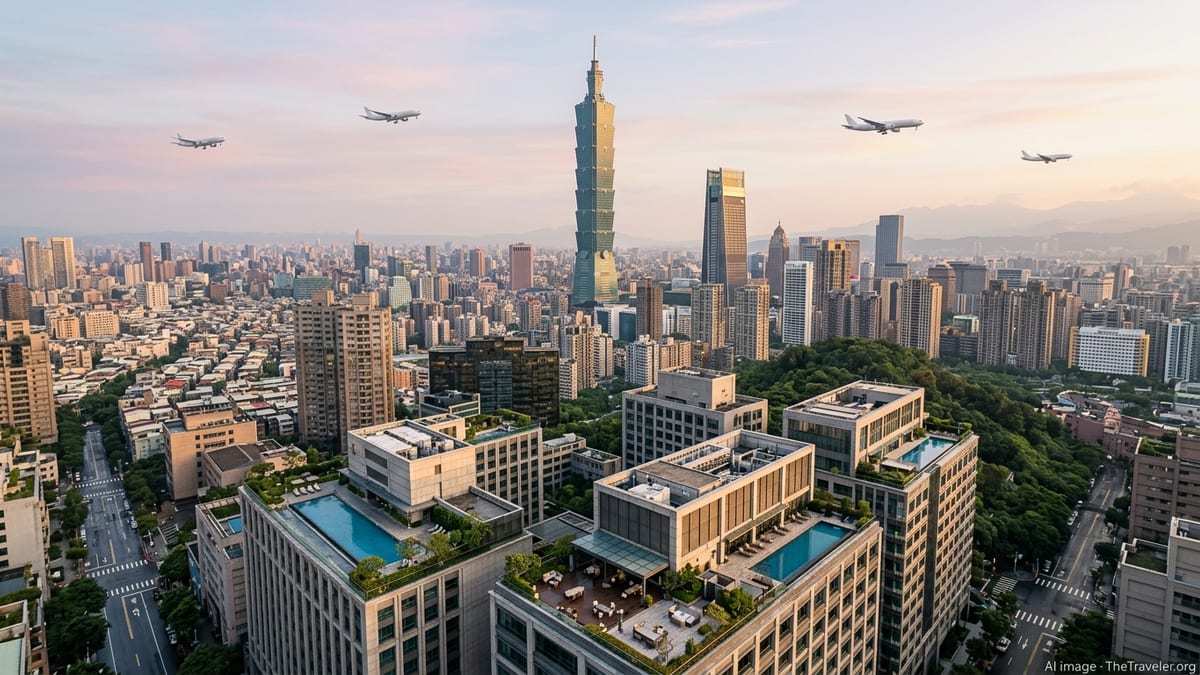
Premium Airlines Fuel Taiwan’s High-Value Tourism Boom
Publicly available data from Taiwan’s tourism authorities show that international arrivals rebounded strongly in 2024, with visitor numbers surpassing pre-pandemic levels and total arrivals reported at around 7.8 to 8.5 million for the year, depending on the data series consulted. The momentum continued into early 2025 and early 2026 with additional year-on-year growth, signaling that Taiwan has shifted from simple recovery mode into a new phase of premium-led expansion.
The rebound is being led by longer-haul and higher-spend markets. Analysis of tourism statistics highlights particularly strong growth from North America, where arrivals to Taiwan climbed to more than 760,000 visitors in 2024, making the region one of the fastest-growing inbound segments. Industry observers note that travelers on these routes are more likely to book premium cabin seats and upscale accommodation, feeding directly into higher hotel revenues.
At the same time, the Taiwan Tourism Administration has reported a double-digit increase in foreign hotel guest stays in 2024 compared with 2023, even as domestic hotel nights softened. This pattern aligns with a broader shift towards “quality over quantity,” with inbound visitors tending to stay in international tourist hotels and luxury properties in Taipei, Taoyuan, Taichung and key resort regions.
Market reports on Taiwan’s hotel sector show that total industry revenue grew robustly in 2023 and 2024, helped by rising occupancy at high-end properties. In Taipei, luxury hotel occupancy surpassed 80 percent in late 2023, and analysts tracking the 2024 performance point to continued strength in the upper-upscale and luxury tiers, supported by the return of corporate travel, meetings and events alongside leisure demand.
STARLUX Puts Taiwan in the Premium Long-Haul Spotlight
At the center of Taiwan’s upscale aviation story is STARLUX Airlines, the boutique carrier founded with a luxury-first positioning. The airline operates a young fleet of Airbus A321neo, A330neo and A350 aircraft and has focused on highly design-led cabins, refined in-flight dining and elevated ground experiences, particularly on its North America and Japan routes. Travel coverage and frequent-flyer commentary increasingly describe the airline as a rising rival to some of Asia’s most established premium brands.
STARLUX’s long-haul services from Taipei to cities such as Los Angeles and San Francisco have drawn extensive attention from aviation analysts, who note strong load factors in premium cabins and intense interest from high-yield leisure travelers. Online reviews of the carrier’s A350 business class between San Francisco and Taipei highlight spacious suites, curated dining and a distinctly boutique ambience, reinforcing Taiwan’s image as a destination accessible via top-tier flying experiences.
The airline has also invested in its ground product at Taipei Taoyuan International Airport, including a flagship lounge opened in 2024 for long-haul passengers. Travel media reports describe the facility as tailored to international premium travelers, with tarmac views, quiet work zones and elevated food and beverage options. This kind of infrastructure helps position Taipei as not only a destination but also a high-quality transfer point for journeys across Asia-Pacific.
STARLUX’s growing intra-Asia network, particularly to Japan, Southeast Asia and selected secondary cities, is adding further connectivity that benefits Taiwan’s tourism sector. Frequent flyer forums and booking data commentary point to very high load factors on Japan routes, indicating robust regional demand for Taiwan as a short-break destination, and strengthening the argument that premium capacity is directly linked to higher occupancy at urban and resort hotels.
Global Network Carriers Channel High-Spend Visitors Through Taipei
While STARLUX has captured much of the recent spotlight, global network carriers such as Emirates, Qatar Airways, Singapore Airlines, Cathay Pacific, ANA and Turkish Airlines are also playing a decisive role in shaping Taiwan’s tourism mix. Collectively, these airlines link Taipei to an expansive web of destinations across Europe, the Middle East, Africa and the Americas, often with multiple daily frequencies and substantial premium-cabin capacity.
According to airline schedule data and publicly reported capacity trends, Gulf carriers Emirates and Qatar Airways have rebuilt and in some cases expanded their Asia-Pacific services, positioning hubs in Dubai and Doha as key gateways for European, Middle Eastern and African travelers bound for Taiwan. Their multi-cabin widebody fleets deliver a disproportionate share of business- and first-class seats, which are associated with higher spending on accommodation, dining and experiences.
Singapore Airlines, Cathay Pacific and ANA, all of which maintain strong reputations for service quality and premium offerings, are similarly influential. Their networks connect Taipei with major markets in Southeast Asia, Northeast Asia, North America and Europe, supporting both direct inbound tourism and complex multi-stop itineraries that feature Taiwan as a core or side destination. Travel industry analysis indicates that such carriers are increasingly focusing on high-yield “bleisure” traffic, which overlaps with the profile of visitors occupying upscale hotels.
Turkish Airlines, known for its broad European and Middle Eastern coverage via Istanbul, adds another layer of connectivity, giving travelers across a wide geography one-stop access to Taiwan. The combined effect of these networks is to place Taipei in reach of millions of potential high-spend visitors who now see Taiwan’s luxury hotels, dining scene and cultural attractions as natural extensions of a premium long-haul journey.
Record Hotel Demand Reshapes Asia-Pacific’s Premium Landscape
Beyond Taiwan, the Asia-Pacific region as a whole is recording strong growth in hotel occupancy and room rates, with market research firms reporting that many key cities are approaching or exceeding pre-pandemic levels. In several destinations, including leading financial and tourism hubs, luxury and upper-upscale properties have led the rebound, sustained by returning international visitors and an expanding affluent middle class.
Industry snapshots covering 2024 show that Taipei has rejoined the region’s leading cities in terms of revenue per available room, supported partly by rising international arrivals from neighboring markets such as Japan, Hong Kong and South Korea. Visitor statistics compiled by Taiwan’s economic and tourism agencies for 2024 show double-digit growth from these North Asian markets, all of which are heavily served by the premium carriers spotlighted in this report.
Meanwhile, the wider Asia-Pacific hotel pipeline continues to grow, with developers adding new luxury inventory in destinations that compete directly with Taiwan for long-haul travelers. This has encouraged Taiwanese hoteliers to sharpen their offerings, from redesigned suites and expanded wellness facilities to more sophisticated food and beverage programs aimed at discerning regional and global guests.
Analysts tracking regional trends observe that airlines and hotels are increasingly aligned in their target segments. Premium carriers emphasize comfort, privacy and service, while leading hotels stress experiential luxury, cultural authenticity and personalization. For Taiwan, which markets itself as a safe, food-rich and culturally diverse destination, this alignment has translated into greater visibility on premium booking platforms and improved yields for city and resort properties.
Tourism Strategy Leverages Premium Connectivity for Long-Term Growth
Taiwan’s tourism and economic planning documents released over the past two years outline a strategy that explicitly shifts focus from volume to value. Rather than simply aiming to match the pre-2019 visitor count of roughly 11 to 12 million arrivals, the goal is to attract travelers who stay longer, spend more and are more likely to select higher-quality accommodation and experiences.
The government has announced initiatives centered on incentive travel, meetings and events, repeat visitation programs and support for international concerts and large-scale happenings, all of which tend to appeal to visitors arriving on premium airlines. These travelers, often flying business or premium economy, are seen as especially valuable for luxury urban hotels and convention-focused properties.
Recent statistics on foreign guest stays, which rose more than 18 percent in 2024 compared with the previous year, suggest that this strategy is gaining traction. Hotel industry data indicate that upscale and luxury properties are capturing a rising share of overnight stays, particularly in Taipei, as inbound visitors gravitate toward well-known international brands and high-end local operators.
With STARLUX consolidating its position as a flagship premium carrier and global network airlines such as Emirates, Qatar Airways, Singapore Airlines, Cathay Pacific, ANA and Turkish Airlines deepening their presence in the Taiwan market, the foundations appear set for continued growth in high-value tourism. For Asia-Pacific hoteliers, Taiwan’s experience is emerging as a case study in how luxury aviation capacity and targeted tourism policy can combine to lift both occupancy and average rates across an entire destination.