

More news on this day
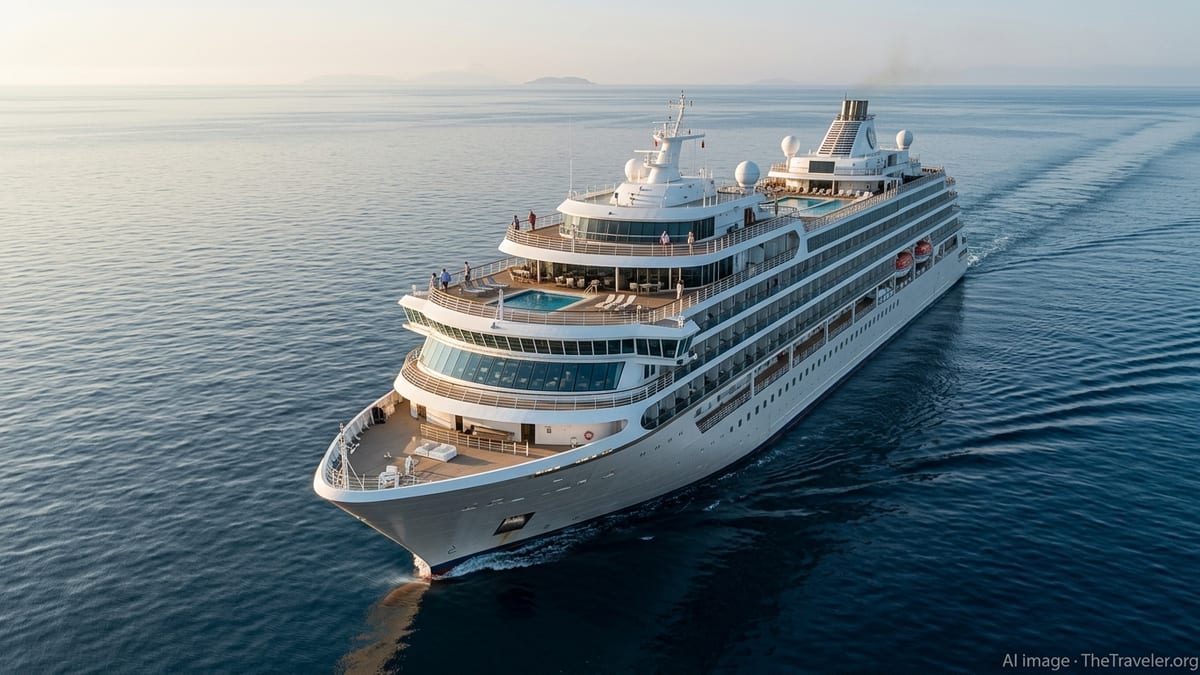
Luxury cruising is entering a new phase of growth as rising demand, aggressive new-ship investment and a broader base of affluent travelers push the global market toward an estimated 23 billion dollars in annual revenues by 2032.
Get the latest news straight to your inbox!
A Niche Segment Scaling Up Fast
Recent industry forecasts indicate that luxury cruise tourism, a relatively small but high-yield slice of the broader cruise sector, is on track to expand rapidly over the next decade. One widely cited outlook values the luxury cruise tourism market at just over 9 billion dollars in 2024 and projects it to reach slightly more than 23 billion dollars by 2032, implying double-digit compound annual growth over the 2025 to 2032 period.
Separate market analyses focused on luxury cruise ships reach similar conclusions, pointing to sustained high single-digit to low double-digit annual growth rates into the early 2030s. While exact definitions of “luxury” differ across studies, the direction of travel is clear: capacity, pricing power and onboard spending in the upper tiers of cruising are all expected to rise faster than the mainstream market.
This acceleration comes as the global cruise industry continues to recover and then surpass pre-pandemic demand. Industry and payment data highlighted in recent travel coverage show cruise transactions and bookings outpacing 2019 levels, reinforcing expectations that a growing share of vacation spending will flow into premium and luxury cabins, suites and experiences at sea.
The projected 23 billion dollar threshold by 2032 therefore reflects not only more ships and more passengers, but also higher yields per guest as operators refine their upmarket offerings and target travelers willing to pay for privacy, personalization and exclusivity.
Orderbooks Point to a “Golden Age” Fleet
Orderbooks at major shipyards across Europe and Asia underline how strongly cruise brands are betting on luxury growth. Industry compilations of firm orders show dozens of new vessels scheduled for delivery into the 2030s, including a rising number of small and mid-sized ships explicitly positioned in the luxury and ultra-luxury brackets.
A recent luxury market report from a leading cruise trade publication notes that the value of luxury newbuild orders alone has climbed into the mid-teens of billions of dollars and continues to grow as operators add ships through 2032. These orders range from ocean-going boutique vessels with fewer than 1,000 guests to expedition ships designed for remote regions such as Antarctica and the Arctic, priced and marketed squarely at the top end of the market.
European shipyards, in particular, report that strong cruise orderbooks are helping secure work well into the mid-2030s. Sector-focused coverage indicates that more than 70 large cruise ships are currently under construction or on firm order, alongside a steady stream of smaller river, yacht-style and expedition vessels. Within that pipeline, the mix is tilting noticeably toward higher-yield segments where per-passenger revenue can be several times that of a typical mass-market sailing.
Against this backdrop, the term “golden age” is increasingly used by analysts and commentators to describe the next decade of cruise development, with luxury ships serving as floating showcases for new technology, design and hospitality concepts.
Affluent Demand Broadens Beyond Traditional Cruisers
The demand side of the equation has shifted as well. Travel and financial data sets released over the past year show that cruise bookings are not only rebounding among traditional guests, but also gaining traction with younger, more affluent travelers who might previously have chosen high-end resorts or city breaks instead of time at sea.
Consumer research cited in recent travel industry reports indicates that millennials and Generation Z are increasingly attracted to the value proposition of cruises, especially when they include fine dining, wellness facilities and immersive shore experiences within a single price. For those with higher disposable incomes, luxury and ultra-luxury ships offer a way to combine multi-destination itineraries with the privacy and amenities of a boutique hotel.
Regional reports from Europe and North America describe strong growth in bookings for luxury and expedition cruises, with some operators noting that demand for top-tier suites and exclusive itineraries has outpaced overall volume growth. In certain markets, travel retailers have reported that demand for luxury cruises has doubled over a two-year period, even amid broader economic uncertainty, suggesting a resilient appetite among high-net-worth and upper-middle-income travelers.
At the same time, high occupancy levels and, in some cases, record pricing for premium itineraries show that many guests are willing to accept higher fares in exchange for more space, upgraded service and distinctive destinations. This willingness to pay underpins the revenue forecasts that push luxury cruise tourism toward the 23 billion dollar mark by 2032.
New Ships Redefine Luxury at Sea
The latest generation of luxury cruise ships is designed to differentiate itself not just through cabin size and decor, but through a holistic onboard experience that competes with top-tier hotels and resorts. Recent deliveries and upcoming launches feature expanding suites with private verandas, dedicated butler or concierge services, and an emphasis on culinary diversity, often including partnerships with well-known chefs and sommeliers.
Many new luxury vessels are also being built on more sustainable platforms, incorporating liquefied natural gas propulsion, shore power connectivity, advanced wastewater treatment and energy-efficient hull designs. Major cruise groups have outlined road maps toward significantly lower emissions profiles by the mid-2030s, and several of the newest ships in their luxury portfolios are positioned as testbeds for these technologies.
Onboard, the line between ship and destination continues to blur. Panoramic lounges, glass-backed pools and wraparound promenades are designed to maximize connection to the sea and the landscapes visited, while wellness complexes, thermal suites and spa programs mirror trends seen in high-end land-based hospitality. Expedition-style luxury ships add specialized features such as reinforced hulls, observation lounges and equipment for landings in remote environments.
This shift in design and amenities supports higher pricing and contributes to the strong revenue projections. As more of these advanced vessels enter service between now and 2032, operators expect to attract both repeat cruisers trading up and first-time guests drawn by the promise of resort-level comfort with constantly changing views.
Strategic Focus on Premium Revenue Streams
Beyond ticket prices, cruise companies are sharpening their focus on ancillary revenue opportunities that are particularly lucrative in the luxury segment. Publicly available financial disclosures from major cruise groups show that onboard spending on items such as specialty dining, spa treatments, premium beverages and curated shore excursions has become a critical contributor to profitability.
In luxury and ultra-luxury contexts, these add-ons are often integrated into more inclusive fare structures, but operators still benefit financially from higher daily spend per guest and from the ability to sell bespoke experiences, private tours and personalized services. Analysts note that when these revenue streams are scaled across a growing fleet of high-end ships, they add significantly to the market’s overall size.
Destination development is another part of the strategy. Several large cruise brands have introduced or expanded private island and private port concepts in recent years, explicitly marketing them as elevated beach and resort experiences. These destinations often feature upgraded suites, exclusive enclaves and high-end dining reserved for guests in premium cabins or on luxury-brand vessels, further reinforcing the segmentation between standard and top-tier cruise products.
With a supportive demand environment, a full pipeline of purpose-built luxury ships and a business model that increasingly relies on premium experiences and high onboard spending, industry forecasts suggest that the luxury cruise market is well positioned to climb toward and potentially beyond the 23 billion dollar revenue milestone by 2032.