

More news on this day
High-net-worth travelers are rewriting the rules of luxury by swapping traditional five-star trappings for rare, place-driven experiences that stretch from Antarctica’s ice fields to Australia’s wild coasts and Europe’s reborn grand railways.
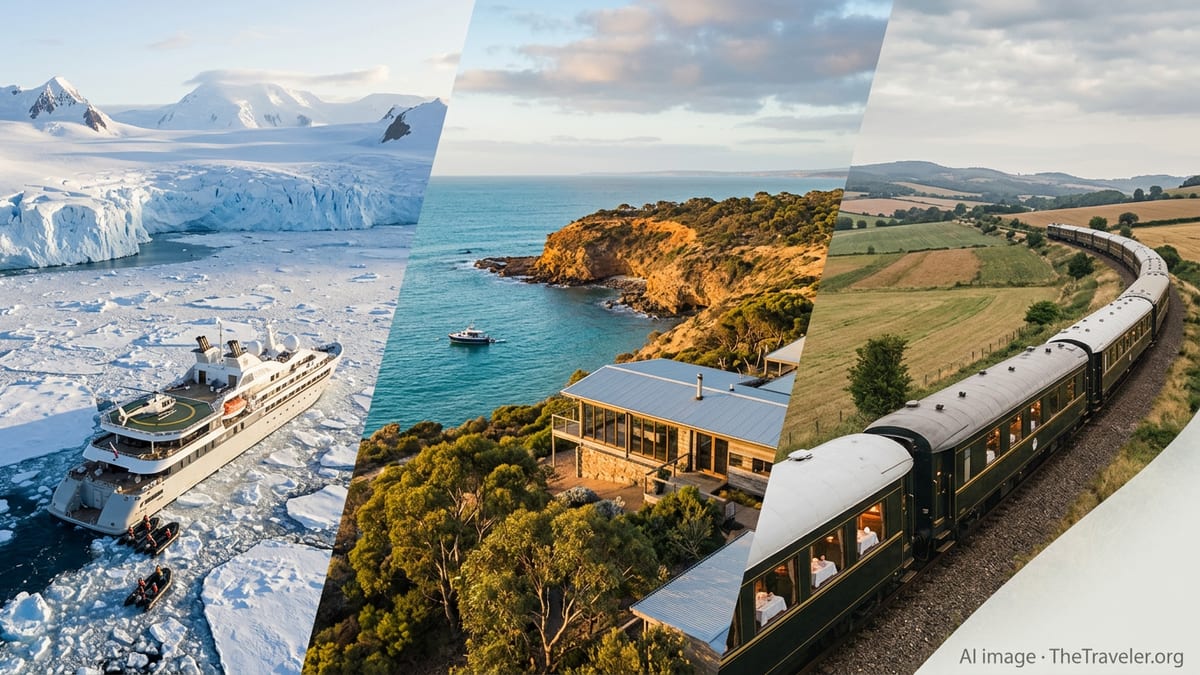
Antarctica’s Expedition Boom Puts Comfort on the Ice Edge
Once reserved for hardy scientists and rugged adventurers, Antarctica is now emerging as one of the most coveted ultra-luxury frontiers, with cruise lines racing to add new itineraries and higher-comfort ships to the White Continent. Operators from boutique yacht brands to global names are expanding 2024 to 2026 polar seasons, pairing helicopter-assisted landings and ice-class technology with suites that resemble high-end city hotels more than research vessels.
Silversea’s recent Antarctica season, built around the purpose-built Silver Endeavour, signaled how far the segment has come. The ship has been sailing extended itineraries to South Georgia, the South Shetlands and the Antarctic Peninsula, offering options from fly-in six-day expeditions to 22-day immersive routes. On board, guests move from balcony suites and fine-dining venues to lecture theaters and mud rooms in a single corridor, underscoring the way comfort and deep-field exploration are now expected to coexist.
Other lines are building similar playbooks. Atlas Ocean Voyages has opened reservations for yacht-style expeditions that combine charter flights, pre-cruise hotel nights and small-ship operations with Zodiac landings on the peninsula. Larger brands such as Viking continue to deploy expedition vessels like Viking Octantis on a seasonal migration pattern, spending northern summers in the Great Lakes and Arctic before returning south for Antarctic summers. The result is a denser calendar of departures that gives affluent travelers more choice in timing and style.
What is changing most, travel advisers say, is intent. Rather than sprinting through a checklist of landings, guests are paying for itineraries that slow down for wildlife encounters, ice conditions and even citizen-science projects. Suites, spas and fine wine lists remain selling points, but the real luxury is now framed as time on the ice and access to remote bays that only a handful of ships can safely enter each year.
Australia’s New Wave of Lodges Targets Privacy and Place
On the other side of the globe, Australia is seeing a surge in demand from ultra-high-net-worth travelers, particularly from the United States and United Kingdom, for stays that favor seclusion and story-rich landscapes over overt opulence. Luxury specialists report that their most-requested itineraries now combine reef, outback and cool-climate wine regions, stitched together by private aviation and exclusive-use villas rather than traditional resort-hopping.
The country’s hotel pipeline reflects that shift. New openings slated across 2025 are leaning into low-density designs, with suite-only properties in wine regions such as Victoria’s Yarra Valley and architecturally ambitious lodges on remote islands off Western Australia. These projects emphasize floor-to-ceiling glass, native materials and connection to country, often weaving in Indigenous-led experiences and conservation programs that resonate with travelers seeking a sense of purpose alongside comfort.
In Western Australia, new island retreats are positioning themselves as gateways to seldom-visited reefs and marine parks, offering helicopter transfers, private skippers and on-site marine biologists to guide snorkeling and diving. On land, outback homesteads and station stays are being reimagined as buyout properties, where small groups can have tens of thousands of hectares effectively to themselves, complete with chefs, guides and astronomers for night-sky tours.
Industry observers note that guests still expect heated plunge pools, intuitive service and design-led suites, but the visual language of Australian luxury is evolving. Instead of marble and gilt, the highlights are red-earth sunsets, vineyard fog at dawn and the glow of a campfire outside a glass-walled lounge. For time-poor, cash-rich visitors, the appeal lies in being able to experience Australia’s vastness in a curated, deeply comfortable way that feels far from mass tourism.
Europe’s Vintage Trains Lead a Rail Renaissance
Europe, long associated with grand hotels and city breaks, is seeing its own luxury reinvention on the rails. A cluster of new and revived vintage train journeys scheduled through 2025 and 2026 is redefining what high-end travel on the continent can look like, bringing polished wood, white tablecloths and multi-course tasting menus back to the tracks.
New services are tapping into the nostalgia surrounding historic brands. The modern Orient Express, backed by a major hospitality group, has begun operating itineraries across Central and Eastern Europe, using painstakingly restored carriages that nod to 1920s and 1930s art deco design. Models of the train’s cabins, showcased in Paris at a design exhibition focused on a century of Art Deco, highlight intricate marquetry, bespoke glassware and textiles that echo the golden age of rail while quietly incorporating modern comforts such as climate control and ensuite bathrooms.
Elsewhere, Spain is preparing additional vintage-style rail offerings that pair Andalusian gastronomy with overnight rolling suites, while the United Kingdom continues to lean on heritage trains that tour the countryside in 1930s-inspired carriages. Seasonal programs for services like the Northern Belle have pivoted toward festive itineraries, including multi-course lunches and Champagne as the train winds through winter landscapes, reinforcing the idea that the journey itself can be the main event.
Travel trend analysts point out that luxury train bookings are rising alongside broader interest in lower-impact alternatives to short-haul flights. While these trains remain exclusive and often expensive, they are also marketed as slower, more sustainable ways to cross borders, with dining cars serving regional produce and itineraries timed to showcase mountains, coastlines and historic towns through panoramic windows.
A New Definition of Luxury: Experience Over Excess
Across all three regions, the common thread is a recalibration of what affluent travelers consider luxurious. Industry executives and advisers report a move away from conspicuous consumption and toward experiences that feel rare, unrepeatable and rooted in local culture and environment. In practice, that means trading larger cabins or suites for smaller ships and trains, or choosing properties with fewer rooms but deeper ties to their surroundings.
In Antarctica, this shift is visible in the growth of citizen-science opportunities and climate-focused briefings, where guests can assist with data collection under the guidance of onboard researchers. In Australia, bespoke itineraries increasingly incorporate time with Traditional Owners, vineyard tastings with winemakers and behind-the-scenes access to conservation projects. In Europe, rail journeys are adding curated off-train excursions, from private gallery openings to chef-hosted market visits, to differentiate themselves from conventional city-to-city travel.
The demographic is broadening as well. While ultra-high-net-worth individuals remain the primary market for these premium products, travel agencies note rising interest from younger, experience-driven travelers who are willing to save for a single extraordinary trip rather than multiple shorter breaks. For them, the appeal lies less in formal dress codes and more in authentic storytelling, thoughtful design and the sense of stepping into a narrative that stretches beyond the cabin door.
With new polar seasons on the books, lodge openings scheduled across Australian wine and wilderness regions, and a slate of vintage and modern luxury trains preparing to roll out across Europe, the coming years look set to further blur the line between transport, accommodation and destination. For travelers ready to invest in fewer, more meaningful journeys, Antarctica, Australia and Europe are emerging as stages on which the very idea of luxury is being quietly, and dramatically, redefined.