

More news on this day
Europe’s rails are set for a nostalgic yet forward-looking comeback in 2026, as European Sleeper, Spain’s Al Andalus and the Venice Simplon-Orient-Express unveil new or expanded journeys that revive historic routes while catering to modern travelers’ appetite for slow, scenic and sustainable luxury.
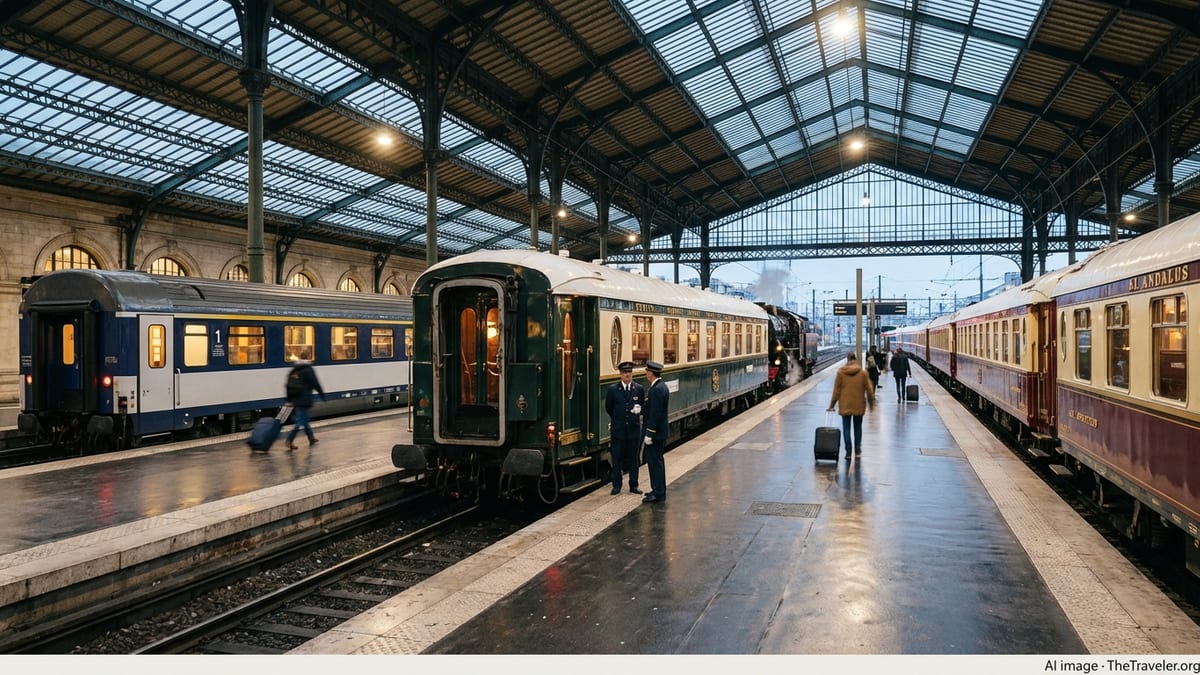
Historic Night Trains Return to the European Mainstage
After a decade in which many overnight services were quietly withdrawn, 2026 is shaping up as a watershed year for Europe’s sleeper trains. Independent operators and national railways alike are investing in refurbished heritage carriages, elevated service and new cross-border itineraries that turn the journey itself into the main attraction. At the center of this shift sit three high-profile names: European Sleeper, Renfe’s Al Andalus and Belmond’s Venice Simplon-Orient-Express.
The comeback is driven by a combination of climate-conscious policy, resurgent demand for rail holidays and a renewed fascination with the romance of historic trains. Overnight services that once seemed destined to disappear are now marketed as immersive travel experiences, offering soft bedding, restaurant-quality meals and panoramic views instead of cramped airline seats and airport queues.
For destinations across the continent, the relaunch of these trains promises more than nostalgia. The new and extended routes link major capitals with smaller cities, rural regions and coastal resorts, spreading tourism more evenly and often in shoulder seasons. As 2026 timetables are firmed up, rail advocates are hailing what they describe as a new golden age for long-distance train travel in Europe.
European Sleeper Expands a Grassroots Night-Train Network
Founded as a crowdfunded start-up, European Sleeper has quickly become a symbol of rail’s renaissance. The Dutch-Belgian operator already connects Brussels, Amsterdam, Berlin and Prague overnight. In 2026 it will take a substantial leap forward, stepping into gaps left by state-backed operators and extending its reach both north-south and east-west.
The headline announcement is the revival of the Paris to Berlin night train from March 2026, after the previous Nightjet service was axed when French subsidies were withdrawn. European Sleeper will run the route three times a week, routing via Brussels instead of Strasbourg and creating a de facto nightly Brussels to Berlin link when combined with its existing service. Timetables published by rail industry outlets indicate evening departures from Paris and overnight arrivals in the German capital the following morning.
A second major development is planned for June 2026, when European Sleeper intends to launch an overnight service from Brussels and Amsterdam to Milan via Switzerland. The route is set to follow the classic Simplon axis through Cologne, Bern and Brig before crossing into Italy, marrying practical night-time transport with one of Europe’s most spectacular rail corridors. The train is expected to run three nights per week, with ticket sales scheduled to open in early 2026.
Crucially for many travelers, the company emphasizes a relatively accessible form of comfort rather than ultra-exclusive luxury. Passengers can choose between seats, couchettes and sleeping compartments, with basic berths on the revived Paris to Berlin route projected to start around the price of a budget flight. Supporters say this model demonstrates how heritage-inspired rail can scale beyond a niche market while maintaining a distinct sense of occasion.
Al Andalus Marks 40 Years With a New Madrid-Focused Journey
While European Sleeper leans on modern rolling stock, Spain’s Al Andalus represents a different side of the revival: a fully fledged luxury tourist train operating historic carriages with Belle Époque styling. Run by national operator Renfe, Al Andalus has long been known for week-long itineraries circling Andalusia, combining onboard accommodation with guided excursions and regional gastronomy.
To mark its 40th anniversary, Renfe has confirmed that Al Andalus will debut a revised itinerary in the 2026 season that, for the first time, includes Madrid as a point of departure or arrival. The new route will retain the train’s seven-day, six-night format while adding destinations in Extremadura, Castilla-La Mancha and the Community of Madrid alongside its classic Andalusian stops. The announcement was made at the Madrid Railway Museum, where the train is periodically exhibited to showcase its historic interiors.
Onboard, passengers sleep in wood-paneled suites and dine in ornate restaurant cars, with haute cuisine menus highlighting Spanish wines and produce. The experience is closer to a rail cruise than a point-to-point journey. Each day typically blends slow rolling through rural landscapes with off-train visits to UNESCO-listed cities, palaces and vineyards, before returning to the train for multi-course dinners and live music in the lounge car.
The 2026 changes are significant for both the train and the regions it will serve. Adding Madrid opens easier access for international visitors arriving by air or high-speed rail, while the extension into lesser-visited inland provinces is expected to bring high-spending, low-volume tourism to smaller historic towns. Regional officials have welcomed the move as a way to promote heritage sites beyond Spain’s coastal hotspots, in a format that naturally limits visitor numbers.
Venice Simplon-Orient-Express Deepens Its Mediterranean Foray
If any train embodies Europe’s romantic rail mythology, it is the Venice Simplon-Orient-Express. Operated by luxury travel company Belmond, the train uses painstakingly restored 1920s and 1930s carriages, complete with art deco marquetry, brass fittings and white-linen dining cars. Its classic routes linking Paris, Venice and other Central European cities have long attracted a global clientele seeking old-world glamour.
In recent seasons, Belmond has steadily diversified the Venice Simplon-Orient-Express program, extending beyond Central Europe into the French Riviera and, more recently, the Italian south. For 2026, industry reports highlight particular attention on a Paris to Amalfi Coast offering that pairs overnight rail with onward transfers to southern Italian resorts. The route taps into surging demand for high-end rail alternatives to congested Mediterranean airports and highways.
Passengers on these journeys typically board in the late afternoon, settling into richly upholstered cabins that convert into beds at night. Multi-course dinners are served in rotating vintage restaurant cars, with menus curated by celebrated chefs and paired with European wines and champagnes. The following day, the train glides along some of Italy’s most storied railways before guests disembark for stays in cliffside hotels overlooking the Tyrrhenian Sea.
Though seats and suites on the Venice Simplon-Orient-Express are priced in line with top-tier luxury resorts, demand has remained robust. The 2026 season is expected to build on that momentum with a mixture of classic Paris to Venice departures and limited-edition itineraries that spotlight new Mediterranean combinations. Travel advisors report that departures often sell out months in advance, underscoring the enduring pull of the Orient Express name.
Luxury Meets Sustainability in Europe’s Rail Renaissance
Beyond nostalgia and glamour, the resurgence of night trains in 2026 reflects shifting attitudes toward the environmental impact of travel. Rail generally produces far fewer emissions per passenger than short-haul flights, particularly when powered by electricity from low-carbon grids. As European Union policymakers tighten climate targets and some countries weigh restrictions on domestic flights where rail alternatives exist, overnight trains are being promoted as a practical, lower-impact option.
European Sleeper explicitly positions its services as a greener choice, highlighting that its Paris to Berlin and Brussels and Amsterdam to Milan connections are designed to replace some of the busiest air corridors in Europe. By allowing travelers to sleep while covering long distances, the company argues, overnight rail can compete on total door-to-door time for many city pairs once airport transfers and security queues are factored in.
Al Andalus and the Venice Simplon-Orient-Express occupy a different segment of the market but intersect with the same sustainability narrative. Their itineraries often encourage longer stays, slower pacing and deeper engagement with local culture and cuisine, in contrast to quick weekend hops. Rail advocates note that even small numbers of high-profile luxury trains can help normalize the idea of choosing the tracks over the tarmac for complex itineraries.
At the same time, experts caution that sustainability benefits depend on more than marketing. The environmental impact of refurbishing rolling stock, sourcing onboard supplies and organizing off-train excursions will come under increasing scrutiny as climate-conscious travelers interrogate the full footprint of their journeys. For now, however, night trains enjoy a favorable position in the public debate as a tangible, highly visible alternative to flying.
Design, Comfort and the Revival of the Rail Aesthetic
Part of the appeal of these 2026 services lies in their design stories. From lovingly restored art deco suites to streamlined modern sleeping pods, operators are investing heavily in interiors that photograph well and feel distinct from both aviation and standard daytime trains. The result is an emerging design language that draws on rail’s past while adopting contemporary comforts and safety standards.
Al Andalus, built on vintage French and Spanish rolling stock, showcases polished wood, velvet seating and period light fixtures, complemented by updated en suite facilities in many cabins. Its lounge cars are designed to evoke a grand hotel bar, with live piano music and attentive table service. The Venice Simplon-Orient-Express goes even further, with each carriage individually restored to reflect original marquetry and glasswork, turning the train itself into a moving museum of 20th-century craftsmanship.
European Sleeper’s approach is more functional but still carefully considered. The company is introducing refurbished couchettes and sleeping cars with improved sound insulation, USB charging points and flexible configurations for solo travelers, couples and families. While the aesthetic is closer to contemporary Scandinavian minimalism than gilded age opulence, the emphasis on privacy, practical comfort and warm lighting marks a clear evolution from older, utilitarian night trains.
Industry observers say this focus on interiors is no coincidence. Social media has turned trains into backdrops as much as vehicles, and operators know that visually distinctive spaces can serve as powerful marketing assets. At the same time, comfortable beds, well-designed bathrooms and thoughtfully lit corridors are critical to convincing travelers that overnight rail is not a compromise but an upgrade on other modes.
Economic Ripple Effects Across Regions and Cities
The relaunch and expansion of these historic trains also carry tangible economic implications for the regions they traverse. Night trains can bring overnight guests directly into city centers rather than peripheral airports, increasing the likelihood that visitors spend time and money in local neighborhoods, restaurants and cultural institutions.
European Sleeper’s new north-south axis from Brussels and Amsterdam to Milan via Switzerland is expected to benefit intermediate stops such as Cologne, Bern and Brig, which gain better visibility among international travelers planning multi-stop itineraries. Local tourism boards are already promoting rail-based holidays that combine nights onboard with stays in Alpine resorts and lakeside towns accessible from the new route.
In Spain, the updated Al Andalus itinerary is positioned as a tool for spreading tourism beyond the heavily visited Mediterranean coasts and major cities. By including destinations in Extremadura and Castilla-La Mancha, the luxury train will expose affluent travelers to smaller historic centers and rural landscapes that have traditionally attracted fewer international visitors. Tourism officials argue that such rail-based, small-group travel can support local businesses while avoiding the overcrowding sometimes associated with large cruise ships or mass-market tours.
For Italy, the extension of Venice Simplon-Orient-Express journeys toward the Amalfi Coast and other southern destinations further embeds rail within the country’s luxury tourism strategy. High-end guests arriving by heritage train and continuing to boutique hotels or private villas are seen as a valuable, low-volume segment that can support preservation of historic properties and artisanal food and wine producers, provided flows are managed carefully.
What 2026 Signals for the Future of European Rail Travel
Taken together, the 2026 plans of European Sleeper, Al Andalus and the Venice Simplon-Orient-Express suggest that Europe’s rail revival is entering a new phase. Night trains are no longer framed only as a public service or a niche curiosity for enthusiasts. Instead, they are being positioned as aspirational products in their own right, ranging from democratic comfort to ultra-luxury, and integrated into broader debates about climate, tourism and regional development.
Analysts expect more announcements in the coming months as operators refine timetables and secure additional rolling stock. Other national railways are also exploring partnerships and joint ventures inspired by the success of these high-profile services. The challenge will be maintaining reliability and affordability while demand grows, especially on cross-border routes that rely on cooperation between multiple infrastructure managers.
For travelers planning 2026 and beyond, the message is clear: Europe’s most memorable journeys may increasingly unfold not at 35,000 feet but overnight, in softly lit compartments gliding past cathedral spires, mountain passes and moonlit coasts. Whether in the democratic bunks of European Sleeper, the gilded suites of Al Andalus or the storied carriages of the Venice Simplon-Orient-Express, the continent’s historic rails are once again becoming a stage for stories that begin the moment the train pulls out of the station.