

More news on this day
Luxury cruising, once shorthand for tuxedoed dinners and an older clientele, is being recast for affluent Millennials and Gen X travelers as a new generation of yacht-style lines moves aggressively into the market.
Get the latest news straight to your inbox!
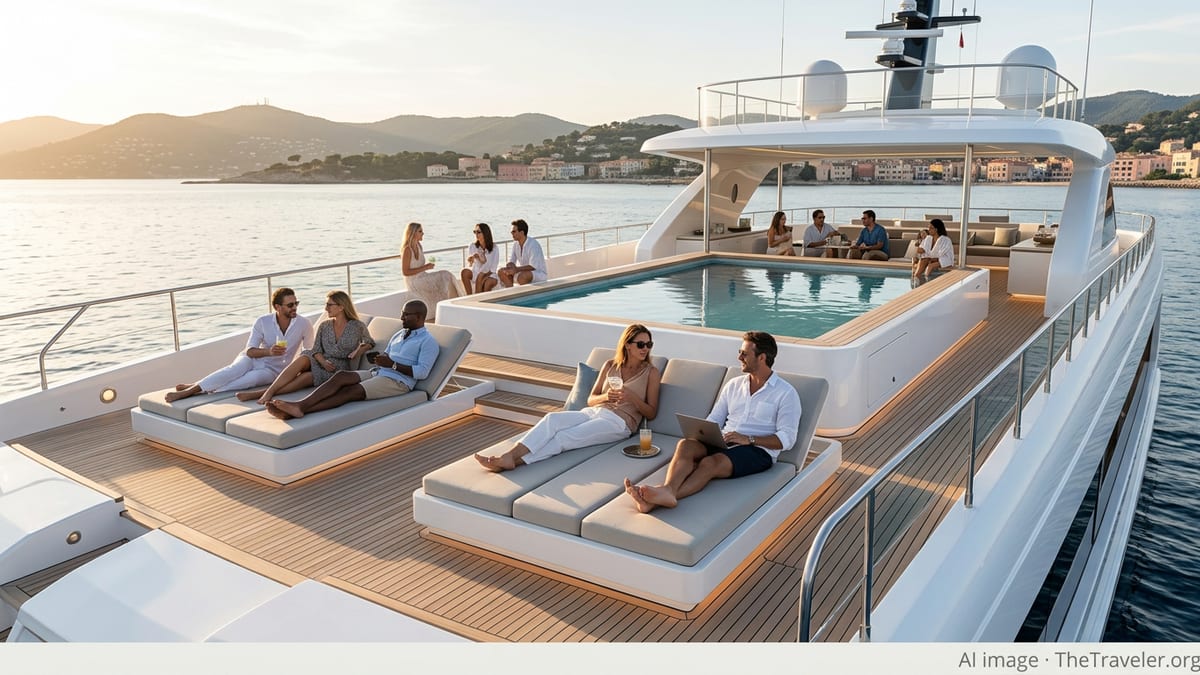
A Younger Face for the Luxury Cruise Market
Industry data indicates that cruise passengers are steadily getting younger, with recent reports showing the global average age dropping to the mid‑40s as Millennials emerge as some of the most enthusiastic prospective cruisers. At the top end of the market, yacht-style brands are capitalizing on this shift by trading formality for lifestyle-focused design, immersive itineraries, and wellness-led programming that resonates with travelers in their 30s, 40s, and 50s.
Explora Journeys, Aman at Sea and The Ritz-Carlton Yacht Collection are among the most prominent examples of this repositioning. Their ships are conceived less as traditional cruise vessels and more as floating boutique resorts, where contemporary design, flexible dining, and high‑touch but relaxed service are central to the experience. The lines are also emphasizing cultural access and slow-travel itineraries that appeal to time‑poor but experience‑hungry professionals.
This evolution coincides with a broader post‑pandemic shift among younger affluent travelers toward fewer but longer, more considered trips. Rather than sampling multiple short breaks, many are seeking multi‑week journeys that combine wellness, gastronomy, and meaningful time in destination, an equation that these new cruise products are explicitly built around.
Explora Journeys Bets on Design, Space and the “Ocean State of Mind”
Backed by the MSC Group, Explora Journeys entered service in 2023 and is rapidly scaling toward a six‑ship fleet by 2028. Recent announcements highlight an accelerated construction schedule and describe the vessels as “floating luxury hotels,” underscoring the brand’s intention to compete less with mainstream cruise lines and more with high‑end land resorts.
The ships, beginning with Explora I and Explora II and soon to be joined by Explora III in 2026, are designed with a high ratio of outdoor space, numerous pools and whirlpools, and suites that emphasize residential-style layouts over traditional cabin design. Publicly available materials showcase collaborations with leading designers and a visual identity built around an “Ocean State of Mind” concept that taps into Millennial and Gen X preferences for wellness, mindful travel, and understated luxury.
Pricing and deployment also signal a tilt toward younger, globally mobile guests. Reports indicate per‑diem rates positioned between premium and ultra‑luxury levels, while itineraries for the coming years include extended seasons in the Mediterranean, Red Sea, and Asia. Those regions are popular with professionals looking to pair a sailing with time in major hubs, and with travelers seeking shoulder‑season travel that avoids peak crowds but not contemporary cultural scenes.
Aman at Sea Targets Ultra-Private Yacht Enthusiasts
Aman at Sea, due to launch its first vessel Amangati in spring 2027, is pushing the age barrier in a different way. The project translates Aman’s ultra‑luxury resort model to a 47‑suite yacht that holds just 94 guests, an environment that mirrors the small‑scale privacy favored by younger high‑net‑worth travelers familiar with villa stays and bespoke safaris.
Public information on the concept highlights expansive suites, extensive spa and wellness facilities, and curated retail and fashion collaborations on board. The positioning leans heavily into the kind of quiet, design‑driven space that has proven popular with tech entrepreneurs, creatives, and finance professionals who often skew younger than the traditional luxury cruise passenger.
Amangati’s planned routes, spanning Mediterranean coastlines and major cultural centers worldwide, are another clue to its target audience. Instead of ticking off the largest cruise ports, the yacht is expected to focus on access to sought‑after destinations where room rates on land can be extremely high, making the ship itself part of the value proposition for travelers used to luxury urban hotels and high‑end beach resorts.
Ritz-Carlton Yachts Draw First-Time, Younger Cruisers
The Ritz-Carlton Yacht Collection, which entered the market with Evrima and has since expanded with Ilma, is already seeing a demographic shift on board. Trade and consumer reports describe an average guest age in the 50s, younger than the traditional ultra‑luxury cruise segment, with a strong showing from travelers in their 30s and 40s and a high proportion of people who have never cruised before.
Observers note that the product feels intentionally familiar to loyal Ritz-Carlton hotel guests. Suites echo modern hotel rooms in layout and finish, public areas adopt a lounge-like aesthetic, and culinary offerings are presented in ways that align more with contemporary city dining than with conventional shipboard banquet service. For many Millennial and Gen X travelers wary of the “floating retirement home” stereotype, this framing lowers the psychological barrier to trying a cruise.
The itineraries also appear calibrated to this audience. Sailings are often structured around gateway cities and resort destinations that fit neatly into broader travel plans, allowing guests to add stays at Ritz-Carlton properties before or after a voyage. Shorter week‑long routes and repositioning sailings have proven particularly appealing to younger professionals who can integrate a yacht cruise into limited vacation time.
Why Millennials and Gen X Are Rewriting the Luxury Cruise Playbook
The appeal of Explora Journeys, Aman at Sea, and Ritz-Carlton Yachts for younger travelers rests on a convergence of factors. Survey data from the cruise industry underscores that Millennials show some of the highest intent to book ocean voyages in the coming years, with overall average cruise passenger ages trending downward. At the same time, discretionary income among older Millennials and Gen Xers has risen, especially among dual‑income households and entrepreneurs seeking once‑in‑a‑year “big” trips.
For these travelers, the traditional trappings of cruising, such as rigid dress codes and fixed dining, are less compelling than flexible spaces, high‑quality wellness facilities, and longer days in port. Yacht-style ships, with fewer passengers and longer overnights or late departures, match that preference more closely than larger vessels built for scale. The promise is less about spectacle and more about access, comfort, and time.
Digital culture plays a role as well. Design‑led suites, refined pool decks, and architecturally interesting public spaces translate neatly to social media, which continues to influence how Millennials, in particular, discover and evaluate trips. At the same time, the relative anonymity of an ocean voyage, compared with heavily photographed resort destinations, offers a degree of privacy and escapism that appeals to a generation that lives much of its life online.
As order books fill and additional ships for these brands move from plan to construction, the competitive landscape for luxury cruising is likely to center even more on this younger, experience‑driven traveler. While ultra‑luxury cruising is not abandoning its older loyalists, the rapid rise of yacht-style fleets suggests that the age profile of guests on the world’s most exclusive ships is set to stay younger for years to come.