

More news on this day
As Russia’s full-scale invasion enters another year, Lviv’s UNESCO-listed Old Town and Bernardine Monastery remain open to visitors, offering a rare mix of living city life, visible war scars and determined cultural preservation.
Get the latest news straight to your inbox!
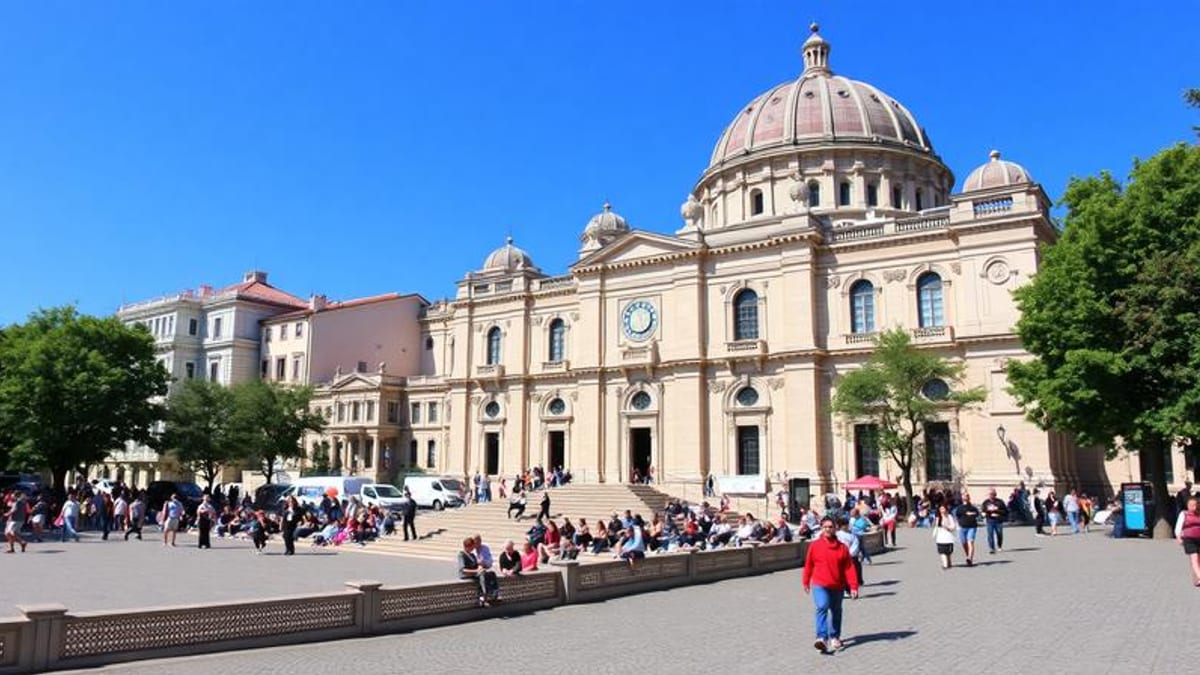
Image by Latest International / Global Travel News, Breaking World Travel News
UNESCO Status and Recent Attacks on Lviv’s Historic Centre
Lviv’s historic centre has been on the UNESCO World Heritage List since 1998, recognized for preserving a largely intact medieval street pattern and an urban landscape shaped by Polish, Armenian, Jewish and Ukrainian communities. In 2023, UNESCO placed the property, officially titled “Lviv – the Ensemble of the Historic Centre,” on the List of World Heritage in Danger in response to mounting security risks linked to the war.
Recent reports show that these concerns have intensified. Missile and drone strikes in 2023 and 2024 damaged buildings in the buffer zone around the Old Town, prompting UNESCO and Ukrainian heritage agencies to document structural losses, shattered windows and facade damage across residential and religious buildings. Assessments describe harm to roofs, masonry and interior finishes, even where primary structural stability has been preserved.
In late March 2026, international coverage highlighted another attack affecting the historic core, including an area near the seventeenth-century church of St. Andrew, part of the Bernardine monastery complex. Images published by European media and humanitarian organizations show debris-covered streets and firefighters working against the backdrop of baroque towers that remain standing despite blast damage.
Ukrainian cultural authorities continue to log each new incident as part of a broader national inventory of war damage to heritage, which now runs into the thousands of affected sites. Lviv’s entries in these tallies are smaller in number than heavily bombed eastern regions, but they focus on some of the country’s highest-profile monuments, adding urgency to calls for better protection and long-term recovery funding.
Exploring the Old Town: Lviv’s Living World Heritage
For travelers who do reach western Ukraine, Lviv’s Old Town still functions as a dense, walkable district centered on Rynok Square, the town hall and radiating cobbled streets. Publicly available tourism and municipal information describe a compact area in which Renaissance townhouses, Austro-Hungarian facades and art nouveau details coexist with coffee shops, bookshops and small hotels operating under wartime constraints.
The UNESCO inscription emphasizes that Lviv’s value lies not only in individual buildings but in an urban fabric that reflects centuries of cultural overlap. Visitors entering from the town hall tower or Market Square encounter Latin and Armenian cathedrals, the Dormition ensemble and Dominican church within a few minutes’ walk, illustrating how Catholic, Orthodox and Eastern Christian traditions shared the same medieval grid.
Despite curfews and periodic air-raid alerts, recent travel accounts and local business updates indicate that many Old Town establishments continue to serve residents and domestic visitors. Terraces and courtyards open when security conditions allow, while museums and cultural centers adjust hours around energy-saving schedules and alert protocols. The atmosphere can shift quickly from relaxed café culture to methodical sheltering, but the district’s daily rhythm persists.
Nightlife remains more subdued than in the pre-war years, with early closing times and limited large events, yet smaller concerts, literary evenings and gallery openings are still announced in city cultural calendars. These activities contribute to the sense that Lviv’s Old Town is a living heritage site rather than an open-air museum frozen by conflict.
Bernardine Monastery: Baroque Landmark Under Threat
The Bernardine monastery ensemble, anchored by the church of St. Andrew close to the Old Town’s southern edge, is one of Lviv’s signature baroque landmarks. Heritage descriptions emphasize its richly articulated facade, sculptural decoration and monastic courtyard integrated into the city’s former defensive line. The complex has long been promoted as a key stop on historical walking routes that connect fortifications, religious sites and former guild quarters.
Recent international reporting notes that the area around the monastery has been within the impact zone of Russian strikes targeting Lviv’s centre, reinforcing concerns over collateral damage to a monument that symbolizes the blending of Central European and local architectural traditions. Initial images suggest that while the church’s main silhouette and towers remain intact, surrounding structures and nearby streets have been exposed to blast waves and falling debris.
Ukrainian conservation specialists working with municipal heritage offices are compiling photographic documentation and technical reports to guide future stabilization and restoration. The aim, according to publicly available project briefs, is to prioritize emergency measures such as roof protection and window boarding while planning for more detailed conservation work when conditions permit.
In parallel, cultural organizations have used the Bernardine complex as a focal point in campaigns drawing attention to the vulnerability of sacral heritage across Ukraine. Exhibitions, online mapping tools and fundraising initiatives often feature the monastery among case studies that illustrate both the richness of Ukrainian baroque and the specific threats posed by modern warfare in dense historic centres.
Current Travel Conditions and Safety Considerations
Travel to Lviv remains subject to the realities of an active war, and official government advisories in many countries continue to warn against non-essential trips to Ukraine as a whole. Nonetheless, transport links from neighboring Poland and other European states are functioning, with international trains and buses connecting to Lviv’s main stations, and a limited but steady flow of humanitarian workers, journalists, diaspora visitors and independent travelers passing through the city.
Recent traveler accounts posted on public forums describe Lviv as comparatively calmer than frontline regions but emphasize the importance of monitoring air-raid alerts, knowing the location of nearby shelters and planning activities around curfew schedules. Power and water supplies are reported as generally stable, though subject to temporary outages after large-scale attacks elsewhere in the country.
Local tourism operators and accommodation providers highlight flexible booking policies and the availability of English-speaking staff familiar with emergency procedures. Many hotels and hostels publicize information about basements or reinforced areas that can be used during alerts, aligning with broader municipal guidance on civilian protection.
Travel observers note that visitors who choose to come often combine sightseeing in the Old Town and monastery precinct with volunteering or support for local initiatives, such as cultural NGOs, libraries or relief efforts for displaced people. The expectation across Ukrainian and international commentary is that tourism in Lviv during wartime carries a responsibility to respect local sensitivities and avoid treating damaged sites as backdrops for spectacle.
Resilience, Restoration and the Future of Lviv Tourism
Heritage and development plans released before and during the war envision Lviv as a long-term cultural and educational hub for the wider region, with the UNESCO-listed centre and monuments like the Bernardine monastery forming the backbone of sustainable tourism. While many of those plans are on hold or being revised, the underlying strategy of linking preservation, creative industries and visitor experiences remains in place.
International donors, city partners and cultural institutions are already sketching out frameworks for post-war recovery, focusing on technical training for conservators, digital documentation of historic fabric and pilot projects for climate-resilient restoration. Lviv’s experience in cataloging war damage and maintaining day-to-day use of heritage buildings is emerging as a reference point for other cities confronting conflict-related risks.
In the shorter term, tourism-related businesses in the Old Town aim to keep staff employed and skills active, even with reduced visitor numbers. Cafes, bookshops and small museums frequently serve local residents first, while remaining ready to accommodate a gradual return of foreign tourists when conditions improve.
For now, Lviv’s UNESCO inscription carries a dual message: international recognition of exceptional cultural value, and a warning about the site’s exposure to continuing military threat. Travelers who decide to visit the Old Town and Bernardine monastery encounter a city that is simultaneously safeguarding its past, adapting to present dangers and preparing for a future when its streets and baroque courtyards can once again welcome visitors in peace.