

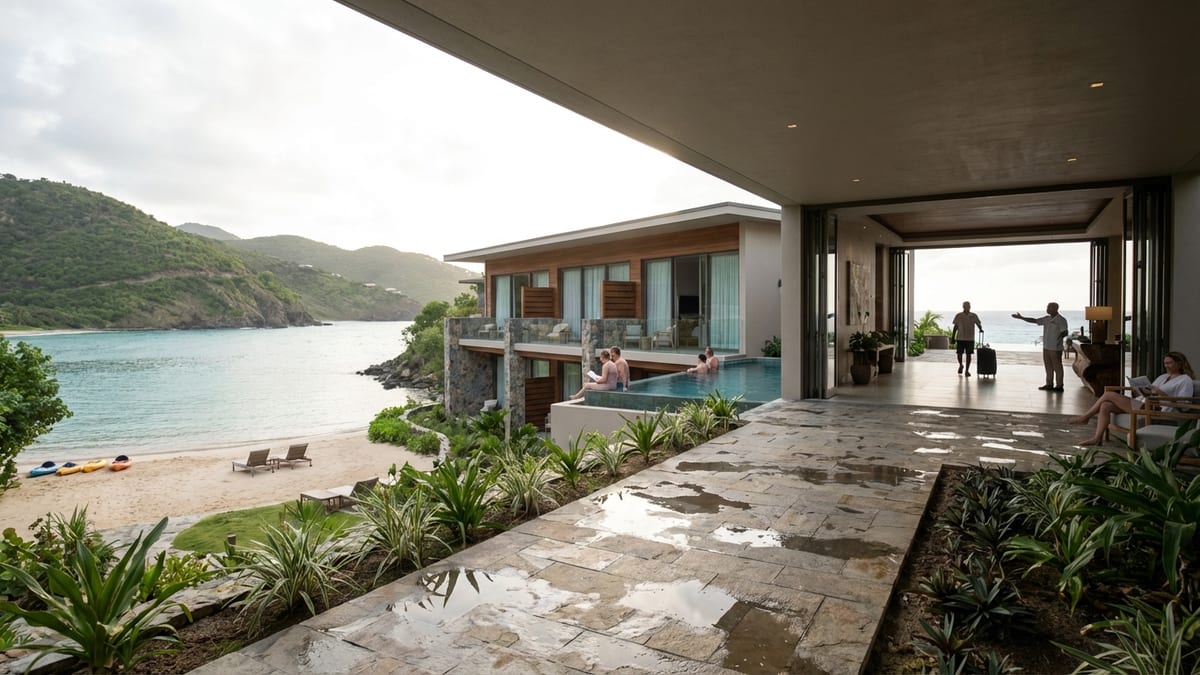
I have a tricky relationship with so called soft branded luxury hotels. I like individuality and local character, but I also want a certain level of consistency when I am parting with a serious amount of money or burning points I worked hard to collect. LXR Hotels & Resorts, Hilton’s indie luxury flag, sits right in the middle of that tension.
I have now stayed at two LXR properties and toured a third, and while there were some genuinely memorable moments, there were also a few hard reality checks on value, privacy, and service. If you are wondering whether LXR as a brand is worth it, especially compared with stalwarts like Waldorf Astoria or independent five star hotels, my honest answer is: it depends very much on the specific property and what you expect from “luxury.”
What LXR Promises Versus What I Actually Experienced
On paper, LXR sells itself as a curated collection of independent minded luxury hotels that retain their own identity but plug into Hilton’s loyalty ecosystem. In practical terms, that means you can earn and redeem Hilton Honors points at places like Mango House Seychelles and Roku Kyoto, while enjoying something more distinctive than a generic corporate tower. The brand language leans heavily into words like “seclusion,” “immersive local experiences,” and “bespoke service.” That was exactly what drew me in.
In reality, the experience across properties was more uneven than I expected for the price point. At Mango House Seychelles, the sense of place was undeniable: the setting on Anse Aux Poule Bleues, the former private home turned 41 key resort, and the Creole and Japanese restaurants all gave it a boutique, one of one feeling that I loved. At Roku Kyoto, the mountain backdrop, onsen style pool and quiet grounds outside the main tourist grid delivered the promised sanctuary vibe. Both felt very different from each other, which is a strength of the brand.
Where the promise started to wobble was on consistency of service and value. LXR is not a budget luxury play. Cash rates at Mango House often push well above 1,000 US dollars per night in high season, with award nights pricing at a six figure Hilton Honors level. Roku Kyoto regularly commands premium nightly rates as well. For that money I expect service that feels anticipatory rather than reactive, and a hardware and amenity set that is clearly a step above a good five star city hotel. Sometimes I got that. Often I did not.
The result is that I no longer see “LXR” on a listing and assume a guaranteed top tier experience. Instead, I treat each property as a standalone hotel that happens to participate in Hilton Honors, and judge it on its own merits. That is not necessarily a bad thing, but it is different from what the branding might lead you to believe.
Checking In: First Impressions, Transfers, and Practicalities
One of the first things that struck me about LXR stays was how different the practicalities of arrival felt depending on the property. At Mango House Seychelles, I landed at Mahé airport and had arranged a transfer through the hotel. The drive took around 45 to 60 minutes depending on traffic, crossing the mountainous spine of the island before dropping down toward the secluded bay. It was scenic, but also a reminder that this is not a quick-hop resort. Once my flight landed I was “committed” to being fairly far from everything else for the duration of my stay.
Arriving at the resort, staff greeted me at the lower carport and shuttled me by buggy up to the main house where reception, the primary infinity pool, and most of the restaurants are clustered. The welcome drink and check-in ritual were warm and relaxed rather than stiff. I appreciated that the team took a few minutes to walk me through the layout of the different “houses” stepping up the hillside, because you do need that mental map. With only 41 rooms it never feels huge, but it is vertically spread out. If you dislike stairs or rely on buggies, that is something to be aware of.
At Roku Kyoto, the arrival was a different story entirely. Set in the foothills of the Takagamine mountains in northern Kyoto, the hotel is technically within city limits but feels a world away from downtown. I reached it by taxi after taking a train into Kyoto Station. The drive through residential neighborhoods and then into the Shozan Resort complex was not particularly glamorous, but once we turned into Roku’s driveway the tone changed. Stone, water, and low rise modern buildings with plenty of glass created a very deliberate feeling of retreat. Bell staff were right there, and check-in was handled smoothly in a lounge-like reception with views out to the Tenjin River and the trees.
On the practical front, both resorts had clear check-in and check-out windows similar to most upscale properties, typically mid-afternoon arrival and late morning departure. I did not run into any surprise early check-in fees, but I also did not feel a strong willingness to bend those rules outside of published times when flights did not align. It was all polite, but transactional. If you are used to elite status buying you more flexibility at full service Hilton or Conrad properties, you might find LXR a bit stricter.
Rooms, Design, and the Reality of “Privacy”
The core of any hotel stay comes down to the room, and this is an area where LXR generally impressed me, with caveats. At Mango House I stayed in one of the Bay House rooms close to the water. The design leaned contemporary tropical, with lots of light woods, neutral fabrics, and accents that nodded to Seychellois life without turning into a theme park. Floor to ceiling glass opened onto a balcony overlooking the bay. It was the kind of space where I was happy to linger with a book when the midday sun made exploring unappealing.
Privacy, though, was not absolute. Balconies and terraces are staggered, but with only a narrow strip of land to work with, you do see and hear neighbors. I never felt exposed, but nor did I have that pure “I am alone in my own world” sensation that marketing photos suggested. Within the room, noise insulation was adequate but not exceptional. I could hear footsteps and occasional conversation in the corridor, and in the early evening I picked up faint sounds from the bar area carried on the breeze. It was never disruptive enough to complain about, but it chipped away at the image of complete seclusion.
Roku Kyoto delivered a different kind of privacy. My room there was a standard category overlooking the river and mountains rather than one of the higher priced suites or garden onsen rooms. The aesthetic was all calming earth tones, clean lines, and subtle references to traditional Kyoto craftsmanship: textured papers, simple ceramics, and warm lighting. It felt more like an architect’s weekend house than a hotel room. Sliding doors and thoughtful layout separated the sleeping area from a sofa and small table, which made the space feel larger than the square footage would suggest.
In terms of privacy, Roku fares better. The low rise layout and spacing between buildings means you are unlikely to be peering into someone else’s balcony, and soundproofing was excellent. My only real gripe was that curtains were either fully open or drawn; there was no sheer layer that allowed light while still shielding the room from view, so I was often choosing between exposure and darkness.
Across both properties, bathroom quality was excellent: powerful showers, deep tubs where space allowed, and high quality toiletries that leaned into local brands and scents. The small but important touches, like plenty of hooks and shelves, good lighting at the mirror, and working ventilation fans, were mostly present. Housekeeping, however, was inconsistent. At Mango House I occasionally found turn-down hit or miss, and once returned after dinner to towels that had not been replaced and a room that felt half finished. Roku, on the other hand, was almost obsessively tidy. If you are the kind of traveler who notices those details, it is another sign that the LXR badge does not equal uniform standards.
Resort Grounds, Pools, and The “Secluded” Setting
LXR talks a lot about seclusion and sanctuary. At both Mango House and Roku Kyoto, I did feel a genuine sense of place, but I also learned that “secluded” can be a double-edged sword if you like to roam. Mango House sits along a gorgeous but compact bay in the southwest of Mahé. The water views are exactly as photogenic as the glossy magazines claim, with those lush green hills rolling into the sea. However, the beachfront directly in front of the resort is short. It is a pleasant place to lounge, swim and launch kayaks, but if your dream is long, empty beach walks without leaving the property, you will be disappointed.
The compact nature of the resort means that public spaces are shared between in-house guests and day visitors who come for the restaurants and bars. That gives the place some welcome energy; it never felt like a sterile, gated enclave. On the flip side, it meant that certain corners, particularly around the main pool and restaurants, could feel busier than I expected for such a small key count. Finding a truly quiet nook sometimes required retreating to my balcony rather than staying by the water.
At Roku Kyoto, the seclusion is more literal. The hotel is tucked within a larger resort enclave with gardens and traditional structures, but once you are on Roku’s section it feels like a self-contained bubble. The star here is the outdoor thermal pool fed by onsen style waters from the local area. You can access it year round, and taking a soak at dusk with the mountains silhouetted and a hint of chill in the air was one of those simple experiences that linger long after you fly home. There is also a standard pool and a lawn area used for yoga and quiet lounging.
The trade off for this tranquility is that you are not steps from Kyoto’s temples or nightlife. Getting into the city requires either a taxi or a bus plus some walking, and return trips late at night are not as simple as stepping out of a downtown hotel into a sea of cabs. During my stay, this meant I often structured my days in blocks: mornings in town sightseeing, late afternoons and evenings back at Roku enjoying the pool and dinner. It worked, but I felt mildly “stranded” a couple of times when I wanted a spontaneous drink in the city but did not quite have the energy for the 20 to 30 minute journey each way. If you are a restless urban explorer, it is worth thinking about how that physical separation will feel after a few days.
Dining, Drinks, and The Real Cost of Staying On Site
Food and beverage is where my feelings about LXR became most conflicted. On the quality side, both properties delivered very strong showings. At Mango House, the three main restaurants each have their own personality. The Creole grill leans into local seafood and spice, the Japanese spot plates beautifully precise sushi and robatayaki with a Seychellois twist, and the all day restaurant balances Mediterranean and island flavors. I had several genuinely memorable meals, including a grilled fish prepared over coconut shell charcoal that was among the best things I ate all year.
The problem is that you do not really have much choice but to eat on site most of the time. Mango House’s seclusion, combined with scarce and expensive taxis, effectively nudges you into the resort’s ecosystem. That is fine for a couple of nights but starts to feel cabin-feverish if you are there for a week. Rotating through three main options for dinner, plus bar snacks, meant that by night four or five dishes felt repetitive, regardless of how well executed they were. I also felt the pricing was aggressive, even by remote island standards. When you mentally tack on the cost of full dinners and drinks every night to the already high room rate, the total bill climbs fast.
Roku Kyoto’s main restaurant focuses on French cuisine filtered through local ingredients, with a strong emphasis on presentation and seasonality. My dinners there were polished affairs, and I appreciated the chef’s tasting menu approach that incorporated Kyoto vegetables and Japanese fish into very classic French techniques. Breakfast was a highlight, with both Western and Japanese sets that felt thoughtful rather than perfunctory. That said, the restaurant is very much a destination in itself, and prices match the ambition. For a couple of nights it felt appropriately indulgent. Beyond that, I found myself craving the simple noodle shops and izakayas in town, both for variety and to rein in costs.
The bar scenes at both properties were surprisingly subdued. At Mango House, even in high season, I often found myself one of only a small handful of guests at the main bar in the evenings. The cocktails were creative and leaned into regional rums and spices, which I enjoyed, but the lack of atmosphere made it hard to linger. At Roku, the bar felt more like an elegant waiting area before or after dinner than a nightlife destination. If you are looking for buzzing energy and people watching, LXR is not the right brand. These are places where you share a quiet drink, not where you close down the night.
Service, Staff, and How Elite Status Really Feels
Service is where I noticed the biggest gap between LXR’s luxury aspirations and the reality on the ground. There were standout individuals at both Mango House and Roku Kyoto: the bartender who remembered my preference for a slightly drier martini, the concierge at Roku who helped rearrange a tea ceremony booking at the last minute when weather disrupted my plans, the housekeeper at Mango House who spotted that I preferred more still water and quietly left extra bottles each day.
At a systems level, though, things did not always feel as smooth as they should at this price. Response times to requests varied widely. At Mango House, arranging a taxi into town sometimes turned into a 20 to 30 minute process of back and forth rather than a simple “give us ten minutes” answer. On one occasion, a simple request for extra towels took two follow up calls and almost an hour to fulfill. Staff were unfailingly polite and clearly trying, but I often felt like the resort lacked a strong managerial presence on the floor to coordinate and troubleshoot proactively.
Roku Kyoto ran more tightly, but even there, communication hiccups cropped up. A spa appointment I had booked for late afternoon was somehow entered in the system as morning. To their credit, the team apologized sincerely and found a replacement slot the same day, but it meant cutting short time in town to rush back. For a property that highlights wellness and calm, that kind of scheduling glitch undercuts the narrative a little.
As a Hilton Honors elite member, I was curious how LXR would handle recognition. The answer: cautiously, and not always generously. Both Mango House and Roku participated fully in the program when I visited, and I received standard benefits like complimentary breakfast and late checkout when available. But the extra touches that some flagship Waldorf or Conrad hotels offer their top tier guests, like small welcome amenities or room upgrades beyond the bare minimum, were mostly absent or had to be nudged along. At Mango House, despite a fairly empty bookings calendar, my upgrade was one category at most. It was fine, but not impressive. More tellingly, there was no sense that status shaped the experience beyond what the terms and conditions required.
Value for Money: When LXR Makes Sense and When It Does Not
The blunt question is whether LXR is worth the premium over other options. Having now paid both cash and points for stays, my conclusion is that the value equation is fragile. It can work very well in specific circumstances, but it can also tip into overpriced territory faster than you might expect.
On the positive side, when you redeem Hilton Honors points for high season stays at resorts like Mango House, you can extract good theoretical value compared with eye-watering cash rates. It is satisfying to check out after several nights, look at the bill and realize you have only paid for food, beverage and activities. If you already have a deep stash of points and are flexible on dates to grab standard room awards, this is one of the strongest ways to experience LXR without wincing at the nightly rate.
Where the numbers start to look shaky is when you are paying full cash rates and then adding in the inevitable captive resort spending. At Mango House, that means multiple on site dinners, bar tabs, and perhaps spa treatments, all priced at a level that matches the brand’s luxury ambitions. At Roku Kyoto, while you technically have easier access to city dining, in practice the distance encourages you to eat at the hotel more than you might otherwise. After a few days, the all-in cost approaches or exceeds what you would pay at some very serious independent luxury properties that offer more expansive facilities or more central locations.
For me, LXR feels worth it when I am leaning heavily on points at a property whose location and character I truly want, or when I find a promotional rate that brings prices closer to strong five star competitors. It feels less compelling if I am paying top of market rack rates just to be within the LXR umbrella. At that point, I would rather choose the best hotel for my needs regardless of its chain affiliation and accept that I might not earn or burn points on that particular trip.
What I Would Do Differently Next Time
In hindsight, there are a few things I would change about how I approached LXR stays. The first is length. Mango House is a beautiful place, but for my travel style it is better suited to four or five nights than a full week. That sweet spot allowed me to enjoy the setting, try each restaurant a couple of times, and still depart before familiarity turned into mild boredom. If I returned, I would probably pair it with time at a different Seychelles property on another part of Mahé or on a different island altogether, both to break up the food routine and to experience a contrasting beach scene.
For Roku Kyoto, I would lean into its strengths rather than fight its location. On my first stay I tried to use it as a base for intense, full-day city sightseeing, which meant a lot of time going back and forth and a certain amount of frustration at not being able to pop into my room midday. If I stayed again, I would frame it as a retreat tacked onto the end of a Kyoto visit based in a more central hotel. Two or three nights of soaking in the thermal pool, enjoying slow breakfasts, and taking one or two curated excursions into the city would align much better with what Roku naturally offers.
I would also adjust my expectations around service. LXR is not Aman or a classic, small independent ryokan where you are one of a select handful of guests and staff anticipate your preferences almost before you express them. It is closer to a well run boutique hotel that still has to interface with a larger corporate system. Knowing that, I would be quicker to communicate my needs clearly up front, confirm bookings like spa appointments in writing, and allow a bit of extra time for logistics like transfers and restaurant reservations.
Finally, I would be more ruthless about comparing total costs. Before locking in an LXR stay, I now build a rough budget that includes expected on site dining and spa spending and compare that against alternative properties in the same destination, regardless of chain. If the differential is small and I really like the LXR property’s design or location, I go for it. If the gap is large and the alternatives look equally compelling, I set aside my loyalty program instincts and choose the hotel that best fits the trip rather than the brand that fits my account.
The Takeaway
After experiencing LXR Hotels & Resorts in different parts of the world, I do not see the brand as a straightforward yes or no proposition. It is better viewed as a label for a loose collection of characterful properties that share a loyalty backbone rather than a tightly controlled luxury standard. There are real highlights: distinctive design that reflects local culture more than corporate templates, settings that prioritize scenic seclusion over convenience, and some excellent food and beverage programs. When everything lines up, a stay can feel personal and memorable in a way that many large chain luxury hotels struggle to deliver.
At the same time, the brand’s softer definition means that service and operational polish vary more than I would like for the prices involved. Privacy is generally good but not absolute, and “secluded” often translates into practical limitations and higher on site spending. Hilton Honors benefits are present but not transformative, and paying full cash rates can quickly put you into a price bracket where very strong independent contenders exist.
For certain travelers, LXR is absolutely still worth it. If you are a points focused guest who wants to redeem at aspirational properties without venturing into ultra stiff formality, LXR sits in a sweet spot. If you care more about sense of place and thoughtful design than about having a huge roster of facilities or a hyper social atmosphere, many LXR hotels will appeal. And if you value coming “home” to a calm, well curated environment after days of sensory overload in a city like Kyoto, the trade off in location makes sense.
On the other hand, if you equate luxury solely with hard service standards, extensive amenities, or central urban convenience, you might find LXR’s proposition less convincing. In that case, you may be better served by the top tier of more traditional chains or carefully chosen independent hotels, even if that means forgoing points or brand familiarity. In my own planning, LXR now lives in a specific mental category: not my automatic default, but a set of individually interesting options that I will happily choose again, as long as the property, price, and purpose of the trip all align.
FAQ
Q1. Is LXR a true luxury brand or just an upscale Hilton label?
LXR sits in Hilton’s top tier alongside Waldorf Astoria and Conrad, but it behaves differently. It is more of a curated collection of independent style hotels that participate in Hilton Honors rather than a tightly standardized luxury brand. Some properties feel genuinely high end, others feel closer to a very good boutique hotel. I treat each LXR individually rather than assuming a uniform luxury level.
Q2. How does LXR compare with Waldorf Astoria and Conrad for service?
In my experience, Waldorf and Conrad tend to be more consistent in terms of service protocols and staff training. LXR can match or exceed them at certain properties, but it can also fall short at others. The highs are high, often thanks to strong local character, but the variance is wider.
Q3. Is it worth using Hilton Honors points at LXR resorts?
Yes, it can be, especially in high season when cash rates are very high. Redeeming points at places like Mango House Seychelles took the sting out of nightly prices that would have been hard to justify in cash. The key is to compare the points cost to the real cash rate on your dates and decide whether the value per point feels acceptable to you.
Q4. Are LXR properties good for families?
Some are, some are not. Mango House, for example, has family friendly villas, a kids’ program, and multiple pools, but it also has a compact beach and a quieter atmosphere that might not suit very energetic families. Roku Kyoto leans more toward couples and adults who want a calm retreat. It is important to look at each property’s facilities and layout before deciding.
Q5. How private are LXR resorts in practice?
They generally offer a good level of privacy compared with big city hotels, but not the extreme seclusion of ultra luxury villas. At Mango House, neighbors and restaurant guests are within sight and sound, although thoughtfully screened. At Roku Kyoto, room and terrace privacy are stronger thanks to the layout. If absolute seclusion is your top priority, you may need to look at standalone villas or more remote options.
Q6. Do LXR hotels recognize Hilton elite status well?
They recognize it adequately, but not lavishly. I received the published benefits such as complimentary breakfast and, when available, late checkout. Upgrades were cautious, and I did not feel that status significantly transformed my experience. If you are used to very generous elite treatment, you may want to temper your expectations.
Q7. Are LXR properties usually remote from city centers?
Many LXR resorts emphasize tranquil or scenic locations, which often means being outside downtown cores. Roku Kyoto is in the northern foothills rather than in central Kyoto, and Mango House sits on a quieter bay on Mahé away from busier areas. This is part of the appeal, but it does add time and cost to reach restaurants, nightlife, or attractions off property.
Q8. How expensive is food and drink at LXR resorts?
Prices generally match or exceed what you would expect at other five star properties in similar destinations. At Mango House, the combination of limited nearby alternatives and high menu pricing made on site dining a significant part of my bill. At Roku, the main restaurant is deliberately high end, and the cost reflects that. Budget accordingly, especially for longer stays.
Q9. Would I stay at an LXR property again?
Yes, but selectively. I would choose specific LXR hotels that genuinely excite me for their design or location, and I would favor situations where I can either use points or secure a good promotional rate. I would not book an LXR purely because of the brand name if an equally appealing independent hotel offers better value.
Q10. Who is LXR really best suited for?
In my view, LXR works best for travelers who value distinctive design, a strong sense of place, and relative tranquility more than they value rigid brand uniformity or buzzing social scenes. It is a good fit for couples, honeymooners, and points collectors who enjoy boutique style stays, and who are comfortable accepting occasional rough edges in return for character and setting.