

More news on this day
Drivers using the M1 through Derbyshire are facing severe disruption as a combination of incidents, lane closures and heavy weekend traffic has brought long stretches of the motorway close to a standstill, causing hours-long delays and widespread frustration for motorists travelling through the East Midlands corridor.
Get the latest news straight to your inbox!
Major Delays Reported Along Key Derbyshire Stretch
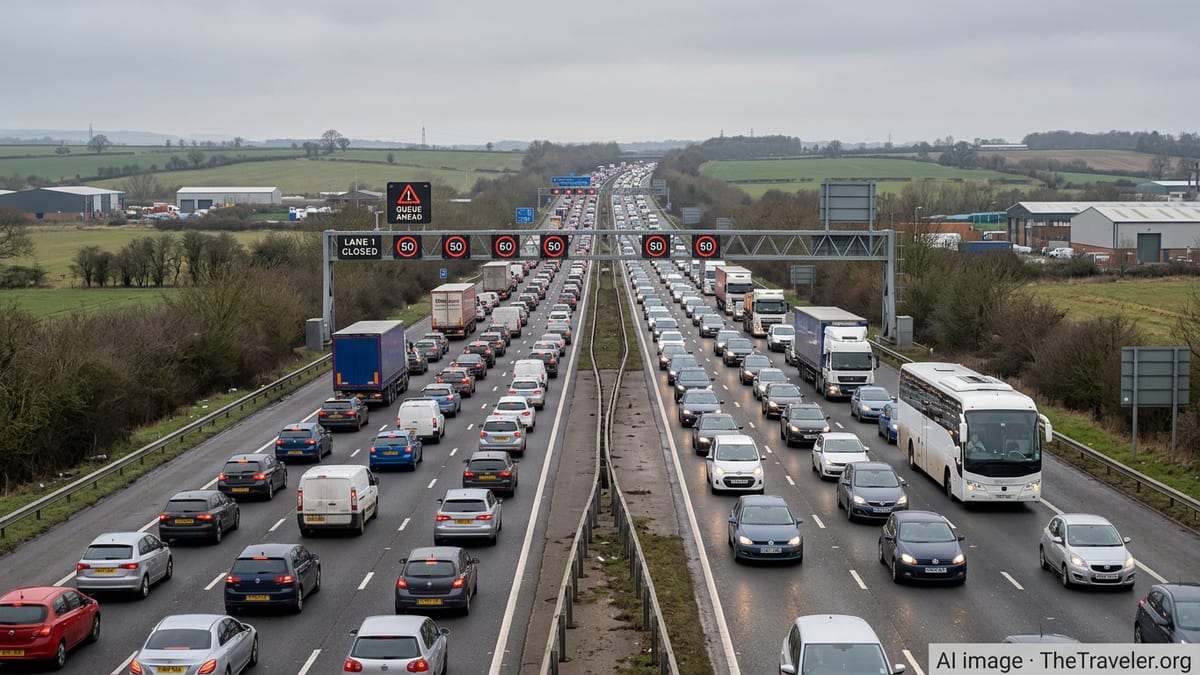
Reports indicate that traffic is heavily congested along several junctions of the M1 in Derbyshire, with tailbacks stretching for miles as vehicles inch forward at walking pace. Live traffic maps and local travel updates describe conditions as severe, with some drivers experiencing delays of well over an hour on journeys that would normally take a fraction of the time.
The affected corridor through Derbyshire forms part of a critical north-south route for both long-distance travellers and local commuters. When traffic grinds to a halt on this section of the motorway, surrounding A-roads and village routes often become saturated as motorists attempt to divert, compounding the disruption for communities across the county.
Publicly available information shows that congestion has been building gradually through the morning and early afternoon, as an initial incident led to lane closures and subsequent breakdowns and minor collisions added further pressure to already slow-moving traffic. Drivers are being warned to expect significant delays, particularly in the vicinity of junctions serving Derby and key links towards Nottinghamshire and South Yorkshire.
Travel times are being reported as unpredictable, with motorists encountering sudden pockets of standstill traffic followed by short bursts of movement, creating a stop-start pattern that is placing additional strain on drivers and vehicles alike.
Incidents, Lane Closures and Smart Motorway Limits Blamed
According to published coverage and real-time traffic feeds, a combination of factors appears to be responsible for the current gridlock on the M1 in Derbyshire. Initial reports point to collisions and stranded vehicles that prompted lane closures, which in turn reduced capacity and triggered rapid queues in both directions.
Variable speed limits and smart motorway controls along this stretch are designed to smooth traffic flow and reduce the risk of serious collisions. However, when even one or two lanes are closed, the sudden reduction in available road space can lead to long queues forming quickly, especially during busy travel periods. Drivers encountering a mix of reduced limits, lane closures and heavy braking often find that the motorway becomes a stop-start crawl for extended distances.
Publicly accessible traffic camera images and driver accounts shared on social platforms describe scenes of standstill lines of cars, vans and heavy goods vehicles, with many motorists reporting that they have moved only a few miles over the course of an hour. Some reports describe sections where all movement temporarily ceased while debris was cleared and vehicles were recovered from live lanes.
High volumes of freight using the M1 as a strategic route, combined with weekend leisure travel and local journeys, mean that any disruption can quickly ripple outward. Once queues reach critical length, recovery of normal speeds can take several hours even after the original obstruction is removed.
Knock-On Effects for Local Roads and Travellers
The congestion on the M1 is having a visible impact on surrounding roads in Derbyshire, as drivers seek alternative routes to bypass the worst of the queues. Publicly available traffic data indicates increased volumes on nearby A-roads and through routes serving towns and villages close to key junctions, including areas that typically carry modest levels of traffic outside peak commuting hours.
Residents and local businesses often feel the effect when motorway traffic spills onto local networks, with delivery schedules disrupted, bus services delayed and everyday journeys taking much longer. Reports from earlier disruption events on the M1 show that diverted motorway traffic can quickly overwhelm signalised junctions and roundabouts, leading to gridlock well beyond the immediate vicinity of the motorway itself.
For travellers attempting longer journeys between the Midlands, northern England and further south, today’s disruption is likely to result in missed connections, rescheduled plans and unexpected additional costs. Published journey-time estimates show significant delays not only through Derbyshire but also on approaches from neighbouring counties, as queues extend back towards major interchanges and service areas.
Those already committed to the route are reportedly facing limited options, with many service stations and rest areas becoming busy as drivers choose to pause and wait out the worst of the congestion rather than remain in stop-start traffic.
Advice for Motorists Planning to Use the Route
Travel information services are urging motorists with flexibility in their plans to reconsider journeys that rely on the M1 through Derbyshire while the disruption continues. Public bulletins suggest that those who can delay their departure or re-route using alternative long-distance corridors may avoid the worst congestion, particularly during the busiest afternoon and early evening periods.
For drivers who must use the M1, journey planners recommend allowing substantial extra time and preparing for extended periods in slow traffic. Basic checks such as ensuring sufficient fuel, coolant levels and charged mobile phones are being highlighted as sensible precautions, alongside carrying drinking water and snacks for longer trips.
Reports drawn from previous major delays on this corridor indicate that congestion can persist long after an initial incident is cleared, as traffic gradually returns to normal speeds. Motorists are therefore being reminded that even when early reports of a collision or breakdown have been resolved, queues may continue to affect journeys for some time.
With Derbyshire’s section of the M1 serving as a vital link between regions, today’s disruption underlines how quickly traffic conditions can deteriorate when incidents coincide with high demand, and how far-reaching the impact can be for travellers and communities along one of the United Kingdom’s busiest motorway corridors.