

More news on this day
Madagascar Airlines is strengthening its role in the Indian Ocean aviation market with a new inter-island route and streamlined regional connections designed to make access to the island nation’s emerging tourism hotspots faster and more reliable.
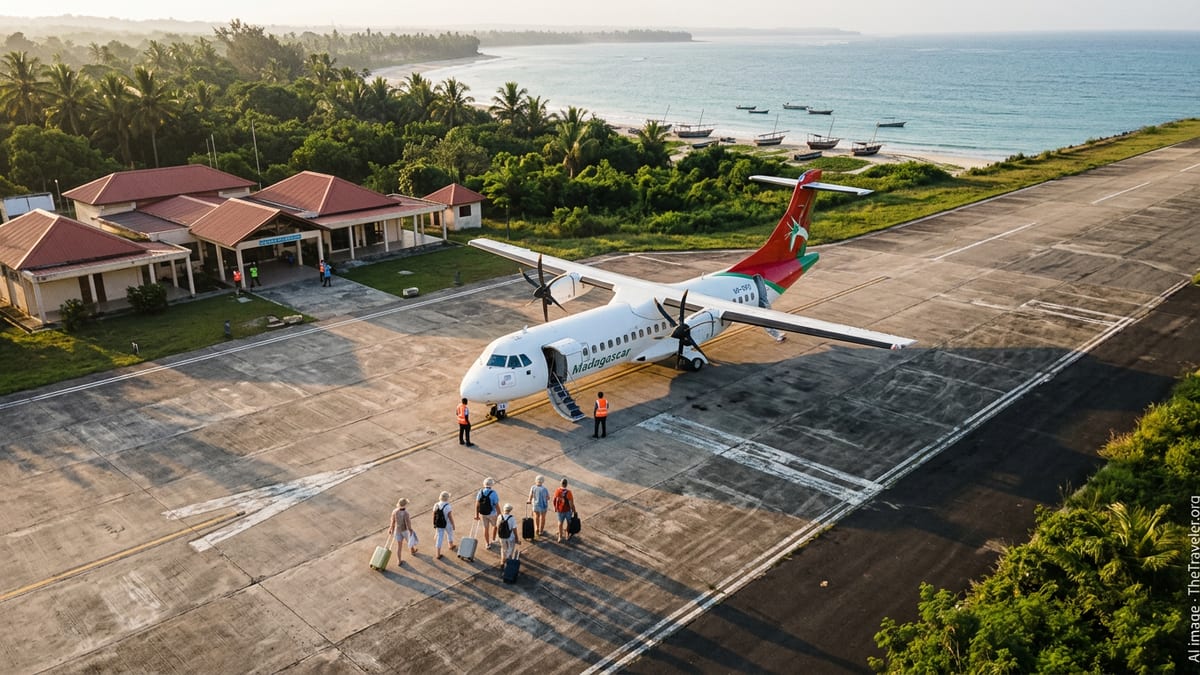
New La Réunion – Toamasina – Sainte-Marie Link Targets Leisure Demand
Madagascar Airlines has introduced a new inter-island routing linking La Réunion, Toamasina and Sainte-Marie, in partnership with Air Austral under a codeshare and special prorate agreement. Marketed under Madagascar Airlines flight numbers, the service is structured to facilitate smoother point-to-point travel within the Indian Ocean while also capturing growing leisure traffic to Madagascar’s east coast.
The itinerary is configured to support same-day connections for long-haul passengers arriving in La Réunion from Europe and other international markets. By reducing the need for overnight stops in Antananarivo, the airline is positioning the route as a time-saving alternative for travelers heading directly to beach and nature destinations such as Sainte-Marie, known for seasonal whale watching and low-key coastal tourism.
Industry observers say the launch reflects a broader shift in the national carrier’s strategy from a predominantly Antananarivo-centric network toward a more distributed model that connects key regional gateways. It also signals renewed confidence in medium-haul regional demand following several years of capacity constraints and schedule volatility affecting Madagascar-bound travel.
The La Réunion – Toamasina – Sainte-Marie service builds on the framework of an earlier commercial partnership between Madagascar Airlines and Air Austral, which opened access to each other’s domestic and regional networks. That agreement has helped underpin a more reliable schedule and increased seat availability on routes that are crucial for tourism and trade across the southwest Indian Ocean.
Smoother Transfers via La Réunion and Antananarivo
A central aim of the expanded network is to offer smoother transfers for international visitors who traditionally faced long layovers and complex itineraries when combining long-haul flights with domestic sectors in Madagascar. With the new routing, passengers arriving in La Réunion from Paris or other major European hubs can, in many cases, connect onward to Toamasina and Sainte-Marie in a single travel day.
At the same time, Madagascar Airlines is working to better coordinate domestic schedules over Antananarivo’s Ivato International Airport, its primary hub. By tightening connectivity between east coast cities, northern gateways and the capital, the carrier is seeking to reduce backtracking and duplicate legs that many tour operators have viewed as barriers to itinerary design.
The enhanced transfer structure is expected to benefit not only international tourists but also Malagasy travelers and regional business passengers who depend on reliable access to provincial centers. Better-aligned connections should make it easier to combine multiple regions, such as the east coast and the northern archipelagos, within a single trip without returning to the capital between each leg.
Travel trade partners in La Réunion and Madagascar report growing interest from operators looking to package the new route with existing long-haul services. For them, shorter transfer times can translate into higher guest satisfaction and improved cost-efficiency, particularly on tightly scheduled group tours and seasonal charter programs.
Domestic Cross-Country Links Strengthen the Tourism Backbone
The regional expansion comes alongside new cross-country domestic services that Madagascar Airlines has been rolling out with support from the Ministry of Transport. Recent east–north routes operated with smaller regional aircraft are designed to knit together key economic and tourism centers that were previously connected only via indirect, capital-focused itineraries.
These internal links play a critical role in making emerging destinations more accessible to visitors who wish to explore beyond Madagascar’s established tourism corridors. Faster connections between eastern ports, northern coastal hubs and inland cities can significantly reduce overland travel times on infrastructure-limited road networks, enabling more varied and commercially viable itineraries.
Fleet investments, including the retention and planned expansion of turboprop capacity, are aimed at giving the airline the flexibility to serve shorter runways and secondary airports that anchor many nature-based tourism zones. This capability is considered essential for distributing visitor flows more evenly across the country, easing pressure on a handful of overburdened gateways while bringing economic benefits to under-served regions.
According to airline and government statements, these moves are part of a broader recovery and transformation program intended to stabilize operations, restore confidence among international partners and lay the groundwork for sustainable growth in the visitor economy over the coming decade.
Strategic Partnerships Deepen Indian Ocean Connectivity
Beyond the new inter-island route, Madagascar Airlines has in recent months expanded its commercial cooperation with regional and long-haul carriers to reinforce its role as a connector within the Indian Ocean. Agreements with partners such as Air Austral and French carrier Corsair are designed to open more one-stop options between Madagascar, La Réunion and mainland France, while feeding passengers into the national carrier’s domestic network.
Codeshare and interline arrangements give foreign airlines access to a broader range of Malagasy destinations than they could serve directly, while providing Madagascar Airlines with additional traffic flows and marketing reach. For travelers, the practical effect is a more seamless booking and transfer experience, with through-ticketing, coordinated schedules and the possibility of through-checked baggage on many itineraries.
These partnerships are being implemented against a backdrop of heightened competition for leisure travelers across the Indian Ocean region, as islands such as Mauritius, Seychelles and the Maldives continue to invest heavily in air access. By leveraging regional alliances, Madagascar aims to sharpen its value proposition as a multi-faceted destination combining wildlife, culture and coastal tourism.
Analysts note that a more integrated regional air network could also support resilience in the face of external shocks, enabling operators to reroute passengers and adjust capacity more quickly when individual carriers or routes are disrupted. For Madagascar, which has historically been vulnerable to such shocks, deeper cooperation is viewed as a strategic hedge as well as a growth driver.
Tourism Growth Ambitions Drive Connectivity Push
The government of Madagascar has set an ambitious target of significantly increasing international arrivals over the next five years, positioning tourism as a pillar of post-crisis economic recovery. Improved air connectivity is at the heart of that strategy, with the new inter-island route and associated partnerships seen as key tools to accelerate growth.
Tourism stakeholders say that easier access to east coast and island destinations such as Sainte-Marie could help diversify the country’s visitor base and extend average length of stay. By making it more straightforward to combine beach holidays with nature reserves, cultural sites and whale watching, the upgraded network supports a broader range of high-value itineraries.
Local businesses, from small guesthouses to excursion operators, are expected to benefit as new routes bring more consistent visitor flows. Improved schedule reliability and clearer transfer options also give tour operators greater confidence to market complex, multi-stop packages that rely on domestic and regional flights.
While challenges remain, including infrastructure constraints and the need to maintain operational reliability, the launch of the new La Réunion – Toamasina – Sainte-Marie service marks a notable step in aligning Madagascar’s air network with its tourism ambitions. For travelers, it promises a more direct and time-efficient path to some of the island’s most compelling coastal landscapes and emerging visitor destinations.