

More news on this day
The port town of Madang in Papua New Guinea is experiencing a renewed tourism surge as boutique cruise ship MS Azamara Onward sails in with 655 visitors, positioning the coastal community as a rising stop on high-value South Pacific itineraries.
Get the latest news straight to your inbox!
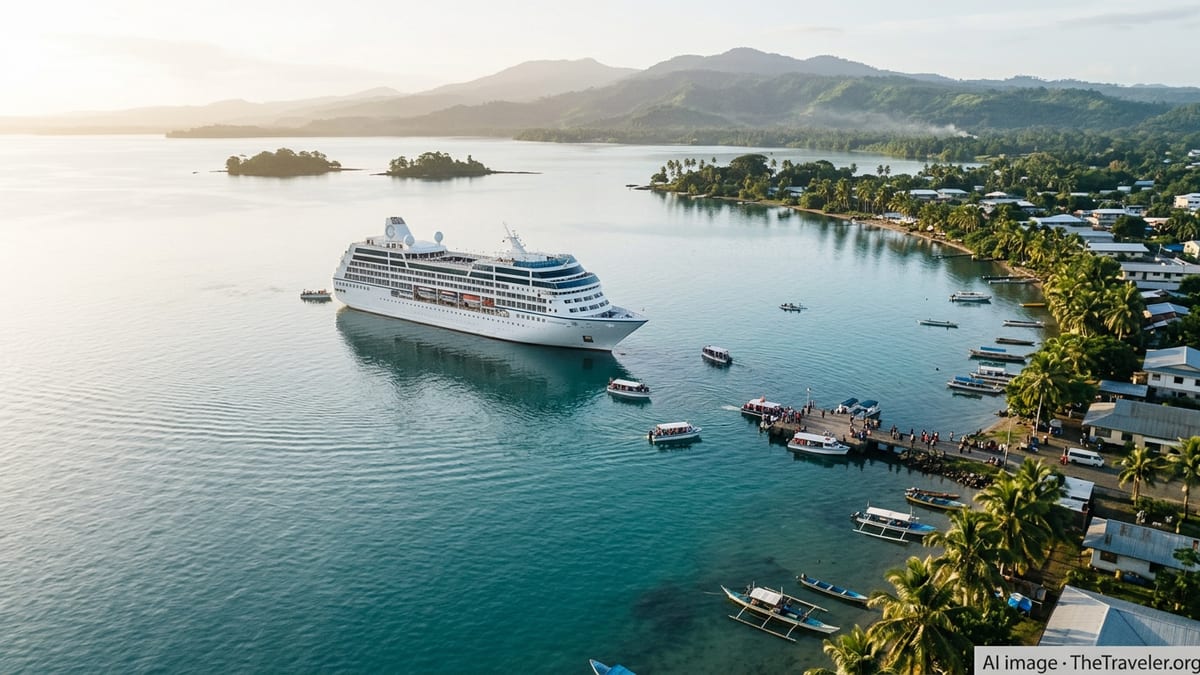
Azamara Onward Adds Madang to High-Value Pacific Routes
Publicly available itinerary data shows that Azamara Onward is operating a 22-night Australia and Asia voyage in March 2026, with Madang listed as a full-day call on March 14. The vessel, which typically carries around 670 passengers at double occupancy, is reported to be bringing approximately 655 cruise tourists to the Papua New Guinea port during this visit. The call is part of a longer route connecting Sydney to major gateways across the region, positioning Madang among a select group of smaller ports gaining exposure to upscale international cruise guests.
The arrival aligns with Azamara’s broader strategy of focusing on smaller ships and extended port calls, marketed as offering deeper destination immersion compared with larger mainstream cruise operators. Industry information on the brand highlights an emphasis on longer itineraries and less frequented ports, a model that naturally favors destinations like Madang with strong cultural and nature-based appeal rather than mass-market infrastructure.
For Madang, inclusion on a premium line’s regional program signals growing confidence in local port capability and shore-excursion potential. The visit follows a wider South Pacific and Indian Ocean trend in which smaller cruise vessels are increasingly venturing beyond traditional hubs to secondary ports, bringing fewer but typically higher-spending guests.
While exact passenger counts can fluctuate by sailing, the reported figure of 655 tourists positions this Azamara Onward call as one of the more substantial single-day injections of international visitors Madang has seen since the broader restart of regional cruise operations.
Economic Boost for Local Tours, Handicrafts and Hospitality
Madang’s tourism sector, which has long promoted its lagoon, offshore islands and coastal scenery, is expected to benefit directly from the influx of cruise visitors. Based on patterns observed in other South Pacific ports, a significant proportion of the 655 tourists are likely to disembark for guided tours, independent sightseeing, handicraft shopping and food and beverage spending in town.
Local tour operators offering snorkeling, village visits, cultural performances and historical excursions are among the primary beneficiaries of such calls. Publicly available reports from other cruise-reliant destinations in the region suggest that even a single day visit from a mid-sized ship can generate meaningful revenue across transport providers, guides, market vendors and small businesses clustered around the port.
Madang’s arts and crafts sector may also see a lift. Cruise travelers on boutique lines such as Azamara typically show strong interest in locally made carvings, bilums, shell jewelry and woven items that can be easily transported home. This pattern has been documented in other emerging cruise ports, where artisan markets adapt product offerings to appeal to short-stay visitors seeking authentic, portable souvenirs.
Accommodation and food outlets are likely to feel more indirect benefits, particularly from crew members seeking services in town and from longer-term momentum if Madang’s profile rises on global travel platforms as a result of cruise exposure. Over time, repeat calls can encourage small-scale investment in cafes, guesthouses and waterfront amenities tailored to a mix of cruise and independent travelers.
Madang’s Appeal: Culture, Coastline and Underwater Attractions
Madang has been promoted in tourism literature as one of Papua New Guinea’s most picturesque coastal areas, with its volcanic backdrops, offshore islands and sheltered waters drawing divers and adventure travelers. The town’s inclusion on Azamara Onward’s March 2026 itinerary underscores how these attributes are being repackaged for an upmarket cruise audience seeking distinctive, less crowded ports of call.
The region offers a mix of cultural and nature-focused experiences that lend themselves well to day-long cruise programs. Visitors can encounter traditional music, dance and craft, while excursions often highlight local village life and coastal landscapes. For more active guests, nearby reefs and wartime wreck sites are known within dive and snorkel communities and are increasingly appearing in small-ship shore excursion catalogs.
Madang’s urban core, though compact, provides a practical staging point for these activities, with its harbor, markets and basic visitor services within easy reach of the pier. This footprint aligns with the type of destination Azamara promotes within its “destination immersion” branding, where passengers are encouraged to spend extended time ashore and explore beyond the immediate cruise terminal area.
As more cruise lines test similar ports across the region, Madang’s ability to offer both cultural authenticity and manageable logistics may help it secure a regular place on specialized itineraries that prioritize depth of experience over volume.
Part of a Wider Cruise Tourism Rebound in Papua New Guinea
The Azamara Onward call comes amid a broader rebound for cruise tourism in Papua New Guinea. Local media coverage in recent years has documented the gradual return of international ships to ports such as Madang, Rabaul and Alotau, following the disruption of global travel. These visits remain relatively modest in scale when compared with major Caribbean or Mediterranean hubs, but they carry outsized significance for local economies.
Port authorities and tourism stakeholders have been investing in infrastructure upgrades, safety measures and community-based tourism products to better accommodate visiting vessels. Madang’s ability to receive a boutique ship with several hundred passengers reflects incremental progress in areas such as pilotage, berthing and passenger handling, elements that are crucial for attracting repeat business from specialized cruise operators.
Published industry commentary on the South Pacific cruise market indicates that smaller ports in Melanesia and Micronesia are now being evaluated more seriously as part of longer, expedition-style or enrichment-focused itineraries. Papua New Guinea’s diverse cultures, dramatic coastlines and relatively low levels of mass tourism give it a distinctive appeal within this segment, especially for lines whose clientele value off-the-beaten-path destinations.
As itineraries for subsequent seasons are developed, Madang’s performance in handling this Azamara Onward call, along with visitor satisfaction levels and reported onshore spend, will likely shape decisions about future deployments. Strong outcomes could support arguments for expanded cruise programming across Papua New Guinea.
Managing Growth and Preserving Community and Marine Environments
While the immediate economic benefits of cruise arrivals are widely recognized, destinations like Madang are also facing questions about how to manage growth sustainably. Experiences from other emerging cruise ports in the Asia-Pacific region indicate that clear guidelines on waste management, visitor flow and community engagement are important to preserving local quality of life and environmental health.
Stakeholders in similar coastal communities have increasingly emphasized the need to protect coral reefs, mangroves and nearshore ecosystems that are central to both tourism and local livelihoods. With Madang’s reputation closely tied to its marine and coastal assets, maintaining water quality and minimizing physical impacts from increased boat and snorkel activity are likely to remain priorities as more ships arrive.
Community-focused tourism models, including village-based experiences and locally guided excursions, can help ensure that revenue from cruise calls is distributed more widely. Reports from other Pacific ports show that when residents have a tangible stake in tourism, support for welcoming ships tends to be stronger and cultural heritage can be presented on terms defined by local communities.
For Madang, the arrival of 655 Azamara Onward passengers offers both an immediate boost and a test case. The way the town balances economic opportunity with cultural integrity and environmental stewardship will help determine whether the current tourism boom evolves into a stable, sustainable feature of the local economy.