

More news on this day
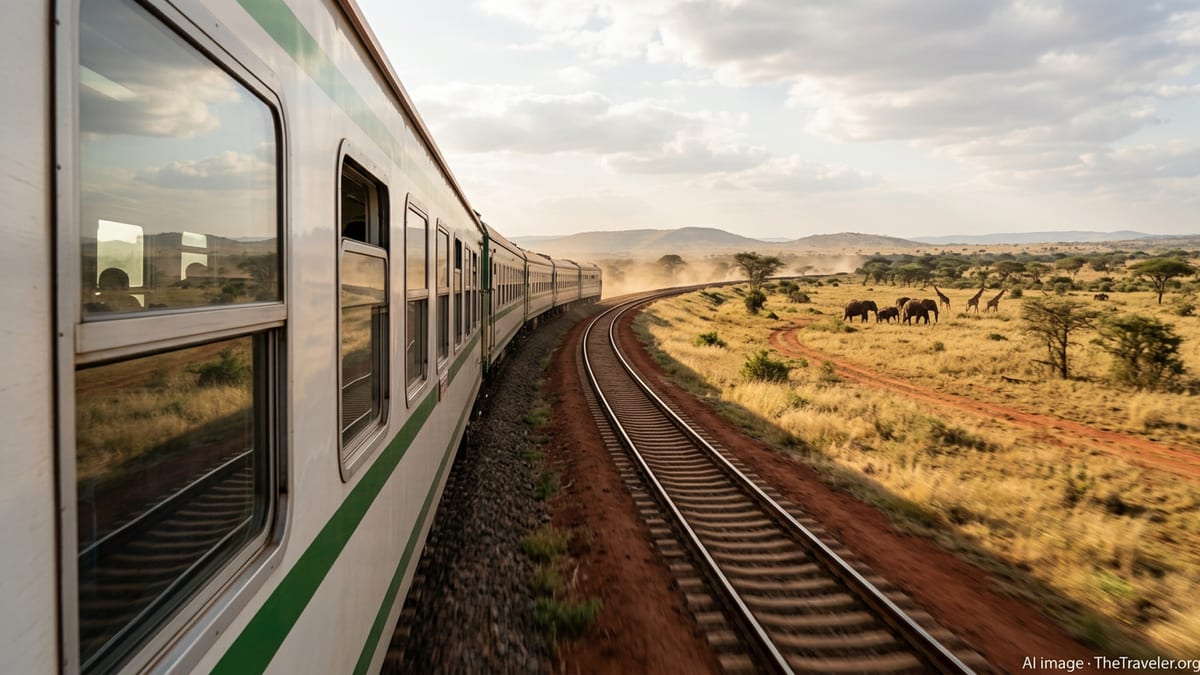
On a warm morning at Nairobi Terminus, as families wheel Rimowa suitcases past khaki-clad safari guides, the sleek white-and-green Madaraka Express looks less like a commuter workhorse and more like the new front row seat to Kenya’s wild side.
A High-Speed Gateway to the Bush
Since entering service on the Standard Gauge Railway between Nairobi and Mombasa in 2017, the Madaraka Express has transformed how travelers move between Kenya’s capital and the coast, replacing gruelling all-day road journeys with a smoother trip of roughly five to six hours. For safari-goers, that shift is proving decisive. Instead of flying over the vast savannah, many are now gliding through it, watching the Athi plains and the red-earth landscapes of southern Kenya unfold at eye level.
Recent tourism data and government reports show that increased frequencies on the Madaraka Express have supported the broader rebound of Kenya’s tourism sector, particularly along the southern circuit that links Nairobi with Tsavo East, Tsavo West and the coast. Tour operators say the line has turned Tsavo, once overshadowed by the Masai Mara, into a convenient first or final stop on a luxury itinerary, especially for visitors combining a safari with time on the Indian Ocean beaches.
The train’s dedicated passenger service, coupled with modern stations at key junctions, has effectively redrawn the safari map. Where high-end trips once revolved around small planes hopping between airstrips, the rail corridor is now spawning rail-to-lodge products that start on the platform and end at a private plunge pool or tented suite overlooking a waterhole.
Premium Class and the Rise of Rail Luxury
Kenya Railways has leaned into this opportunity by elevating the onboard experience. In late 2024 the corporation introduced a new Premium Class on the Madaraka Express, adding upgraded coaches, a dedicated dining car and enhanced onboard service. The new configuration includes four Premium Class coaches atop the existing first and economy classes, signaling a deliberate push toward higher-yield leisure travelers and international safari guests.
In Premium and First Class, seats are more spacious, carriages are quieter, and there is greater emphasis on table service and comfort, from air conditioning and generous luggage space to more attentive staff-to-passenger ratios. For travelers who have just flown long haul into Nairobi, the ability to step directly from the airport transfer into an air‑conditioned carriage, settle into an upholstered seat and sip Kenyan coffee as the city falls away has become part of the appeal.
Tour operators are responding by marketing the rail journey as an experience in its own right rather than a mere transfer. Some packages now include private compartment blocks in Premium Class, branded welcome kits, curated picnic-style meals and hosted onboard briefings by safari guides who meet clients at the terminus. The result is a soft landing into the safari rhythm, where the journey slows down even as the infrastructure speeds it up.
Tsavo Stopovers Create a New Safari Corridor
Key stopovers along the 472‑kilometre line are rapidly evolving into hubs for rail-linked safaris. Stations such as Voi and Mtito Andei, which sit within easy driving distance of Tsavo East and Tsavo West National Parks, have seen a rise in visitor numbers as operators design itineraries around the train timetable. A short transfer from Voi station can now place guests at classic lodges and high-end tented camps in time for an afternoon game drive.
Local authorities and hoteliers report that additional scheduled stopovers and minor timetable tweaks have boosted footfall, feeding business not only for established safari properties but also for community conservancies, smaller boutique camps and cultural tourism enterprises. For many travelers, the ability to step off a modern train into a waiting 4x4, drive past small towns and sisal farms, and then enter a landscape of lava flows and elephant herds is part of the narrative that rail safaris can uniquely deliver.
This rail corridor is also reshaping how time is allocated within luxury itineraries. With a predictable schedule and fewer weather-related disruptions than bush flights, operators can confidently dovetail game drives with train arrivals and departures. That reliability allows for shorter, more intensive stays in parks such as Tsavo, stitched seamlessly to nights in Nairobi’s top hotels or along the palm-fringed beaches of Diani, Watamu and the islands north of Mombasa.
From Coast Resorts to Conservation: Packages Evolve
The ripple effects of the Madaraka Express are being felt along the entire Nairobi–Mombasa axis. Coastal tourism officials say the line, supplemented by additional seasonal services during peak holiday periods, has helped keep hotel occupancy high by making it easier for domestic and regional travelers to combine bush and beach in a single trip. High-end resorts on the south and north coasts are increasingly promoting “rail-and-relax” packages that pair Premium Class seats with suites, spas and ocean-facing villas.
Inland, a growing number of mid-range and luxury safari operators now advertise “SGR safaris” that hinge on the train. These products typically bundle rail tickets, private 4x4 transfers from stations like Voi, and stays at upscale lodges in Tsavo, Amboseli-adjacent conservancies and lesser-known parks reachable by road from the line. For some camps, especially those focused on elephants, big cats and birdlife in the Tsavo ecosystem, the Madaraka Express has become the main artery bringing in guests.
Conservationists and community leaders, however, are quick to stress that the boom must be managed carefully. While improved rail access can reduce road traffic and cut vehicle pressure on fragile ecosystems, it also risks overconcentration of visitors around certain gateways if planning and park management do not keep pace. Many operators now frame their rail-based trips as lower-impact alternatives to long road transfers, emphasizing support for local conservancies, responsible guiding standards and limits on vehicle numbers at wildlife sightings.
Challenges, Innovation and the Future of Rail Safaris
Even as the Madaraka Express becomes more central to luxury safari planning, it faces familiar pressure points. Rising operating costs led to fare adjustments on key routes from early 2024, nudging up the price of both economy and higher classes. Security-related disruptions, including a brief suspension of services in mid‑2025, have also highlighted the vulnerability of a network that many Kenyans and visitors now rely on as a primary transport link.
For overseas travelers, another friction point remains ticketing and payments. While Kenya Railways has taken steps to improve online booking, international visitors still frequently report issues navigating local payment systems and securing Premium or First Class seats during busy seasons. This has opened space for tour operators and travel agencies to act as intermediaries, bundling rail tickets into safari packages and absorbing the logistical complexity on behalf of clients.
Innovation around the rail line is likely to accelerate. Kenyan travel-tech startups are experimenting with tools to track seat availability, automate bookings and integrate train schedules directly into dynamic safari itineraries. Industry insiders also speak of growing interest in private coach charters for high-end groups, incentive trips and film crews, effectively turning a section of the Madaraka Express into a moving lodge with bespoke catering and guiding.
What is already clear is that the Madaraka Express has reframed expectations of what an East African safari journey can look like. Instead of a binary choice between long road trips and quick hops in small aircraft, visitors can now experience Kenya’s landscapes in a more continuous way: rolling out of Nairobi on steel rails, pausing in the shadow of Kilimanjaro and the red plains of Tsavo, and finally descending toward the glittering curve of the Indian Ocean. For a new generation of travelers, the luxury lies as much in that unbroken story as in the five-star room that awaits at the end of the line.