

Madeira is bracing for a fresh wave of international visitors after travel analysts reported a 255 percent surge in flight inquiries to the Atlantic archipelago, a spike closely linked to the island’s preparations to host a major European sporting event in 2026.
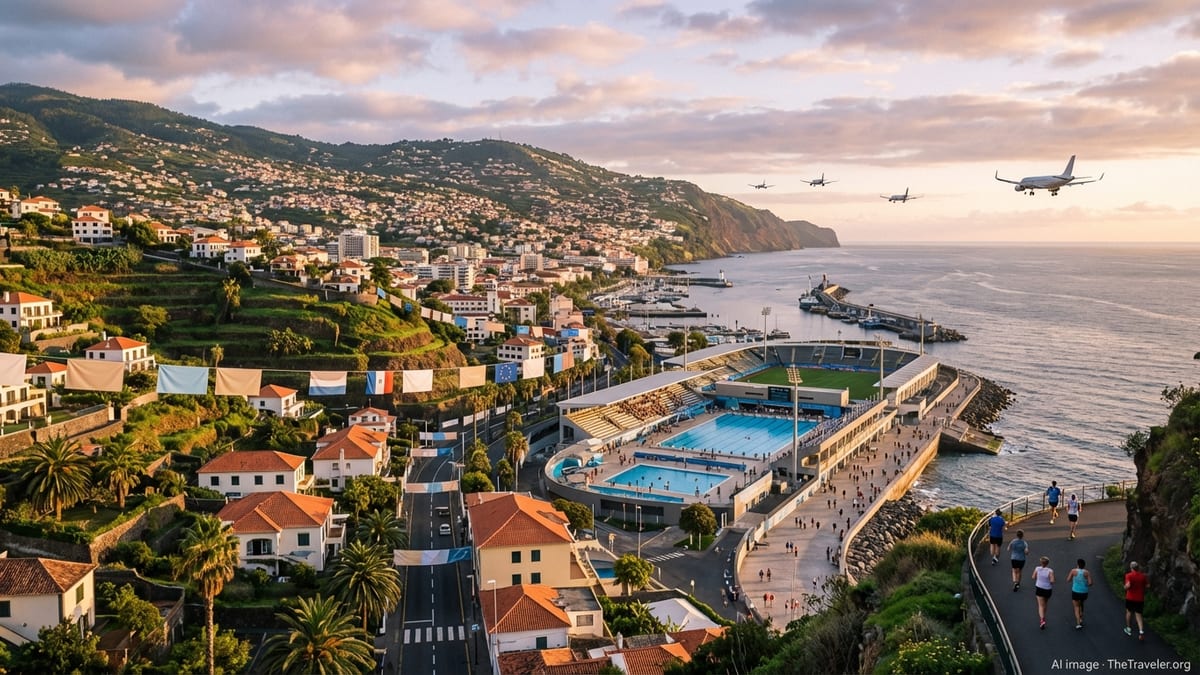
Flight Demand Spikes as Sporting Spotlight Turns to Madeira
The latest figures from industry observers show flight searches and inquiries to Madeira climbing sharply ahead of 2026, with a reported 255 percent increase compared with the same period a year earlier. The jump follows several consecutive years of record-breaking tourism for the Portuguese island and comes as interest grows around a major continental competition scheduled for 2026 in Funchal and surrounding municipalities.
While Madeira has long attracted leisure travelers seeking volcanic landscapes and year-round springlike weather, the upcoming sporting showcase is propelling the destination into a new league of visibility. Airlines, tour operators and local authorities say they are now modeling demand scenarios that go significantly beyond the double-digit growth in passengers the island has already experienced across 2024 and 2025.
The anticipated 2026 event, widely expected to draw elite athletes, coaching teams and thousands of supporters from across Europe, will coincide with broader efforts to position Madeira as a center for outdoor and nautical sports. Officials say the tournament window is likely to compress demand into a concentrated period, magnifying the impact of the 255 percent surge in travel intent recorded in forward-looking booking data.
Forward searches, which often precede actual bookings by several months, are considered a reliable early indicator of demand. Travel platforms tracking consumer behavior report sharp spikes around key calendar dates for the 2026 competition, suggesting that fans are already planning multi-day stays on the island rather than quick in-and-out trips.
Tourism Growth Sets the Stage for a High-Pressure Year
The flight inquiry boom comes on top of an already heated tourism market. Official statistics show that Madeira welcomed roughly 2.23 million guests in 2024, generating more than 11.7 million overnight stays and a record tourism revenue figure above 750 million euros. By late 2025, the archipelago had already reached 1.9 million visitors in just the first nine months of the year, a 9.7 percent increase compared with 2024, underscoring the destination’s momentum.
Airports in the region are also logging unprecedented throughput. Passenger numbers at Madeira and nearby Porto Santo exceeded five million for the first time in 2024, and national airport data for 2025 indicate that Madeira was the fastest-growing market in Portugal’s network, with traffic rising by around 12 percent to more than 5.6 million passengers in a single year. The 255 percent rise in flight inquiries for 2026 suggests that an even more intense period of growth is on the horizon.
Hotel occupancy has kept pace with the jump in arrivals. Regional statistics offices report that room occupancy rates in 2024 approached 76 percent, with revenue per available room climbing by double digits. In 2025, demand remained strong into the shoulder seasons, and April alone brought more than one million overnight stays for the first time on record, supported by over 221,000 visitors and an increase of more than 20 percent in revenue per available room.
For travel planners and tourism businesses, the combination of high base demand and a major sporting fixture in 2026 presents both an opportunity and a risk. On the one hand, a packed event calendar can help extend the island’s appeal into new demographics, particularly sports fans and active travelers. On the other, there is growing concern about capacity pressures on accommodation, transport and essential services at peak times.
Funchal and Island Venues Prepare for 2026 Competition
Much of the 2026 sporting buildup centers on Funchal, Madeira’s capital, which has hosted high-profile aquatic and athletics meetings in recent years. The city’s modern swimming complexes and multi-sport arenas are poised to take on a central role when Europe’s top women’s water polo teams converge on the island for the 2026 Women’s European Water Polo Championship, a tournament organised under the umbrella of European Aquatics.
The championship draw has already been conducted in Funchal, with regional tourism and sports officials sharing the stage alongside international federation leaders. Their presence underscored the political and economic importance attached to the event, which will bring national teams, supporters and media crews to Madeira during a compact competition window. Local authorities expect the tournament to showcase not only state-of-the-art pools but also the island’s wider coastal environment and nautical infrastructure.
Beyond the pools, the island has a track record of staging major international meets, including the European Masters Athletics Championships held across Madeira in October 2025. That event used multiple venues, from the Centro Desportivo da Madeira to road race courses laid out through Funchal and other municipalities, and attracted more than 4,000 athletes from 40 countries. Organisers say the experience gained in transport logistics, scheduling and crowd management during that championship is feeding directly into preparations for 2026.
Sports officials are working closely with hotel associations and transport providers to ensure that training schedules, match days and rest periods align with available accommodation and flight slots. With the extra pressure created by the 255 percent increase in inquiries for 2026 travel dates, planners are emphasizing staggered arrival patterns and promoting extended stays that spread arrivals over a longer period.
Airlines Add Capacity as Travel Platforms Track Surging Interest
The steep rise in flight searches has not gone unnoticed by carriers. Several European low-cost and full-service airlines have already expanded their Madeira capacity for late 2025 and into 2026, adding frequencies from key markets such as Germany, the United Kingdom, France and Poland. One major carrier has previously announced a double-digit percentage increase in summer seats to Madeira, citing strong forward bookings and a robust performance of leisure routes.
New long-haul connections are also changing the profile of visitors. In 2025, direct transatlantic services linking Newark and Funchal made it easier for travelers from the United States to reach Madeira without a mainland stopover. Travel analysts say these services, combined with aggressive marketing in North American markets, are helping to diversify the island’s tourism base and are likely to feed directly into the 2026 sporting event, drawing not only European fans but also international spectators.
Data from leading travel search engines show that interest is especially strong in departure points with existing or recently launched direct routes, where travelers can reach Madeira in four to five hours or less. The 255 percent increase in inquiries reflects repeated search behavior, fare alerts and early-price tracking, suggesting that many travelers are monitoring the market before committing to a booking.
Industry experts note that such pronounced spikes in search activity often precede announcements of additional capacity, as airlines respond to demand indicators by adding flights, upgauging aircraft or extending seasonal services. With Madeira already the fastest-growing airport market in Portugal by passenger numbers in 2025, a further round of capacity increases for the 2026 calendar is widely anticipated.
Hotels, Short-Term Rentals and Cruise Sector Gear Up
On the ground, Madeira’s accommodation sector is shifting into preparation mode. Hotel operators report that group and block bookings related to the 2026 championship have already begun, especially for properties within easy reach of Funchal’s main sporting venues. Many establishments are adjusting inventory allocations to hold back rooms for teams, officials and media, while encouraging individual leisure travelers to book early if they plan to visit during the tournament window.
Short-term rental hosts and rural tourism operators, which together account for a growing share of available beds on the island, are also watching the booking curve closely. Local accommodation has seen some of the fastest growth in recent years, with strong double-digit increases in overnight stays recorded in 2024 and 2025. Analysts expect these properties, often located outside the main hotel districts, to absorb part of the overflow from more central zones if hotels reach capacity.
The cruise sector, which brought more than 700,000 passengers to Madeira in 2025 according to port statistics, is another piece of the tourism puzzle. While cruise visits are typically short and less directly tied to specific sporting fixtures, authorities are considering how cruise calls might intersect with match days in 2026. Port operators are coordinating schedules to reduce congestion around Funchal’s waterfront and to avoid overlapping peaks in traffic when ships are in port and stadiums are at capacity.
Revenue indicators remain robust. Tourism income set new records in 2024 and continued to climb into 2025, supported by rising average daily rates and higher spending per visitor. With event-related demand likely to push up prices further during the 2026 championship, local officials are quietly urging businesses to maintain a balance between capitalizing on the opportunity and preserving the destination’s reputation for value.
Balancing Booming Demand with Sustainability and Community Concerns
As Madeira embraces its newfound status as a sporting and tourism hotspot, questions about sustainability and quality of life for residents are becoming more pressing. The region has secured EarthCheck Silver certification under a strategic plan for 2022 to 2027, committing itself to a model of sustainable tourism built around nature, active sports, sea-based experiences, culture and gastronomy. Authorities have set a target of achieving Gold certification by 2027, positioning the archipelago as a laboratory for sustainable tourism innovation in Europe.
The rapid acceleration in demand, illustrated by both the 12 percent annual increase in airport traffic in 2025 and the 255 percent surge in flight inquiries for 2026, puts that commitment to the test. Residents have already voiced concerns about overcrowding on popular levada hiking trails and viewpoints, prompting regional leaders to introduce new booking systems and modest fees for non-residents on some of the most heavily used routes, in an effort to protect fragile environments and manage flows.
Local community groups argue that the 2026 sporting event must be planned with these tensions in mind. They are calling for investments in public transport, waste management, and environmental monitoring around key venues, as well as clearer communication about how tourism revenues will be reinvested in public services. For many, the success of the championship will be judged not only by full hotels and packed stands, but also by how well daily life continues for those who live in Funchal and across Madeira year-round.
Regional officials acknowledge that the island’s dependence on tourism makes careful management essential. With around 85 percent of overnight stays accounted for by foreign visitors in early 2025, Madeira is more exposed than any other Portuguese region to fluctuations in international demand. By using the 2026 event as a testing ground for crowd control, pricing tools and sustainable transport options, they hope to refine a model that can withstand both surges and slowdowns in the years ahead.
What Travelers Should Expect in 2026
For travelers considering a trip to Madeira around the 2026 sporting showcase, the message from industry insiders is clear: plan early and be flexible. With flight inquiries already up 255 percent and airlines likely to adjust schedules to match demand, those who book well in advance stand the best chance of securing preferred travel dates and more competitive fares. Flexible itineraries that avoid peak match days or incorporate stays on nearby Porto Santo may also help.
Accommodation is another area where early reservations will be crucial. Visitors intending to stay in Funchal or near the main aquatic venues should monitor opening dates for event-related room blocks and look at a range of options, from full-service hotels to certified local accommodation and rural guesthouses. Travel agents recommend paying close attention to cancellation policies in case match schedules or travel conditions change.
Once on the island, travelers can expect an energized atmosphere. Beyond competition venues, Funchal’s harborfront, historic center and hilltop viewpoints are likely to host fan zones, cultural programming and gastronomic events that highlight local wine, produce and traditions. Organisers and tourism boards say they want to use the championship as a platform to introduce visitors to less-known parts of Madeira as well, encouraging excursions to the island’s dramatic north coast, forested interior and high plateau.
For many in Madeira, the surge in attention and the 2026 event mark a new chapter in the archipelago’s tourism story. If managed carefully, the combination of flight demand, sporting prestige and sustainability commitments could help the island secure a long-term place on the world stage, far beyond the closing whistle of the final match.