

More news on this day
Hundreds of passengers were left stranded at Adolfo Suárez Madrid-Barajas Airport on February 20 as a cluster of Iberia, Vueling and Air Europa services racked up 106 delays and one cancellation on key routes to Barcelona, Paris, London and Rome, highlighting the mounting strain on Spain’s busiest aviation hub at the height of the winter travel season.
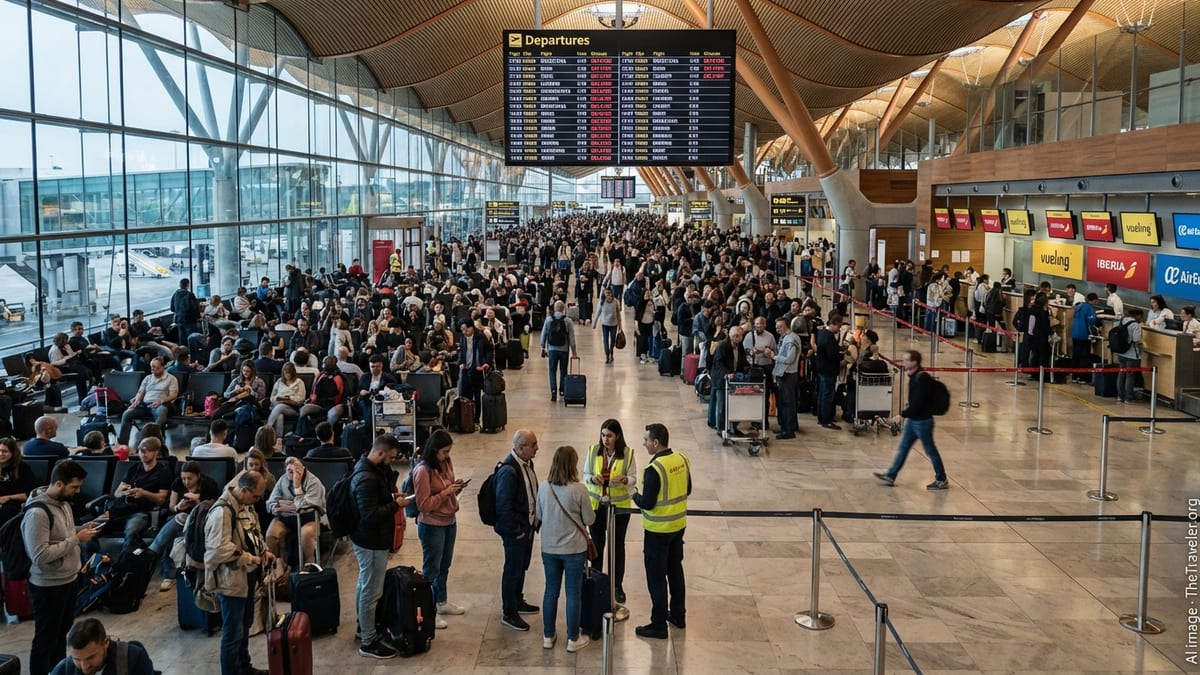
A Difficult Day for Spain’s Busiest Airport
The latest disruption at Madrid-Barajas unfolded against a wider nationwide pattern of flight chaos, with Spain’s four largest airports logging hundreds of delays and a double-digit tally of cancellations in a single day. Operational data compiled from airport and industry trackers for February 20 point to Madrid bearing a significant share of that burden, with delays heavily concentrated on domestic and short-haul European routes.
While the headline figure of 106 delayed flights and a single cancellation captures only a slice of the day’s total disruption at Madrid, the clustering of problems on core Iberia, Vueling and Air Europa services compounded the impact for travelers. These carriers provide much of the backbone for Spain’s connectivity with key European capitals, turning each delayed departure into a missed connection or lost business opportunity across the network.
Airport operator AENA and air-navigation provider ENAIRE have in recent days pointed to a familiar combination of pressures: chronic air-traffic-control staffing constraints, aircraft rotation issues and lingering winter weather patterns across parts of Europe. At Madrid-Barajas, those systemic stress points crystallized into long queues at departure boards showing rolling delay notices for Barcelona, Paris, London and Rome.
Barcelona Shuttle Disruptions Ripple Through Domestic Travel
Among the worst affected passengers were those booked on the high-frequency shuttle corridor between Madrid and Barcelona, one of Europe’s busiest domestic air routes. Iberia, Vueling and Air Europa all operate multiple daily departures on the sector, serving both business travelers on tight schedules and leisure passengers connecting onward to the Mediterranean coast and the Balearic Islands.
On February 20, much of the 106‑flight delay tally was concentrated on these Barcelona rotations, where even relatively short pushback delays of 30 to 60 minutes quickly cascaded across the timetable. Aircraft and crew scheduled to operate morning flights from Madrid to Barcelona often re-serve later services to European capitals, meaning a missed slot on the domestic leg can undermine punctuality across multiple routes.
Passengers arriving at Madrid-Barajas for midday and afternoon departures to Barcelona reported crowded gate areas, with ground staff repeatedly revising departure times as handling teams worked through backlogs. For many travelers, the delays brought particular frustration because the Madrid to Barcelona journey competes directly with Spain’s high-speed rail network, where same-day services often run closer to schedule even during periods of heavy demand.
International Links to Paris, London and Rome Under Strain
The network effect of Madrid’s disruptions was most visible on the short-haul European connections linking Spain to Paris, London and Rome. Iberia’s flights to Paris Charles de Gaulle and Orly, as well as London Heathrow and London Gatwick, share airspace and slot constraints with a wider web of carriers that were themselves facing weather and congestion issues across France and the United Kingdom.
Vueling, which has built a strong presence on routes from Spain to Paris and London, was similarly affected as inbound aircraft from Barcelona and other Spanish cities arrived late into Madrid. Knock‑on effects included late boarding, extended turnaround times and a higher-than-usual number of passengers misconnecting from domestic legs onto European departures.
Air Europa’s operations to Rome and other Italian gateways also faced pressure. Although only one outright cancellation was recorded among the 106 troubled flights, the accumulation of smaller delays placed additional strain on Rome-bound services, already navigating busy afternoon traffic patterns over the central Mediterranean. For travelers on multi‑segment itineraries, a 45‑minute delay out of Madrid could mean missed evening connections at hubs across Italy and beyond.
Stranded Passengers Confront Long Queues and Limited Options
For passengers on the ground in Madrid, the statistics translated into long waits at check‑in counters, customer service desks and boarding gates. With Iberia, Vueling and Air Europa all managing their own disrupted operations, many travelers reported spending more time in lines seeking information and rebooking options than they did in the air.
At the departure halls serving Schengen and non‑Schengen flights, digital information screens cycled through a series of revised estimated departure times, often shifting by increments of 15 to 30 minutes. Some would-be travelers to London and Paris described being called to the gate only to be held in the jet bridge or asked to sit tight in the seating area as ground crews waited for final clearance or a slot allocation.
Hotel rooms in and around Madrid-Barajas proved difficult to secure for those facing missed overnight connections, especially for passengers arriving on late European services and discovering upon landing that their onward flights had already departed or were significantly delayed. While airlines provided meal vouchers and rebooking assistance in many cases, the volume of impacted customers meant some travelers had to wait hours before receiving definitive guidance on alternative arrangements.
Airlines Grapple With Capacity, Crew and Slot Constraints
The immediate causes of the disruptions varied from flight to flight, but industry analysts point to a broader mismatch between surging passenger demand and limited operational slack within airline networks. Iberia, Vueling and Air Europa all rebuilt capacity aggressively over the past two years, returning to and in some cases surpassing pre‑pandemic traffic levels, while key enablers such as air-traffic control staffing, ramp handling resources and aircraft availability have lagged.
On February 20, these structural constraints intersected with seasonal weather systems affecting parts of northern and central Europe, which can cause en route flow restrictions and temporary slot reductions at major hubs. When Madrid-based aircraft are forced to wait on the ground for delayed arrival slots at Paris, London or Rome, crews can reach duty time limits more quickly, reducing flexibility to extend operations or position aircraft for later rotations.
Slot discipline at capacity‑constrained airports also played a role. Airlines that miss their allocated take‑off windows often face substantial additional delays before another slot becomes available, particularly at peak morning and early evening periods. For multi-hub carriers such as Iberia and Air Europa, this can mean a single delayed departure from Madrid to London or Paris disrupts the onward connectivity of dozens of passengers at the destination, magnifying the perception of chaos even when the underlying delay is measured in under an hour.
Wider European Turbulence Adds to the Pressure
The troubles at Madrid-Barajas did not occur in isolation. Across Europe on the same day, airports from Amsterdam and Frankfurt to London and Paris recorded elevated numbers of delayed and cancelled flights, as airlines struggled with winter conditions, airspace bottlenecks and lingering staffing shortages in ground operations and air-traffic control.
Recent data show that in a single 24‑hour window, major European hubs registered thousands of delayed flights and more than a hundred cancellations, with Madrid among the airports reporting significant operational stress. This wider turbulence meant that passengers leaving Spain for Barcelona, Paris, London and Rome were often connecting into networks that were already stretched, reducing the availability of spare seats for same‑day rebooking.
The interconnected nature of European aviation means that disruption in one country can rapidly spill over into others. A late‑running morning service from London to Madrid can delay the same aircraft’s afternoon departure from Madrid to Rome, which in turn feeds into the evening wave of departures from Italy to other parts of the continent. For passengers, the result is a travel day where each minor delay along the chain increases the risk of missed connections and unexpected overnight stays.
Official Responses and Calls for Infrastructure Investment
While airline executives have emphasized that safety remains the overriding priority in any decision to delay or cancel a flight, passenger advocacy groups in Spain argue that the frequency and scale of recent disruptions highlight deeper structural issues. They point to persistent staffing challenges in air-traffic control, coupled with the difficulty of recruiting and retaining skilled workers in airport ground handling and customer service roles.
Aviation unions have in recent months warned that without targeted investment in staffing and modernized air-traffic-management technology, hubs such as Madrid-Barajas risk facing recurring congestion episodes during peak travel periods. Spain’s recovery in tourism and business travel, while a boon to the wider economy, has returned more quickly than some infrastructure planners anticipated, leaving limited buffer capacity when disruptions occur.
Policy makers are under pressure to balance environmental commitments with the need for reliable air connectivity. Proposals to shift more short‑haul travel from air to rail, particularly on corridors such as Madrid to Barcelona, remain politically sensitive but are gaining traction in some quarters as a partial solution to chronic congestion on domestic routes.
What Travelers Can Do on Disruption-Prone Routes
For passengers planning trips that rely on Madrid-Barajas as a hub, the latest wave of delays underscores the importance of building additional buffer time into itineraries, particularly when connecting onward to long-haul flights or last daily departures to cities such as London, Paris or Rome. Travel agents and frequent travelers alike recommend allowing longer connection windows than the minimum offered by booking engines, especially in winter and during peak holiday periods.
Travelers are also encouraged to monitor flight status closely via airline apps and airport information services, which can provide early warning of likely delays and enable rebooking before alternative seats are exhausted. For high‑stakes journeys, such as business-critical meetings or cruise departures, some passengers opt to travel a day earlier to absorb potential disruption within their schedule.
Passenger rights regulations within the European Union provide compensation and assistance in specific circumstances, particularly when delays or cancellations fall within the airline’s control. However, the line between controllable operational issues and external factors such as severe weather or air-traffic-control decisions can be complex, leaving some travelers disappointed when claims are denied. Experts advise documenting all communications with airlines and retaining receipts for meals or accommodation incurred due to lengthy delays.