

More news on this day
Madrid is preparing a new generation of large-scale shopping centres backed by around €1.2 billion in investment, with projects that combine retail, leisure and tourism set to reshape several districts of the Spanish capital over the next few years.
Get the latest news straight to your inbox!
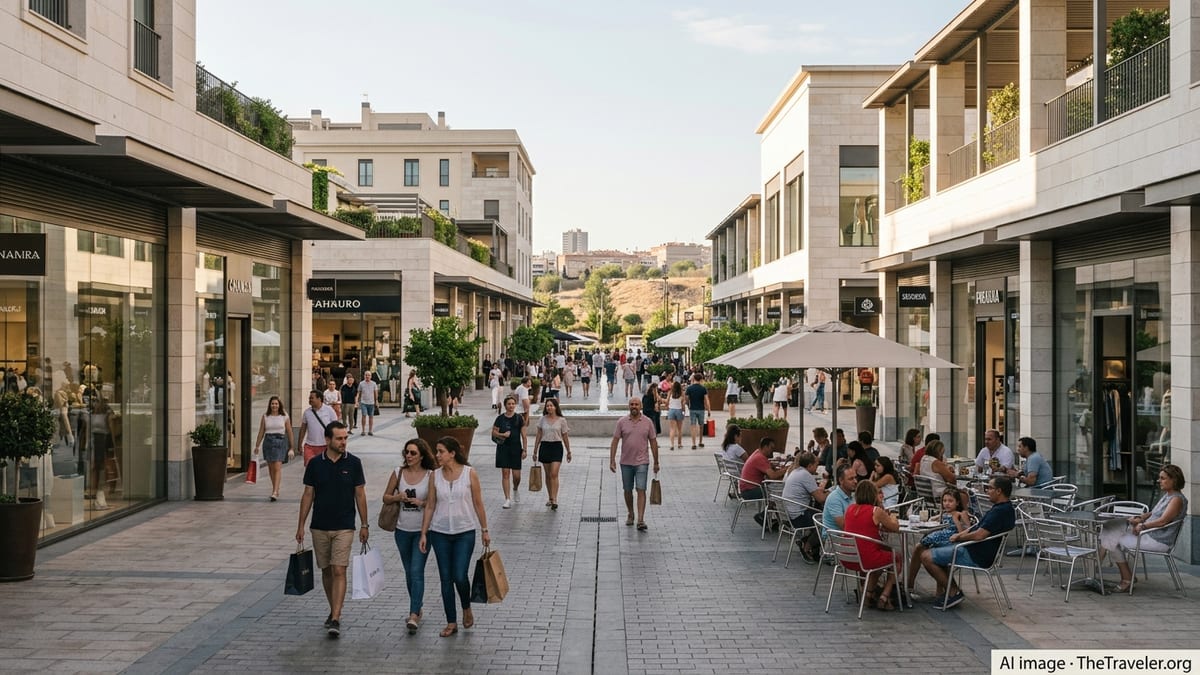
Flagship complexes anchor Madrid’s retail expansion
The latest pipeline of schemes in and around Madrid points to a clear shift towards larger, mixed-use destinations. Recent market research on Spain’s retail sector highlights a strong rebound in investment in shopping centres and retail parks, with Madrid accounting for a significant share of new and refurbished space nationwide. Published coverage indicates that retail investment in Spain has climbed back above €1 billion annually for shopping centres alone, with Madrid consistently ranking among the most active regions.
A number of major developments and repositioning projects in the metropolitan area are drawing in both domestic and international capital. Transactions involving large existing malls, together with new-build complexes and extensions, are contributing to a combined investment envelope of about €1.2 billion focused on the capital and its commuter belt. Publicly available market commentary points to investors targeting assets that can be upgraded with new dining, entertainment and open-air spaces to capture rising consumer spending.
These emerging complexes are designed to sit alongside Madrid’s long-established destinations rather than replace them. Landmark centres such as Intu Xanadú in Arroyomolinos and urban hubs near the city’s business districts have already demonstrated the scale of demand for retail and leisure offers that serve both residents and international visitors. New schemes aim to replicate and update that mixed formula in growth corridors around the city.
Developers are also seeking to align their projects with Madrid’s role as a gateway city for tourism and trade fairs. Retail advisors note that the capital’s visitor economy has recovered strongly, supported by robust air connectivity and a busy calendar of international events. Shopping centres positioned along these flows of people, including near airports and convention grounds, are being pitched as all-day destinations that can extend visitor stays and spending.
Key locations: from Valdebebas to the southern corridor
One of the best-known examples of this new wave is a major complex planned in the fast-growing neighbourhood of Valdebebas, in the north of Madrid. Reports describe a large, open-concept shopping and leisure destination taking shape close to the IFEMA exhibition grounds and Adolfo Suárez Madrid–Barajas Airport, an area that has become a strategic node for both business travellers and families moving into new residential developments. The scheme’s design emphasises natural light, landscaped promenades and a broad mix of retail and food outlets.
To the south and east of the city, additional investment is being directed into existing centres and retail parks that serve expanding suburban populations. Recent sector analyses reference upgrades and refurbishments at assets in municipalities such as Torrejón de Ardoz, Rivas-Vaciamadrid and other towns in the wider Madrid region. These projects, while sometimes smaller than the northern flagships, contribute significantly to the overall capital expenditure figure by adding new floorspace, improving public areas and reconfiguring units to attract international brands.
Closer to the urban core, attention is also turning to established malls that are being repositioned to match current consumer expectations. Market briefings for investors describe a shift towards “destination” concepts, where fashion anchors are combined with extensive restaurant terraces, cinemas, family entertainment and, increasingly, wellness and fitness offerings. In prime residential districts and near major transport interchanges, even modest extensions or redesigns can entail multi-million-euro investments that fold into the broader €1.2 billion total.
Transport connectivity is a recurring theme across these projects. Many of the new or expanded centres are located near major ring roads or commuter rail stops to tap into regional catchment areas. Developers and asset managers are promoting improved access, enlarged parking facilities and better integration with public transport as central elements of their business plans, reflecting lessons learned from earlier generations of out-of-town malls that struggled with congestion.
Tourism, trade fairs and the visitor economy
The opening of new shopping centres in Madrid coincides with strong performance in the city’s tourism and trade fair sectors. Economic reports on IFEMA Madrid, the capital’s main exhibition and convention operator, show that fairs and congresses generate substantial spending on accommodation, dining and retail across the region. With international visitor numbers rising, large-scale shopping destinations situated near the airport or exhibition grounds are positioning themselves as natural extensions of this visitor circuit.
Retail analysts underline that shopping remains a key motivator for city breaks in Spain, particularly among travellers from high-spending markets in Europe, the Americas and the Middle East. Madrid’s combination of historic districts, cultural institutions and modern retail hubs is viewed as a competitive advantage compared with other European capitals. New centres aim to reinforce that profile by offering flagship stores, concept boutiques and experiential formats that can complement the city’s traditional commercial streets.
There is also a growing focus on creating family-friendly spaces that encourage longer dwell times. Recent openings and refurbishments across Spain have prioritized playgrounds, immersive attractions and open-air plazas that can host seasonal activities. In Madrid, several of the schemes included in the current investment round are expected to follow this pattern, dedicating significant floor area to leisure rather than pure retail in order to diversify revenue streams and reduce exposure to shifts in fashion spending.
At the same time, operators are working to integrate food and beverage concepts that appeal to both tourists and locals. Contemporary Spanish and international cuisine, rooftop terraces and late-opening dining streets are becoming standard components of new schemes. This approach aims to ensure that centres remain busy into the evening, aligning with Madrid’s established reputation for nightlife and socialising.
Economic impact, jobs and sustainability priorities
The €1.2 billion wave of shopping centre investment in Madrid is expected to support thousands of jobs during construction and in long-term operations. Industry associations tracking the performance of commercial centres across Spain reported that the sector supported hundreds of thousands of positions nationwide in 2024, with modest year-on-year growth in employment. Given Madrid’s weight in the national retail landscape, the capital is likely to capture a disproportionate share of new roles in store operations, facility management, security, hospitality and logistics.
Beyond direct employment, economic impact assessments for large venues in Madrid illustrate the wider effects on transport, services and public finances. Studies quantifying the influence of trade fairs and major complexes suggest that every euro spent within a venue can generate multiple euros of activity in surrounding neighbourhoods, from hotels and restaurants to taxi services and cultural attractions. New shopping centres designed as full-day destinations aim to replicate this multiplier effect, particularly in districts undergoing urban regeneration.
Sustainability is increasingly central to project narratives. Recent documentation on Spanish retail parks highlights the inclusion of large solar installations, electric vehicle charging points and energy-efficient building systems. In the Madrid region, several new schemes are being promoted as low-impact or “next-generation” centres, with commitments to reduce emissions through renewable energy, efficient lighting and waste reduction programmes. Some retail parks near the capital already feature extensive rooftop solar communities, setting a benchmark for future developments.
Many projects are also incorporating more greenery and outdoor public space than earlier generations of malls. Shaded promenades, planted courtyards and water features are becoming common, responding to both consumer demand for pleasant open-air environments and the need to mitigate urban heat. For visitors, this can translate into more comfortable experiences during Madrid’s hot summers, while for operators it provides an additional draw that differentiates their properties from traditional enclosed centres.
Madrid’s retail outlook in a competitive European landscape
The cluster of major projects now advancing around Madrid reflects confidence in the city’s long-term role as a regional retail hub. Consultancy briefings on Spain’s commercial property market note that yields for prime shopping centres have stabilised and, in some cases, begun to compress again, indicating renewed investor interest after a period of adjustment in the wider retail sector. Higher-quality assets with strong footfall and diversified tenant mixes are proving particularly attractive.
In comparison with other European capitals, Madrid benefits from relatively affordable rents for international retailers, a growing population and strong domestic consumption. The combination of these fundamentals with substantial tourism flows makes the city a logical focus for large-scale retail investment. The current €1.2 billion pipeline of new and upgraded centres is being interpreted by market observers as a sign that international capital continues to view Madrid as a safe and scalable location for long-term holdings.
Looking ahead, sector specialists expect further consolidation, with institutional investors and listed property companies likely to control an increasing share of the region’s flagship centres. Portfolio transactions involving multiple malls, some of them in Madrid, are already being marketed, suggesting that ownership structures may continue to evolve even as new projects open. For consumers and visitors, the impact will be most visible in the form of a broader range of brands, services and experiences concentrated in strategically located hubs around the city.
As these centres come online over the next few years, Madrid’s retail map is set to become more polycentric, with powerful anchors in the north, south and east complementing historic shopping streets in the city centre. For travellers, this means additional options for combining cultural itineraries with modern retail and leisure environments, reinforcing the Spanish capital’s position on the European city break circuit.