

More news on this day
Madrid’s lesser-known Villaverde district is stepping into the European spotlight as Spain accelerates plans for a major rail logistics hub, a strategic move designed to support booming high speed services and reinforce the country’s bid to become Europe’s premier rail tourism powerhouse.
Get the latest news straight to your inbox!
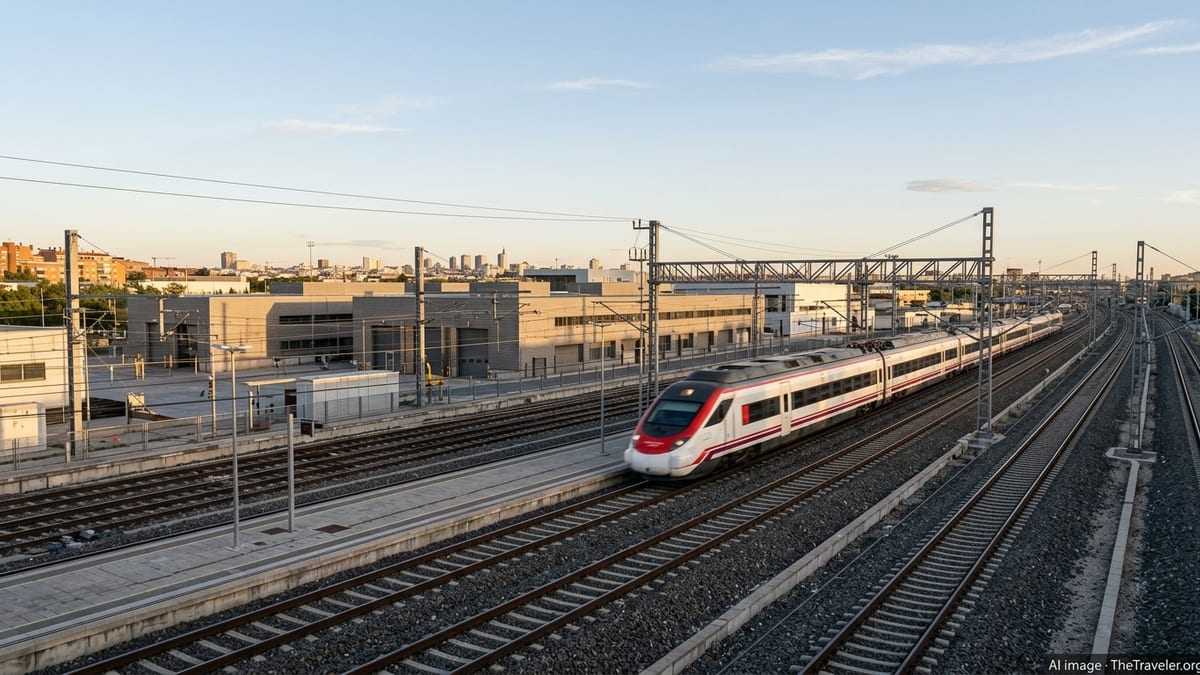
A New Nerve Center in Southern Madrid
The Villaverde rail complex in southern Madrid is poised to gain fresh importance as part of a nationwide overhaul of rail operations and maintenance. Publicly available information indicates that Renfe is moving ahead with a network of new Fleet Parts Logistics Centres, with Villaverde joining La Sagra and Venta de Baños as key nodes in a system intended to streamline the supply of components and improve reliability across Spain’s fast-growing fleet.
The Villaverde site, already crossed by busy suburban and mainline tracks, is being repositioned as a strategic back-of-house engine for passenger services rather than a traditional passenger terminal. The plan focuses on consolidating storage, maintenance support and parts distribution, allowing high speed and long distance trains serving tourist corridors to spend less time idle and more time on the move.
Reports on the investment program highlight a multi year timetable through 2030, aligning the Villaverde upgrades with broader efforts to modernize rolling stock and digital systems. While the complex may remain largely invisible to most travelers, its ability to keep trains running punctually is expected to be a quiet but decisive factor in Spain’s tourism offer.
High Speed Growth Fuels Tourism Ambitions
Spain’s high speed rail network has expanded rapidly in the last decade, and published data show that passenger numbers reached record levels in 2024, with close to 40 million travelers choosing fast trains. Competition from new operators on core corridors such as Madrid to Barcelona and Madrid to Valencia has driven down prices and broadened the market, making rail more attractive for both domestic and international tourists.
Recent reports on infrastructure upgrades indicate that the Madrid to Barcelona high speed corridor is being prepared for higher operating speeds above 300 kilometers per hour, with the goal of cutting travel times and reinforcing the route as a flagship link for visitors arriving from the rest of Europe. Similar investments on other axes, including routes toward the Mediterranean and Andalusia, are framed as part of a coordinated strategy to divert more leisure travel from road and air to rail.
In this context, Villaverde’s enhanced logistics role is seen as one piece of a much larger puzzle. By centralizing train parts, maintenance flows and support services around Madrid, planners aim to ensure that high speed sets can respond quickly to demand spikes linked to festivals, coastal holiday seasons and major events, improving the overall resilience of the tourism network.
Madrid’s Emerging Super Hub: From Chamartín to Barajas
Madrid is already the operational heart of Spain’s rail system, but ongoing works around the capital are designed to transform it into a truly integrated European hub. Coverage of projects at Chamartín station describes a step change in capacity, with the number of high speed tracks expanded and a comprehensive remodelling underway to position the terminal as the leading gateway for northern and international services.
The opening of the standard gauge tunnel linking Atocha and Chamartín has further reshaped travel patterns by allowing high speed trains to cross the city without forcing passengers to change stations. Additional work to connect Chamartín directly to Terminal 4 at Adolfo Suárez Madrid Barajas Airport is expected to give long haul visitors a seamless transfer onto fast trains serving the rest of Spain.
Villaverde’s logistics platform fits into this broader metropolitan ecosystem as a supporting hub in the south of the city. With rail traffic increasingly channelled through Chamartín and Atocha and out toward coastal and cross border destinations, efficient support operations in districts like Villaverde become essential to avoiding bottlenecks and maintaining the high levels of punctuality that leisure travelers now expect.
From Iberian Backbone to European Rail Tourism Powerhouse
Spain’s ambitions reach beyond its own borders. European transport planning documents and recent media coverage point to firm timetables for completing the Madrid to Lisbon high speed connection, a key missing link in the continent’s network. The line is expected to cut journey times between the two capitals dramatically over the next decade, opening up new multi country itineraries for visitors who want to combine Spanish and Portuguese cities without flying.
At the same time, cross border services toward France are being strengthened, giving travelers from Paris and southern France more direct access to Madrid and onward connections to the rest of the Iberian Peninsula. These developments sit alongside major rolling stock investments and digital ticketing improvements that make it easier to plan, book and combine rail journeys across multiple operators.
Industry analyses describe Spain as a reference point for liberalized high speed rail, citing the mix of incumbent and new entrants and the steady rise in passenger volumes. The operational backbone that includes Villaverde’s logistics hub is presented as a crucial element in sustaining this growth, ensuring that the system can handle higher speeds, more frequent departures and greater international integration without compromising service quality.
Opportunities for Travelers and Neighborhoods
For travelers, the changes unfolding in and around Madrid promise more frequent trains, shorter journey times and smoother transfers between planes, metros and long distance services. As Villaverde’s rail facilities are upgraded and integrated into a national logistics network, the effect is likely to be felt indirectly through fewer cancellations, faster recovery from disruptions and better comfort on board refurbished or newly acquired trains.
For the Villaverde district itself, the strengthening of rail activity could bring a different set of opportunities. Although the logistics upgrades are primarily industrial and operational, they can attract related businesses and jobs linked to maintenance, technology and supply chains. Urban planners and local authorities face the challenge of capturing this momentum in ways that also improve public spaces, transport accessibility and environmental performance for residents.
Environmental assessments and policy documents underscore rail’s role in national decarbonization strategies, highlighting high speed and long distance trains as lower emission alternatives to domestic flights and car travel. By consolidating logistics functions at hubs such as Villaverde and investing in more efficient trains and infrastructure, Spain aims to position itself not only as a rail tourism powerhouse, but also as a testbed for greener, higher capacity mobility in Europe.