

More news on this day
Thailand’s ambitious Maha Songkran 2026 campaign is casting fresh attention on Ayutthaya, where the former royal capital is preparing to turn its temple-lined river plains into a vast open-air stage for the traditional New Year water festival.
Get the latest news straight to your inbox!
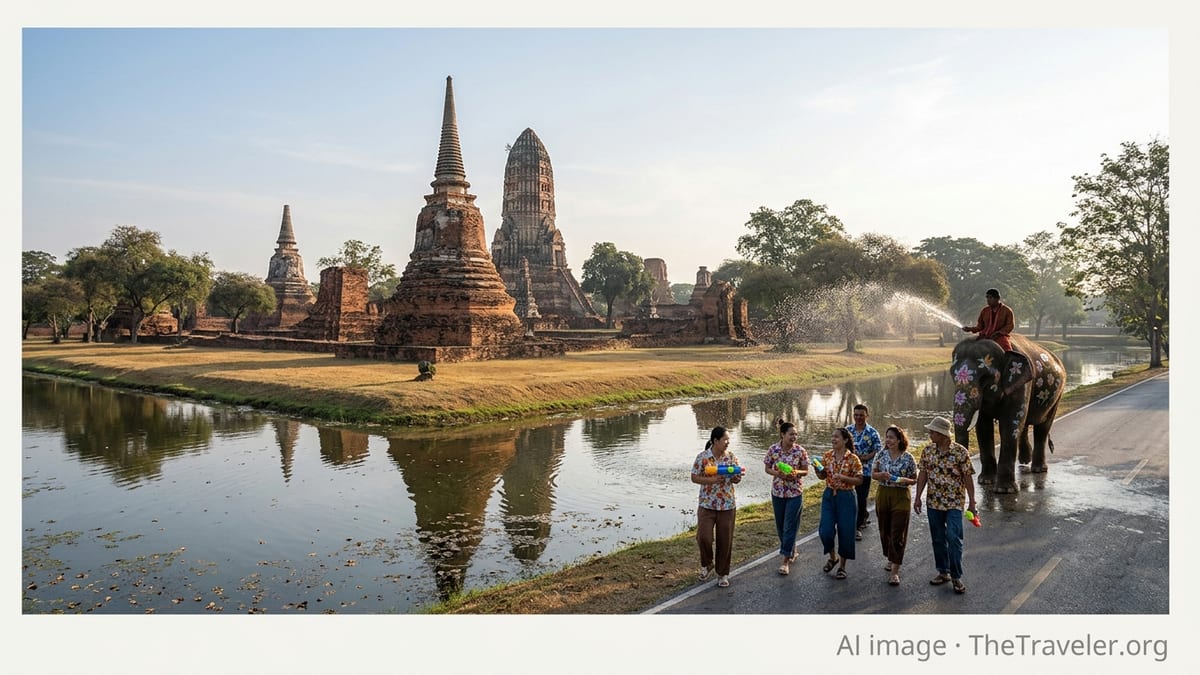
Ancient Capital Steps Back Into the Spotlight
Ayutthaya, the UNESCO-listed former capital north of Bangkok, is emerging as one of the most closely watched destinations for Songkran 2026 as national planners work to elevate the “Maha Songkran World Water Festival” into a global marquee event. Publicly available information on Thailand’s soft power strategy shows that the rebranded Maha Songkran concept is being promoted in parallel with efforts to position Thai festivals alongside major international celebrations such as Carnival in Brazil and Oktoberfest in Germany.
While Bangkok’s Sanam Luang has been the centerpiece of national programming in recent years, reports on past Songkran seasons indicate that Ayutthaya has consistently drawn strong domestic and regional tourism with its mix of heritage sites and family-friendly water play. Travel guides for the 2026 season describe the city as one of the most atmospheric places to experience the festival, thanks to its moated Old City, riverside communities and ruined palaces silhouetted against the dry-season sky.
For 2026, promotional material from tourism operators highlights Ayutthaya as a “heritage counterpoint” to the louder party hubs of Bangkok, Chiang Mai and Pattaya. The narrative around Maha Songkran now emphasizes not only fun and nightlife, but also temple visits, merit-making and cultural displays in historic settings, an approach that places Ayutthaya squarely in the national spotlight.
Festival Dates, Themes and Expected Crowds
Songkran is officially marked from 13 to 15 April 2026, with April 13 falling on the Maha Songkran day that heralds the traditional Thai New Year. Travel advisories and festival guides suggest that celebrations in major destinations, including Ayutthaya, are likely to span several days, with warm-up activities beginning earlier and some “water play” lingering after the official dates, especially in high-traffic tourist zones.
According to recent coverage of Thailand’s tourism strategy, the Maha Songkran World Water Festival branding, introduced nationally for 2025 and extended into 2026, is designed to concentrate experiences into emblematic zones across the country. In Ayutthaya, this is expected to center on the Historical Park and surrounding neighborhoods, where visitors typically move between temple compounds, markets and designated splash areas.
Tourism forecasts for the broader Songkran period in Thailand project millions of domestic and international trips nationwide, and Ayutthaya is widely tipped in travel media as a major beneficiary. Convenient rail and road links from Bangkok, including frequent day-trip connections, make it an easy add-on for visitors who want a more traditional festival backdrop without committing to a separate regional itinerary.
Heritage Rituals Amid Ruins and River Scenery
Ayutthaya’s Songkran program has long combined merit-making and family activities with water play, and 2026 appears set to follow that pattern. Event descriptions from previous years at the Krung Kao (Old City) Songkran Festival outline a familiar core of activities: making merit at temples such as Wat Mongkhon Bophit, releasing fish or birds for good fortune, and participating in the ritual bathing of Buddha images within Ayutthaya Historical Park.
Regional cultural briefs describe how locals also perform water-pouring rites for elders and community leaders, a gesture of respect that predates the modern street water fights. These quieter elements of Songkran tend to take place earlier in the day, often within temple grounds shaded by trees or near the river, before the crowds shift toward livelier splash zones in the afternoon.
The physical setting amplifies the sense of continuity between past and present. Brick stupas and chedis, framed by dry-season light and the broad Chao Phraya and Pa Sak rivers, offer a visual reminder that Ayutthaya once managed elaborate royal ceremonies tied to the agricultural calendar. For many visitors, the appeal of Maha Songkran 2026 in Ayutthaya lies precisely in this contrast: gentle, incense-scented rituals unfolding just a short walk from streets alive with music, water guns and laughter.
Elephants, Soft Power and Cultural Branding
One of Ayutthaya’s most recognizable Songkran images is the sight of brightly painted elephants spraying water over tourists and locals. News photographs and regional television coverage from recent festivals show elephants parading from the Ayutthaya Elephant Palace and Royal Kraal toward the city, their bodies painted with flowers, hearts and “Songkran Ayutthaya” slogans in Thai and English as they interact with revellers.
Recent reports from March 2026, when Ayutthaya marked Thai Elephant Day with a large fruit banquet and traditional rites for around 70 elephants, indicate that the city continues to foreground elephants as cultural ambassadors. The Elephant Palace and historic kraal complex, rooted in Ayutthaya’s role as a royal elephant center during the kingdom era, provides an institutional backdrop for these appearances during festival periods.
Policy documents on Thailand’s soft power strategy emphasize that cultural icons, including elephants, classical dance and regional crafts, are central to how Maha Songkran is being framed for international audiences. In Ayutthaya, this translates into choreographed parades and heritage shows that sit alongside more informal street-level celebrations, feeding social media imagery that tourism planners hope will reinforce the festival’s distinct Thai identity.
Visitor Experience, Access and Sustainability Concerns
For international travelers planning Maha Songkran 2026, practical advice circulating in travel forums and guide articles consistently highlights Ayutthaya’s accessibility. The city is typically reached in around an hour and a half from central Bangkok by train, minivan or private transfer, allowing visitors to base themselves in the capital while making day or overnight trips to experience the historic setting.
Accommodation listings suggest a growing mix of riverside boutique hotels, guesthouses in the Old City and larger properties along the main approach roads. Many are already marketing Songkran packages featuring sunrise temple visits, cultural workshops and transfers to major splash zones, reflecting expectations of higher-than-usual demand over the mid-April holiday.
At the same time, commentators and conservation advocates have raised recurring questions about crowd pressure on fragile heritage sites and welfare standards for performing animals. Discussions around Maha Songkran 2026 often reference the need to balance high-energy water play with respect for temple etiquette, waste management and the preservation of Ayutthaya’s archaeological landscape. Local guidelines commonly encourage visitors to avoid glass containers, limit water wastage and dress appropriately when entering temple grounds, signalling a broader attempt to align the festival’s expansion with more sustainable tourism practices.