

More news on this day
Malaysia Airports Holdings Bhd (MAHB) has kicked off 2026 with a record-breaking 9.4 million passenger movements across its domestic network in January, underscoring Malaysia’s accelerating ascent as a global travel powerhouse and setting a powerful early signal for the country’s Visit Malaysia 2026 tourism campaign.
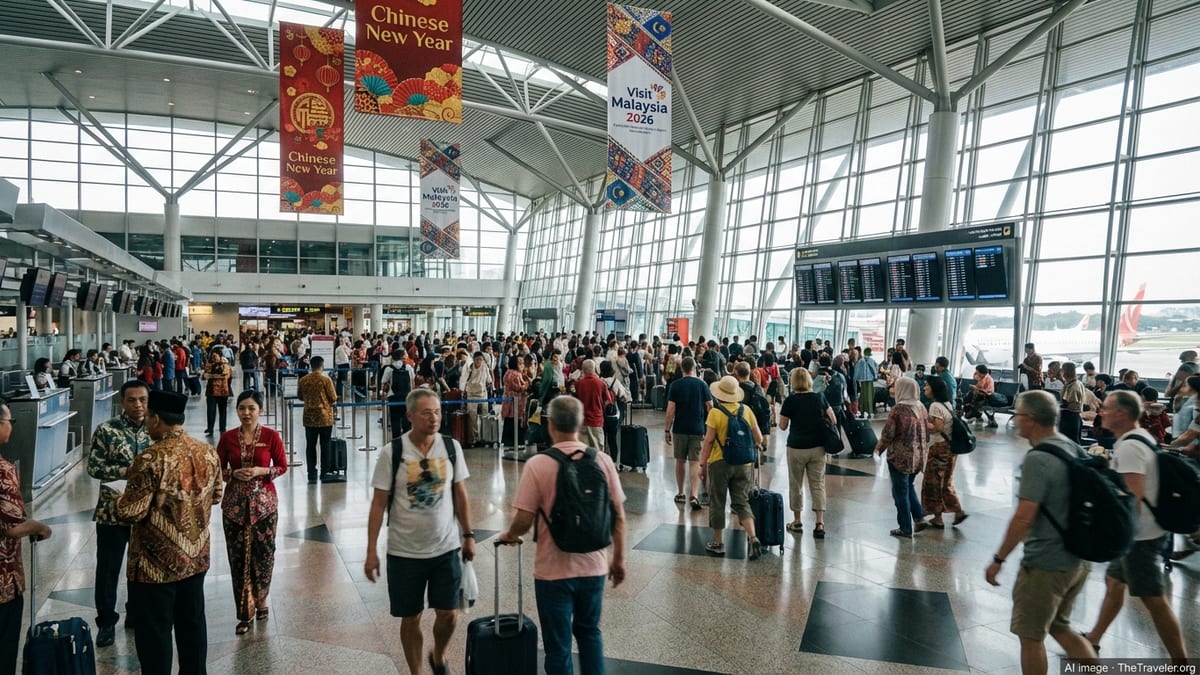
Record January Marks New High for Malaysia’s Aviation Recovery
The January 2026 figure, disclosed by Malaysia Airports and highlighted by national media, represents the strongest start to a year since before the pandemic and follows a robust 2025 in which the group’s Malaysian airports handled more than 100 million passengers. Coming on the heels of steady double-digit growth throughout 2024 and 2025, the 9.4 million tally confirms that demand has not only recovered but is now firmly in expansion territory.
While Malaysia has already seen multiple months in which MAHB’s wider network, including its Turkish operations, crossed the 10 million and even 12 million passenger mark, the domestic network’s January performance stands out because it arrives in what is traditionally a shoulder period for many markets. The surge points to structural shifts in travel patterns, including stronger regional connectivity, deeper penetration of secondary cities, and a tourism calendar increasingly anchored around major festivals and school holidays.
For Malaysia’s aviation sector, the January numbers are especially significant because they come as global airlines continue to rebalance capacity between long-haul and regional routes. MAHB’s ability to sustain near pre-pandemic volumes and then build beyond them illustrates how quickly the country has repositioned itself as a preferred gateway to Southeast Asia, particularly for travelers from China, India and broader non-ASEAN markets.
The latest performance also reinforces MAHB’s role as a bellwether for the wider Malaysian economy. Strong passenger flows correlate closely with tourism receipts, trade-related travel and investment activity, giving policymakers and industry stakeholders confidence that the momentum building into 2026 is broad-based rather than episodic.
Visit Malaysia 2026 Campaign Gains Early Tailwinds
The bumper January traffic arrives just as the Visit Malaysia 2026 (VM2026) campaign gains traction, offering authorities an early proof point that the ambitious multi-year tourism push is on solid footing. The national program, designed to restore and then exceed 2019 visitor levels, hinges on seamless air access to both marquee and emerging destinations, something MAHB’s network of 39 airports is uniquely positioned to provide.
Promotional efforts targeting key markets such as China, India, the Middle East and Europe have been paired with policy measures like 30-day visa exemptions for selected countries, which were introduced in late 2023 and have continued to spur arrivals. Passenger data through 2024 already showed sharp rises in international segments, and January’s performance suggests the pipeline of visitors attracted by relaxed visa rules and aggressive marketing remains strong.
VM2026 also leans heavily on dispersing tourists beyond Kuala Lumpur to secondary cities and nature-rich states such as Sabah, Sarawak and Kelantan. This strategy is already visible in the passenger growth recorded at airports like Penang, Langkawi, Kota Kinabalu and Kuching in recent months, where traffic has climbed steadily back toward and in some cases close to pre-pandemic highs. The 9.4 million January passengers offer an early indicator that this more geographically balanced model of tourism is beginning to take hold.
Tourism operators, hoteliers and regional governments are watching the aviation data closely. Strong passenger numbers provide critical reassurance for those committing capital to new hotels, attractions and tourism infrastructure timed to peak during VM2026. As MAHB’s network scales up, the feedback loop between air capacity, destination investment and marketing spend is becoming a central driver of Malaysia’s tourism strategy.
KLIA and Penang Lead Growth, Secondary Hubs Close the Gap
Within the January 2026 performance, Kuala Lumpur International Airport (KLIA) and Penang International Airport stand out as growth engines, both registering some of the highest year-on-year increases in passenger movements. KLIA, Malaysia’s main international gateway, has been steadily rebuilding its status as a mega hub, with expanding long-haul and regional connectivity and new airline partners adding capacity through 2024 and 2025.
Penang, meanwhile, has cemented its role as a critical northern gateway, supporting both high-value tourism and export-driven industries clustered around the island’s electronics and logistics sectors. The airport’s passenger volumes, which had already rebounded strongly in 2024, continue to climb as airlines restore routes to major Asian and regional hubs. The strength of the Kuala Lumpur–Penang and Penang–Singapore corridors is helping to spread tourism and business travel more evenly across the peninsula.
Further east, airports such as Kota Kinabalu and Kuching are benefiting from renewed attention on Borneo’s ecotourism and island destinations. Prior traffic snapshots showed these hubs posting some of the fastest year-on-year growth rates in Malaysia, and early indications from January suggest this trajectory is continuing. Strong domestic connectivity, combined with a growing roster of direct flights from Northeast Asia and Australia, is enabling Sabah and Sarawak to capture a larger slice of regional tourism flows.
Smaller airports, including those in secondary and tertiary cities, are also gaining from the broader upcycle. Upgrades at facilities like Sultan Ismail Petra Airport in Kelantan, now in advanced stages of expansion, are designed to support higher passenger volumes and eventual international services. Collectively, these developments underscore how MAHB’s network-wide strategy is turning multiple gateways across the country into genuine growth nodes.
New Routes, Service Upgrades and a Sharper Passenger Experience
Behind the strong headline numbers lies a deliberate push by MAHB to refine the passenger experience and diversify connectivity. Over the past year, the operator has attracted new airline partners and routes, particularly to and from Chinese and Indian cities, while encouraging existing carriers to increase frequencies on high-demand regional sectors. This has widened the choice of schedules and connections for both inbound and outbound travelers.
Service enhancements on the ground have been equally important. At KLIA, the recent launch of Rimba @ KLIA, a nature-themed retail and experiential zone, is one of a series of initiatives designed to refresh the terminal environment and reflect Malaysia’s biodiversity to transiting passengers. The move follows earlier efforts to improve wayfinding, queue management and digital services, all of which are aimed at reducing friction points that can undermine a positive travel experience.
Improvements in ground handling and operations have also contributed to the smoother flow of passengers during peak travel periods. Partnerships with global service providers and investments in equipment and staff training are intended to raise on-time performance and baggage-handling reliability. This is particularly critical at a time when airlines are restoring capacity quickly and public expectations around service standards are high following the disruptions of the pandemic years.
The focus on experience is not purely cosmetic. With competing hubs across Southeast Asia investing heavily in state-of-the-art terminals and premium lounges, MAHB’s strategy recognizes that Malaysia must offer a distinctive and consistently reliable journey. January’s ability to handle surging volumes smoothly, particularly around the Chinese New Year travel window, suggests that operational planning and recent upgrades are beginning to pay off.
From Recovery to Leadership in the Regional Hub Race
Malaysia’s aviation narrative has shifted rapidly from recovery to ambition. By late 2024, MAHB’s network had already restored more than 96 percent of pre-pandemic passenger volumes, and 2025 delivered further growth as both domestic and international traffic rose in double digits. The January 2026 figures now point toward a new phase in which Malaysia is not just catching up, but actively competing for a larger share of global and regional passenger flows.
In the wider Southeast Asian context, Malaysia promotes itself as a complementary alternative to well-established hubs such as Singapore, Bangkok and Jakarta. KLIA’s twin-terminal structure, growing low-cost carrier presence and relatively uncongested airspace give airlines flexibility in shaping their networks. The strong domestic feed from MAHB’s regional airports, coupled with expanding connections to non-ASEAN markets, makes Malaysia an attractive staging point for multi-stop itineraries.
Officials and industry analysts note that Malaysia’s hub aspirations are underpinned by broader policy objectives, including attracting more foreign direct investment, growing its meetings, incentives, conferences and exhibitions (MICE) segment, and positioning itself as a center for Islamic finance and halal trade. Air connectivity is a critical enabler across all of these areas, meaning MAHB’s passenger statistics carry implications that go far beyond tourism alone.
At the same time, the competition is intensifying. Neighboring countries are fast-tracking terminal expansions, wooing airlines with incentives, and pushing for more direct long-haul services to North America and Europe. MAHB’s record-breaking start to 2026 shows that Malaysia is very much in the race, but sustaining that momentum will require continued investment, policy coordination and a relentless focus on operational excellence.
Infrastructure, Capacity and the Challenge of Sustainable Growth
The rapid return of demand has sharpened attention on infrastructure and capacity constraints across Malaysia’s airport network. Several key airports, including Penang and Kota Kinabalu, were brushing against or exceeding their designed capacities even before the pandemic, and the rebound in traffic is once again testing terminals, runways and support facilities during peak hours. MAHB and government stakeholders have already signaled the need for carefully sequenced expansions to avoid bottlenecks that could erode the passenger experience.
Upgrade and expansion plans are underway or in discussion at multiple locations. In Penang, authorities have floated proposals to increase terminal capacity to accommodate projected traffic growth over the coming decade, aligned with the state’s industrial and tourism ambitions. On the east coast, work at Sultan Ismail Petra Airport is geared toward handling significantly more passengers and enabling direct international operations, which would alleviate pressure on other hubs and give local communities more direct access to global markets.
Alongside physical capacity, sustainability considerations are moving higher on the agenda. The growth implied by a 9.4 million-passenger January raises legitimate questions about carbon emissions, noise and local environmental impacts. MAHB has previously referenced steps such as deploying more energy-efficient systems, enhancing public transport links to airports and collaborating with airlines on decarbonization initiatives, but environmental groups and regulators are likely to push for faster progress as traffic grows.
Balancing expansion with sustainability will be a defining challenge for Malaysia’s aviation strategy through 2030 and beyond. The record January performance underscores the scale of opportunity, but also the responsibility to ensure that growth supports long-term economic, social and environmental goals rather than undermining them.
What the Numbers Mean for Travelers and the Tourism Economy
For travelers, MAHB’s record-breaking January primarily translates into more choice and better connectivity. An expanding menu of direct flights to regional cities and secondary destinations reduces the need for time-consuming transits, particularly for those traveling between mid-sized Asian markets. For Malaysian residents, the growing route map offers more options for short-haul getaways, business trips and family visits, often at more competitive fares thanks to rising competition among carriers.
Within Malaysia, tourism stakeholders from major hotel chains to independent tour operators are already feeling the impact of rising arrivals. Higher passenger volumes flowing through KLIA and key regional airports support occupancy rates, justify reopening or refurbishing properties, and encourage the launch of new attractions, from eco-resorts in Borneo to urban cultural districts in Penang and Johor. This, in turn, feeds into job creation in hospitality, transport, retail and food and beverage sectors nationwide.
The broader economy benefits from the trade and investment channels that robust air connectivity supports. Business travelers, expatriates and investors rely on frequent and reliable flights, and the strong performance of MAHB’s network strengthens Malaysia’s narrative as an open, connected and predictable place to do business. As multinational companies reassess their regional footprints in light of shifting supply chains and geopolitics, this perception could prove decisive.
At the community level, however, the upswing in traffic brings its own set of challenges. Popular destinations must manage crowding, protect cultural heritage and maintain environmental standards even as they welcome more visitors. The policy debate around overtourism, already well established in parts of Europe and East Asia, is likely to become more prominent in Malaysia if the upward trajectory in passenger numbers continues through Visit Malaysia 2026 and beyond.