

More news on this day
Hundreds of passengers across Oceania are facing extensive disruption after a wave of delays and cancellations affecting Boeing 787 services operated by Qatar Airways, Jetstar, Virgin Australia, Air New Zealand and other carriers at major airports in Australia and New Zealand.
Get the latest news straight to your inbox!
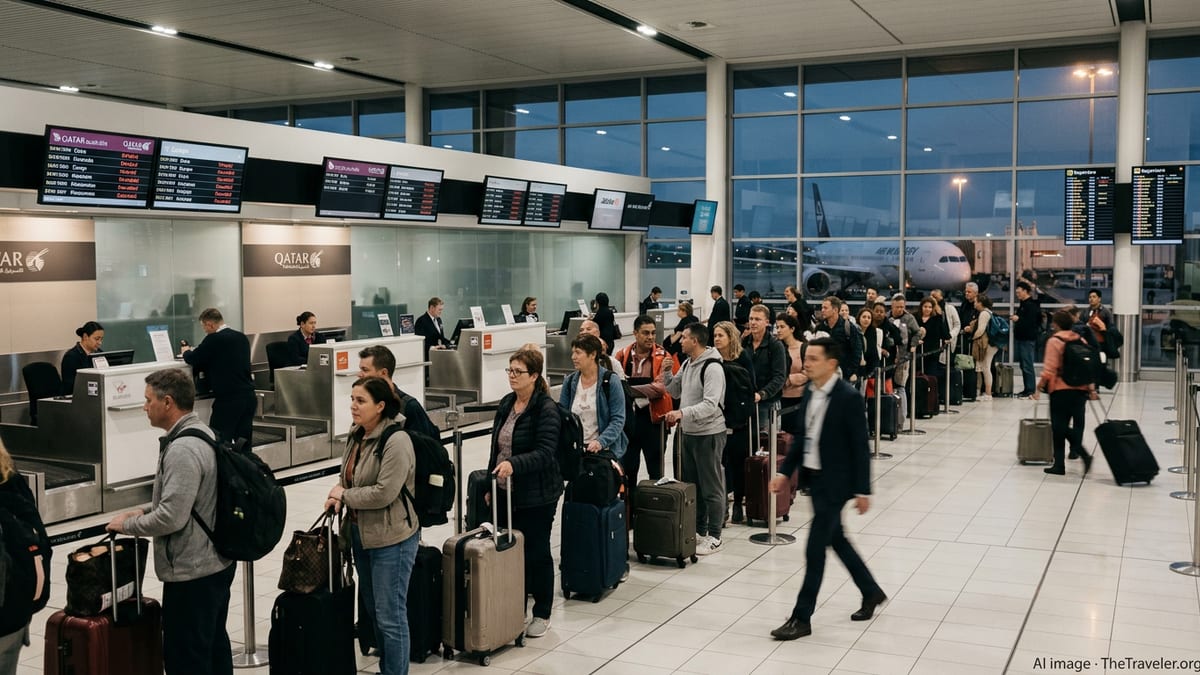
Wave of 787 Cancellations Hits Key Trans-Tasman Hubs
Airports in Melbourne, Sydney, Auckland and Wellington reported mounting disruption on Friday as a cluster of long-haul and trans-Tasman flights operated by Boeing 787 aircraft were delayed or cancelled. Airport information screens showed rolling schedule changes, with a total of 46 cancellations across multiple carriers and dozens more services heavily delayed.
The disruption has been most visible on routes linking Australia and New Zealand with the Middle East, Asia and Europe, where Qatar Airways and partner-operated flights form a critical part of the long-haul network. Passengers connecting through Doha from Melbourne, Sydney and Auckland reported last-minute cancellations and overnight delays, leaving many stranded in transit lounges or scrambling for scarce replacement seats.
Regional and domestic schedules have also been affected as Jetstar, Virgin Australia and Air New Zealand reassign aircraft and crews in an attempt to absorb the shock. While some cancellations are confined to widebody 787 operations, knock-on effects are being felt on narrower domestic routes as airlines juggle aircraft availability and duty-hour limits for crews.
Passengers Stranded as Rebooking Options Quickly Dwindle
At Melbourne and Sydney, queues formed early as passengers sought rebooking and accommodation after overnight cancellations. Travellers reported re-routed itineraries that added one or two extra stops to journeys to Europe, as airlines leaned on alliance partners and alternative hubs in Asia and North America to move affected customers.
In Auckland and Wellington, long-haul passengers bound for Europe and North America faced lengthy hold times with call centres and mixed outcomes at airport desks. Some were offered next-day or two-day-later departures, while others were told that seats on alternative carriers were extremely limited during the current peak travel period.
With 787 aircraft typically serving some of the longest routes out of Oceania, disrupted flights often involve complex multi-sector tickets. That is adding to the pressure on airline operations teams, who must revalidate or reissue tickets, resecure onward connections and manage duty-of-care obligations for accommodation and meals when passengers face involuntary overnight stays.
Airlines Cite Operational Constraints and Network Pressures
Airline representatives pointed to a combination of operational constraints affecting widebody fleets and tight network schedules as key drivers of the current disruption. While specific causes varied by carrier and route, industry analysts noted that 787 fleets across several airlines remain finely balanced, with limited spare capacity to absorb unexpected maintenance or crew-related issues.
Qatar Airways services to and from Oceania have been operating against a backdrop of heightened global airspace complexity, leaving long-haul schedules vulnerable to cascading delays. When a single 787 rotation is disrupted, the resulting knock-on effects can ripple through multiple days of flights, especially on long sectors between the Middle East and the South Pacific.
Jetstar, Virgin Australia and Air New Zealand, which all rely on small pools of 787 or similar long-haul aircraft, are similarly exposed when a single aircraft is taken out of rotation or when crewing plans are disrupted. In several cases, airlines have opted to consolidate lightly booked services or cancel specific rotations in order to preserve the integrity of their wider networks.
Melbourne, Sydney, Auckland and Wellington Bear the Brunt
Melbourne and Sydney, the largest international gateways in Australia, have seen some of the heaviest disruption as multiple carriers operate overlapping long-haul banks in the late afternoon and evening. Cancellations and rolling delays at those times quickly spill into the night, crowding departure halls and straining ground-handling resources.
Across the Tasman, Auckland and Wellington have faced particular pressure on long-haul banks timed to connect with European and North American arrivals and departures. With Air New Zealand and partner carriers already running tight schedules on their 787 fleets, disruptions on one or two key long-haul services have forced rapid adjustments to trans-Tasman connections and domestic feed.
Smaller Australian and New Zealand airports that depend on a handful of daily widebody services are also feeling the effect. Passengers originating in regional centres have reported missed connections in major hubs when 787 flights depart late or are cancelled at short notice, leaving them to overnight in gateway cities at busy times of day.
Travellers Urged to Monitor Flights and Prepare for Changes
Travel agents and consumer advocates across Australia and New Zealand are advising passengers booked on 787-operated services over the coming days to monitor flight status closely and allow extended connection times where possible. Those with critical onward plans, such as cruises or major events, are being encouraged to consider arriving a day earlier than originally booked if their itineraries involve multiple long-haul sectors.
Passengers already affected by delays and cancellations are being reminded to keep all receipts for meals, transport and accommodation associated with the disruption, and to check both airline policies and applicable consumer protections in their country of departure. In some cases, travel insurance may provide additional coverage for costs not reimbursed by airlines.
With long-haul networks in Oceania operating close to capacity, aviation analysts warn that further disruption cannot be ruled out if operational pressures on 787 fleets persist. For now, hundreds of travellers across Melbourne, Sydney, Auckland, Wellington and other airports are left navigating a patchwork of revised itineraries, longer journeys and uncertain arrival times as airlines work to restore stability to their schedules.