

More news on this day
More than 30 flights operated by Gulf Air, Lufthansa, KLM and other major carriers have been cancelled across Germany in recent days, disrupting links to Amsterdam, Paris, Bahrain, Tel Aviv, Doha, Frankfurt and additional hubs as airlines continue to react to fast-changing security conditions and airspace restrictions between Europe and the Gulf region.
Get the latest news straight to your inbox!
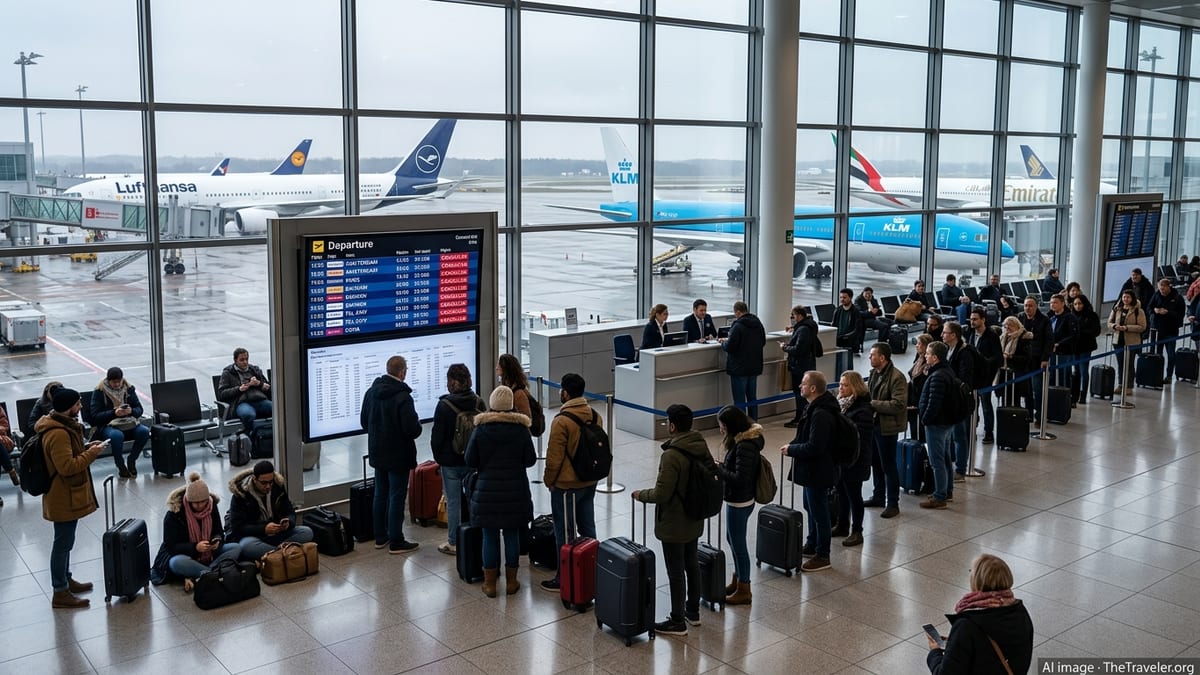
Wave of Cancellations Hits German Hubs
German airports including Frankfurt, Munich and other major hubs have recorded a fresh wave of cancellations as airlines adjust schedules around the Middle East and Gulf. Publicly available data from flight tracking platforms and airline notices indicate that more than 30 services involving German airports have been withdrawn or heavily altered over a short period, affecting both point to point and connecting itineraries.
The cancellations include services linking Germany with Amsterdam and Paris, as well as long haul connections via Bahrain, Doha and Tel Aviv. While some flights have been removed outright from schedules, others have been converted into irregular evacuation style operations, leaving passengers with little advance notice and limited rebooking options.
Reports from travelers show that disruption is not confined to a single airport or airline but is spread across multiple German gateways. Passengers on itineraries involving Gulf and Levant stopovers are among the hardest hit, with journeys that once required a single connection now often needing complex rerouting through alternative European hubs.
Lufthansa Cuts Middle East Links and Adjusts German Operations
Lufthansa and airlines in the wider Lufthansa Group have played a central role in the cancellations affecting Germany. According to recent schedule updates and industry briefings, the group has suspended flights on several routes to Tel Aviv, Beirut, Amman, Erbil, Dammam and Tehran and repeatedly extended those suspensions as security conditions deteriorated across parts of the Middle East.
By late March 2026, publicly available summaries of airline responses to the regional crisis indicated that Lufthansa had prolonged a stop to Tel Aviv flights deep into the summer schedule and kept other routes, including Tehran, on hold for an extended period. These adjustments have removed a series of departures that would normally feed passengers from German cities into the wider Middle East network.
The impact on German airports has been significant. With Lufthansa operating key long haul departures from Frankfurt and Munich, each route suspension effectively cancels multiple weekly services. Passengers booked from secondary European cities into Germany for onward connections to Tel Aviv, Doha or other Gulf destinations are increasingly being rerouted or finding their trips cancelled altogether.
KLM Suspends Tel Aviv and Gulf Routes, Squeezing Amsterdam Connections
Amsterdam has long served as a major transfer point for travelers moving between Germany, Western Europe and the Middle East. KLM’s decision to halt flights between Amsterdam and several Gulf and Levant destinations has therefore had knock on effects for German passengers relying on Dutch connections.
Industry reports compiled in March 2026 show that KLM has suspended services between Amsterdam and Tel Aviv, as well as routes to Dubai, Dammam and Riyadh for at least part of the current season. In parallel, KLM has been avoiding key airspace over Iran, Iraq and Israel, a step that complicates scheduling and further constrains capacity on any remaining services between Europe and the region.
For German travelers who typically route via Amsterdam to reach Tel Aviv or Gulf hubs, these suspensions translate into cancelled segments and missed onward connections. Flights from German cities into Amsterdam remain in operation, but the removal of onward services has forced many passengers to rebook through alternative hubs such as Paris, Istanbul or select Southern European gateways, often at higher cost and with longer travel times.
Gulf Air and Qatar Route Disruptions Sever Bahrain and Doha Links
Gulf Air, which normally provides key connections between Bahrain and European cities including Frankfurt, has also been significantly affected. Passenger accounts and airline communication shared online describe multiple cancellations of Gulf Air services that rely on transiting Bahrain, with some travelers reporting repeated last minute changes and uncertainty about whether flights would operate as scheduled.
Some Gulf Air itineraries involving Germany have reportedly been rerouted via Dammam rather than Bahrain, but availability remains limited and schedules are subject to rapid change. This has had a direct impact on students, workers and visiting family members traveling between India, the Gulf and German cities who had planned to use Bahrain as a transit point.
Qatar’s capital Doha, another core transfer hub for journeys into Germany, has faced its own disruption. Publicly available information shows that Qatari airspace was temporarily closed at the end of February 2026, leading to a wave of cancellations at Doha’s main airport and a shift to limited emergency operations. Although navigation later reopened under restrictions, regular commercial services remained curtailed, sharply reducing the number of flights linking Doha with European hubs, including those in Germany.
The combination of reduced Bahrain and Doha connectivity has cut off two of the region’s most important long haul transfer points, amplifying the effect of cancellations on Germany bound itineraries and pushing more travelers onto an already stretched network of alternative routes.
Tel Aviv, Paris and Other Key Cities Feel the Ripple Effects
Tel Aviv has emerged as one of the most heavily affected destinations in the current disruption. Following previous security incidents that led many airlines to cancel services to Israel for several days, the latest wave of regional tensions and airspace concerns has pushed carriers to prolong suspensions much further. Lufthansa Group and KLM are among the airlines that have kept Tel Aviv flights on hold or extended suspensions into future schedules, removing a substantial number of weekly seats between Germany, Amsterdam and Israel.
Paris and Amsterdam, despite being alternative gateways for rerouted passengers, are also seeing knock on impacts. As airlines like Air France temporarily scaled back some Middle East operations earlier in March and KLM reduced its Gulf network, the capacity available for travelers shifting away from Bahrain and Doha has tightened. This has led to higher fares, crowded rebooking desks and limited same day alternatives for those whose flights to or from Germany are cancelled.
Other European cities with strong German links, such as Brussels and Vienna, are feeling similar pressure as travelers seek any possible route around closed or restricted airspace. Airlines across the continent are being forced to continually revise flight plans, lengthen routings and trim schedules in response to shifting risk assessments and regulatory guidance, leaving the overall network fragile and prone to further short notice cancellations.
What Passengers Traveling To and From Germany Should Expect Now
For passengers traveling to or from Germany in the coming days, the pattern emerging from airline notices and traveler reports suggests that disruption is likely to continue, particularly on itineraries involving Amsterdam, Paris, Bahrain, Tel Aviv or Doha. Schedules remain fluid, with carriers frequently updating timetables as conditions in the Middle East and Gulf region evolve.
Travelers holding tickets with Gulf Air, Lufthansa, KLM or other affected airlines are being advised through public channels to monitor their bookings closely and to check for rebooking or refund options where flights have been removed from the schedule. Some airlines have introduced flexible change policies on routes touching the region, although specific conditions vary and capacity on alternative services can be limited.
Industry observers note that as long as key segments of regional airspace remain sensitive and hubs like Tel Aviv and Doha operate under constraints, German airports are likely to see further clusters of cancellations. While domestic and intra European services within Germany continue to function relatively normally, any journey relying on Gulf or Levant connections may face extended travel times, extra stops or short notice changes.